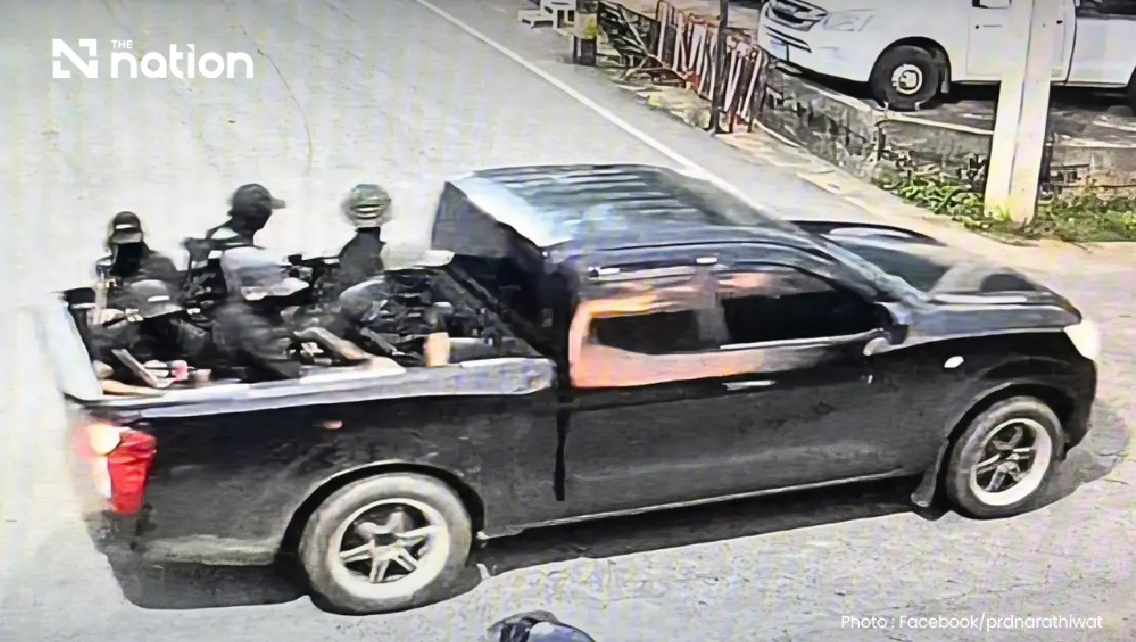
A ruthless assault on the Bukeh Sami checkpoint in Narathiwat on the evening of July 22 has been meticulously documented by security cameras, revealing the lethal precision of a nine-member attack team that overwhelmed the post in less than two minutes. The raid claimed the lives of five paramilitary rangers and left half a dozen civilians wounded, including a child, marking a significant security breach in Thailand's troubled southern region. The footage shows how the assailants operated with clear tactical coordination, splitting into two distinct units that complemented each other during the assault.
The checkpoint, located in Village 7 of Tanyong Mat subdistrict in Ra-ngae district, fell under the command of the 4509th Ranger Company operating within the 45th Ranger Regiment Task Force. When the violence erupted at approximately 6:45pm, only five rangers were present at the post, providing minimal defensive capability against a well-armed and methodical force. Initial witness accounts suggested that merely six attackers participated in the incident, but subsequent analysis of surveillance footage from multiple vantage points around the checkpoint conclusively identified nine individuals involved in the coordinated assault.
The primary assault force arrived in a black Nissan pickup truck registered in Songkhla province with licence plate ผน 6866. Six gunmen occupied the truck bed while another drove the vehicle, their appearance deliberately crafted to resemble paramilitary personnel through the adoption of black clothing and wide-brimmed hats that obscured their facial features. A supporting team travelled behind them on a red-and-white Honda Wave motorcycle, whose registration number remained unreadable on the footage. This secondary unit provided covering fire and logistical support, with the rider dressed in a white shirt and helmet while the rear passenger—disguised in a black women's hijab—carried an AK-type rifle and reportedly possessed an 11mm pistol.
As the convoy approached from the direction of Tanyong Mat market, three ranger sentries positioned at the checkpoint entrance became the first targets. When the pickup slowed to a halt before these officers, the gunmen in the truck bed unleashed a ferocious barrage from M16 and AK-pattern rifles. The initial volley proved instantly fatal, dropping all three rangers where they stood. The vehicle then halted entirely, permitting several attackers to dismount and continue their withering fire towards the checkpoint structure and the fortified bunker housing two additional rangers stationed inside.
The sequence of gunfire concentrated on the ranger position with systematic intensity, creating a landscape of ballistic devastation. Investigators later recovered more than 100 spent cartridge cases scattered across the area, encompassing rounds from M16 rifles, various AK-type weapons, and 11mm pistol ammunition. Additional spent casings suggested that some weapons had jammed during the engagement, and the attackers had cleared these stoppages by extracting rounds through the ejection port. All five rangers present at the checkpoint were killed during this phase, their identities subsequently confirmed as Sergeant Major First Class Theerayut Somakerd and ranger volunteers Sakiriya Jena, Wimon Dabthong, Nattasit Kaewsena and Salahuding Pi.
Following the neutralisation of ranger personnel, the attackers methodically looted the checkpoint facility, appropriating four folding-stock AK-type rifles, one 11mm pistol, four ammunition magazines, and four ballistic protective vests. The inventory of stolen items remained subject to verification, as preliminary counts offered varying figures. As the raiders withdrew towards their vehicles, one assailant hurled a pipe bomb towards an elevated concrete structure adjacent to a nearby bridge, generating additional blast evidence that authorities later examined. The convoy then proceeded toward Dusongyo subdistrict, with the burnt-out remains of the pickup truck eventually discovered abandoned—a transparent effort to obliterate forensic evidence connecting the vehicle to the operation.
Civilian casualties during the assault totalled six wounded individuals, including a ten-year-old child, transported to regional hospitals for emergency treatment. Early confusion regarding civilian injury figures—with initial reports varying between two and five victims—created temporary uncertainty regarding the full human cost of the attack. The geographic proximity of the checkpoint to residential and commercial areas meant that bystanders fell within the engagement zone during the extended gunfight.
Government response mobilised immediately and comprehensively, with Narathiwat Governor Boonchuay Homyamyen coordinating with senior military and law enforcement commanders through the night. Provincial Police Region 9 commissioner Pol Lt Gen Piyawat Chalermsri, Narathiwat police chief Pol Maj Gen Prayong Khot Sakha, and Col Witthaya Sariya, commanding officer of the 45th Ranger Regiment Task Force, oversaw forensic operations that extended through dawn. Bomb-disposal technicians, tactical police units, and forensic specialists worked methodically collecting ballistic evidence and analysing attack patterns. Security forces rapidly established cordons and checkpoints along suspected escape corridors throughout Ra-ngae district and adjacent areas.
The assault stands as a demonstration of operational sophistication that regional security analysts will scrutinise closely. The deployment of a secondary motorcycle escort element, the careful timing of the approach, the methodical clearance of the checkpoint position, the organised looting of weapons and equipment, and the deliberate destruction of the getaway vehicle all suggest planning extending beyond spontaneous militia activity. The incident exposes continuing vulnerabilities in ranger post security configurations, where small-force positions remain exposed to larger, coordinated assault teams operating in Thailand's volatile deep south. For Malaysia and broader Southeast Asian regional security observers, the incident underscores the persistent threat from organised armed movements operating across the Thai-Malaysian border region and the challenge of securing vulnerable military installations scattered throughout border provinces.

