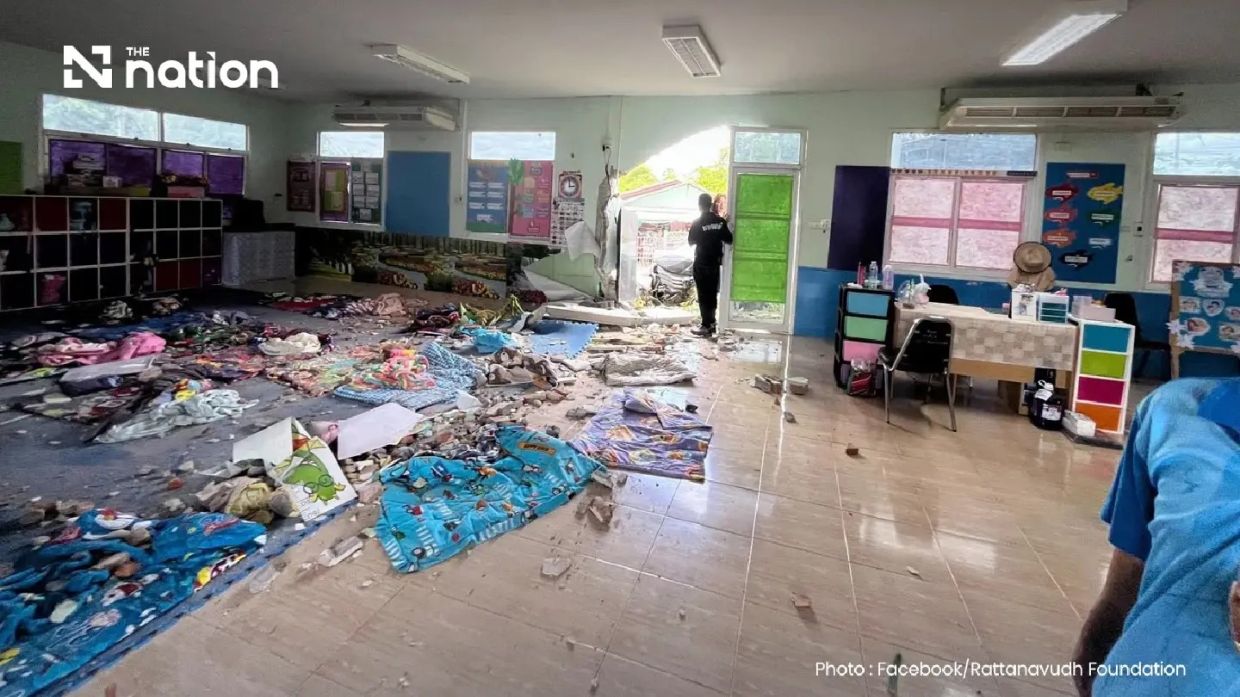
A harrowing incident unfolded in Kanchanaburi on Friday afternoon when a private car lost control and ploughed into the Ban Nong Song Ton Child Development Centre in Mueang Kanchanaburi district. The collision occurred while approximately 34 young children were at the facility, with the majority resting during their scheduled afternoon nap period. The impact proved particularly severe because it struck directly into a classroom where the youngest and most vulnerable children were sleeping, exposing them to the full force of the vehicle's impact and the subsequent structural damage and debris that followed.
The crash resulted in injuries to 15 children who sustained a range of trauma from the collision. Medical personnel attending the scene documented head wounds and injuries inflicted by sharp fragments and debris released during the crash, which scattered throughout the damaged classroom. Beyond physical injuries, rescue workers noted that many of the young victims were emotionally traumatised by the sudden and violent impact, having been abruptly awakened from their rest. The remaining 19 children present at the facility fortunately escaped physical harm, though they too would have experienced the frightening nature of the emergency unfolding around them.
Emergency response to the incident mobilised swiftly following alerts to the Rattanavudh Foundation, a key coordinating body in the region's disaster response network. Personnel from both the Rattanavudh Foundation and the Phithak Kan Foundation converged on the childcare centre to provide critical first aid and stabilisation measures before transportation to hospital. The rapid coordination of multiple rescue agencies meant that injured children received preliminary medical assessment and care within minutes of the collision, potentially minimising the severity of their conditions and preventing complications that might have arisen from delayed treatment.
All 15 injured children were transported to Phaholpolpayuhasaena Hospital for comprehensive medical evaluation and ongoing treatment. Hospital staff conducted thorough examinations to identify both visible injuries and potential internal trauma that might not be immediately apparent following impact incidents. Importantly, authorities confirmed that all 15 children were ultimately declared safe following their hospital assessment, suggesting that whilst injuries were sustained, none were classified as life-threatening or requiring extended intensive care. This outcome proved fortunate given the force of the collision and the vulnerability of the child victims involved.
The incident underscores persistent safety concerns surrounding childcare facilities in residential areas where vehicular traffic poses inherent risks. The Ban Nong Song Ton Child Development Centre, like many similar facilities across Southeast Asia, operates in proximity to roads where vehicle control incidents can occur with minimal warning. The collision occurred at a time when children were in a state of reduced alertness, sleeping during their scheduled rest period, which meant they had no capacity to respond or take evasive action when the vehicle struck their classroom. This temporal aspect of the incident—occurring during scheduled nap time—highlights how routine facility operations can coincide with peak vulnerability periods.
Investigators will likely examine whether the vehicle malfunction resulted from mechanical failure, driver error, or external factors such as sudden medical incapacity of the driver. Understanding the cause becomes essential for determining whether similar incidents might be preventable through enhanced vehicle safety measures, improved driver training and screening, or physical barriers around childcare facilities. The investigation phase will also assess whether the facility's building design and structural integrity performed as expected during impact, and whether modifications to the premises could reduce vulnerability to vehicular intrusion in future incidents.
The psychological impact on the surviving children, parents, and staff cannot be overlooked in assessing the full consequences of this incident. Young children who witnessed the collision or were injured by it may experience anxiety, trauma responses, or behavioural changes in the weeks following the event. Parents across Kanchanaburi will have felt acute concern upon learning of the accident, raising questions about the safety protocols and physical security measures in place at childcare facilities entrusted with their children's wellbeing during working hours. Staff at the centre will face their own emotional processing of the incident and may require support services to manage the stress of having experienced such a dramatic emergency.
From a broader Southeast Asian perspective, this incident joins a concerning pattern of vehicular intrusions into public spaces where children gather. Several similar accidents have been reported across Thailand, Malaysia, and other regional nations, prompting ongoing discussions about whether childcare facilities require mandatory protective barriers, restricted access zones, or enhanced architectural design standards. Policy makers and facility operators face the challenge of balancing accessibility and openness with security measures that might prevent unauthorised or uncontrolled vehicle incursions without creating fortress-like environments that undermine the welcoming, nurturing atmosphere that effective childcare requires.
The incident in Kanchanaburi will likely trigger reviews of safety practices at similar facilities throughout the region. Authorities may issue updated guidelines regarding recommended safety features, emergency response protocols, and staff training requirements for managing incidents involving vehicle intrusions. Industry bodies representing childcare operators may develop shared best practices and safety standards, whilst construction and architectural firms may explore innovative design approaches that integrate passive safety features without compromising the functionality and aesthetic qualities of modern childcare environments.

