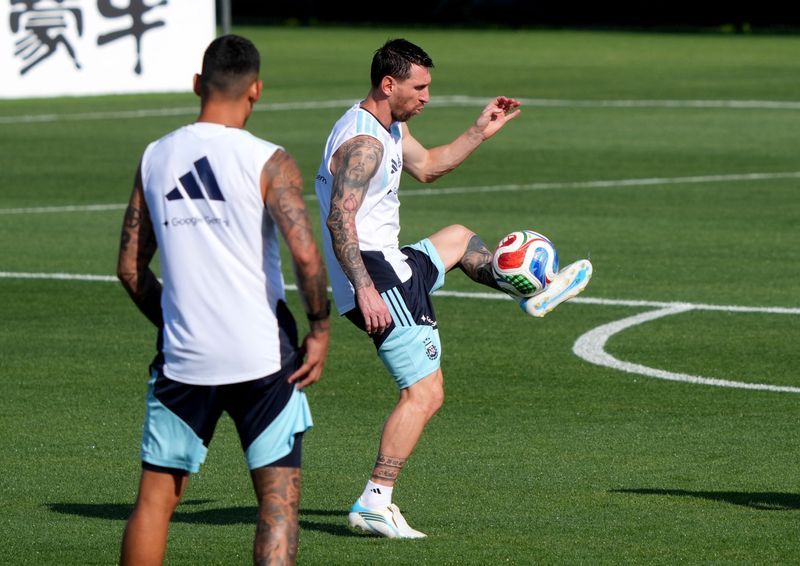
Cape Verde's improbable World Cup journey has reached a critical juncture as the island nation prepares to face Argentina in the round of 32, a clash that would represent one of football's greatest upsets should the Africans prevail. By conventional sporting wisdom, the task appears insurmountable: a squad from the least populous nation ever to qualify for the knockout rounds facing the reigning world champions and one of the game's greatest players. Yet the Cape Verdean delegation has descended on Florida with a conviction that defies the statistical probabilities working against them.
The foundation for this confidence runs deep into the group stage, where Cape Verde defied all expectations by earning draws against Spain and Uruguay—both former World Cup winners. These results transcended the typical moral victories assigned to minnow nations that simply stay competitive against superior opponents. Rather, they reflected a collective display that showcased technical proficiency, tactical discipline, and psychological resilience. The path to the knockout rounds had seemed virtually impossible for a debutant team, yet Cape Verde navigated it with a composure that caught many observers by surprise. Rather than viewing the draw against Argentina as a cruel stroke of misfortune, assistant coach Humberto Bettencourt framed the matchup as a unique opportunity—even describing it as "a pleasure" to test themselves against the Albiceleste.
Bettencourt's philosophical approach to the fixture reveals much about Cape Verde's mindset heading into the encounter. When addressing reporters at the team's Tampa training base, he articulated a perspective that dismisses predictive analytics as mere conjecture detached from the unpredictable nature of football itself. He pointedly noted that pre-tournament projections had assigned Cape Verde a one percent chance of advancement, a figure that expanded only marginally to four percent after their group stage accomplishments. For Bettencourt and his squad, these statistical models have become irrelevant; they represent only abstract theories untethered from the tangible realities of competitive football. What matters instead, according to the assistant coach, is the collective ambition and the fundamental quality of the working group that has already exceeded every reasonable expectation.
The tactical strategy Cape Verde intends to deploy reveals further insights into their confidence and self-awareness. Rather than abandoning their established playing philosophy to construct a defensive fortress around Lionel Messi, Bettencourt confirmed that Cape Verde would maintain their customary style and approach. There would be no desperate man-marking of the Argentine superstar, no wholesale tactical transformation designed simply to contain one exceptional player. Instead, Cape Verde plans to view Messi within the broader context of Argentina's collective attacking threat. This perspective—treating the greatest individual talent as one component of a larger system rather than the sole focus of defensive attention—demonstrates either remarkable faith in their organizational capability or a pragmatic acceptance that attempting to shackle Messi individually would leave other vulnerabilities exposed elsewhere on the pitch.
The demographic composition of Cape Verde's squad underscores the global nature of modern football and the historical patterns of migration that have shaped the island nation. As one of Africa's smallest countries by population, Cape Verde has long experienced significant emigration, with communities scattered across Europe, North America, and notably, Argentina itself. The World Cup squad itself reflects this diaspora, comprising players born in the Netherlands, Portugal, France, the United States, and Ireland. This international recruitment pool has effectively expanded Cape Verde's talent base far beyond what the domestic population alone could provide. The presence of players with personal or family connections to Argentina adds an intriguing subplot to the encounter, as some members of the squad may carry direct links to the nation they now face.
Cape Verde's path into the knockout stage has simultaneously transformed the profile of the national team and, more broadly, elevated the entire island nation onto the international sporting stage. Prior to this World Cup campaign, Cape Verde remained largely peripheral to global football consciousness. The tournament has served as a platform for showcasing both the technical capabilities of their players and the organizational competence of their football association. Beyond the sport itself, qualifying for the knockout rounds represents a significant moment for a small African nation to assert its presence in a tournament watched by billions worldwide. This exposure carries implications extending well beyond football, contributing to the nation's international visibility and soft power.
Team selection considerations loom as potential complications in the days immediately preceding the match. Bettencourt disclosed that Telmo Arcanjo, the team's skilled midfielder, faced a precarious fitness situation with his involvement rated as a fifty-fifty proposition due to a leg injury. The midfielder's absence from training on Wednesday suggested genuine concern about his readiness for such a critical fixture. Conversely, the return of combative left back Sidny Lopes Cabral provided some positive news regarding squad availability. Cabral had served a one-match suspension against Saudi Arabia after accumulating yellow cards during the group stage, meaning he would return to full availability for the Argentina encounter.
Argentina's own preparations suggest a squad undergoing tactical refinement as coach Lionel Scaloni weighs optimal approaches for dismantling Cape Verde's organized defensive structure. The reigning champions entered their final group fixture against Jordan with perfect credentials—three consecutive victories without conceding defeat. Messi, who had begun that particular match on the bench, entered as a substitute and promptly demonstrated his decisive quality by recording his sixth goal of the tournament in a convincing 3-1 victory. Scaloni appears positioned to restore Messi to the starting lineup for the Cape Verde encounter, benefiting from the accumulated rest and the knowledge that the Argentine captain's presence provides in high-stakes knockout football. The selection challenge for Scaloni extends beyond simply including Messi; rather, it encompasses identifying which combination of Argentina's many high-caliber attacking talents can most effectively penetrate and exploit the vulnerabilities present in Cape Verde's defensive organization.
The magnitude of an upset victory for Cape Verde cannot be overstated within the broader historical context of World Cup competition. Such a result would rank among the tournament's most stunning achievements, comparable to the greatest shocks in football history. The confluence of factors—a debutant team from a minimally populated nation eliminating the defending world champions—would rewrite football's narrative landscape. For Cape Verde, the encounter represents not merely a sporting occasion but a cultural and national moment of tremendous significance. Whether the team can translate their psychological confidence and tactical discipline into a result that would send shockwaves through global football remains the compelling question as the fixture approaches.

