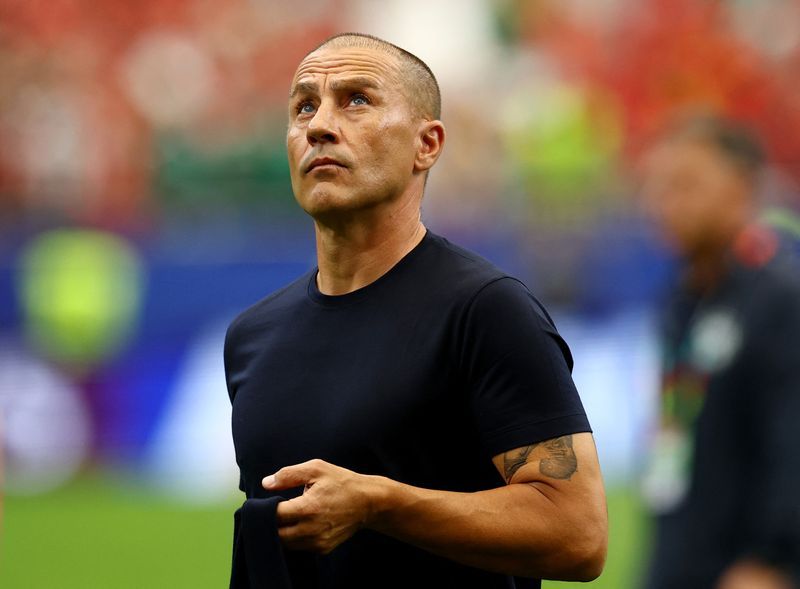
Uzbekistan's maiden World Cup campaign has taken a devastating turn following a 5-0 thrashing by Portugal in Houston on Tuesday, leaving the Central Asian nation teetering on the brink of elimination from Group K. Coach Fabio Cannavaro, the defender who lifted the Ballon d'Or in 2006 whilst captaining Italy to World Cup glory, has placed full blame for the comprehensive defeat squarely on his own shoulders rather than those of his players.
The Uzbek squad now faces a desperate scenario heading into their final group fixture against the Democratic Republic of Congo on Saturday. Having previously lost 3-1 to Colombia in their opening match, they require nothing short of victory to maintain any mathematical possibility of advancing beyond the group stage. This represents a grim reality check for a nation making its World Cup bow, with the tournament having quickly transformed from a proud moment into a tournament of harsh lessons.
Cannavaro's post-match comments reflected the philosophical approach of a coach attempting to extract positives from an otherwise catastrophic scoreline. "They tried everything, they tried their best, I am very proud," he told reporters, emphasising his belief that the players had given their maximum effort despite the disparity in the final score. His insistence on maintaining belief until mathematical elimination became impossible suggested he was attempting to preserve morale and ensure the squad remained mentally engaged for their final assignment.
The 46-year-old Italian coach drew on his extensive experience to frame the defeat as an inevitable part of a developing nation's World Cup journey. He deliberately attributed the loss to tactical and strategic errors on his part rather than player execution, a move clearly designed to shield the squad's confidence during an already fragile period. "All my life I have taken responsibility, as a player and as a coach. If we lost 5-0, it is because today I made mistakes, and not them," Cannavaro stated with the authority of someone accustomed to shouldering pressure at the highest level.
Cannavaro's management of player psychology appeared central to his approach, as he acknowledged the mental toll of competing at their maiden World Cup. He recognised that international inexperience inevitably leads to individual errors, and rather than punish such mistakes, he aimed to create an environment where learning could flourish. "This is our first time at the World Cup. I told the players that they can misplace a pass and make mistakes. Because I must give them the confidence to try and improve," he explained, articulating a development-focused philosophy rather than a results-driven one.
A particularly bitter moment arrived when Uzbekistan had a striking goal by Azizjon Ganiev disallowed at 2-0 down, ruled out for a foul committed during the build-up. Cannavaro identified this incident as a critical juncture that fundamentally altered his team's psychological state during the match. The coach suggested that had the goal stood, the momentum and confidence might have shifted substantially, potentially changing the trajectory of the encounter. This observation highlighted how marginal decisions can compound the difficulties faced by inexperienced teams facing established World Cup nations.
What emerged from Cannavaro's analysis was a recognition that Uzbekistan had displayed moments of genuine competitive intent, particularly in their opening spell against Portugal mirroring their approach in the Colombia match. His instruction to players to exhibit boldness and courage suggested he believed his side possessed the technical capability to compete, provided they could overcome mental barriers surrounding international competition. The challenge, he appeared to acknowledge, lay in sustaining intensity and confidence against superior opponents rather than lacking fundamental footballing quality.
The contrast between Cannavaro's World Cup pedigree and Uzbekistan's situation underscores the tournament's harsh realities for emerging footballing nations. His 2006 triumph with Italy came as a seasoned team with generations of World Cup experience, whilst Uzbekistan enters this competition as relative novices on the global stage. This gap in institutional knowledge and tournament exposure manifested clearly in the Portugal encounter, though Cannavaro's framing suggested such disparities could narrow through repeated exposure and accumulated experience.
Cannavaro's emphasis on treating the tournament as a learning opportunity rather than a immediate competitive showcase revealed realistic expectations for Uzbekistan's first World Cup experience. He positioned even defeat as valuable, arguing that lessons extracted from encounters against elite teams would benefit long-term development. This mindset, whilst philosophically sound, cannot entirely mask the uncomfortable truth that Uzbekistan's World Cup debut has proven considerably more difficult than many observers might have anticipated before the tournament commenced.
The pathway forward demands immediate recovery against Congo, though Cannavaro's honest assessment suggests he recognises the substantial challenge his squad faces in climbing out of this predicament. The coming match will determine whether Uzbekistan's World Cup story concludes as a learning experience that establishes foundations for future tournaments, or whether it becomes a disappointing narrative cut short by early elimination. For Malaysian readers following Asian representation at the World Cup, Uzbekistan's struggles provide perspective on the significant gulf between established football powers and emerging nations still building their competitive infrastructure.