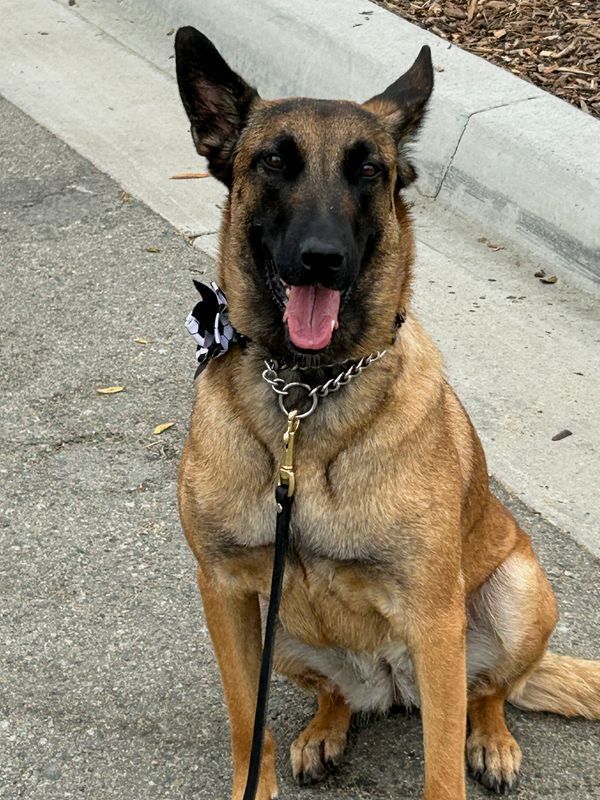
The 2026 FIFA World Cup presented unprecedented security challenges across three nations, and among the frontline defenders were not armed personnel but four-legged sentries equipped with extraordinary olfactory capabilities. Kali, a five-year-old Labrador Retriever stationed at Los Angeles Stadium in Inglewood, California, exemplified this canine security force. Despite her gentle demeanor and impeccable behaviour, this federal detection dog worked tirelessly to prevent explosives, firearms, fireworks, and other contraband from entering the venue—a responsibility that underscored the tournament's complex threat landscape.
The geopolitical dimensions of hosting the World Cup across the United States, Canada, and Mexico created a uniquely demanding security environment. The United States maintained active military and diplomatic tensions with Iran, whose national team was required to compete at venues within American territory. The Trump administration's broader strain on relations with numerous participating nations compounded these concerns. Beyond interstate tensions, the tournament coincided with serious internal security challenges in Mexico, where government operations against criminal cartels had recently triggered widespread violence just months before the tournament commenced. Meanwhile, large-scale political demonstrations erupted during Iran's matches in Los Angeles, creating dynamic threats that extended beyond traditional terrorism concerns.
Responding to these multifaceted risks required marshalling hundreds of police and security dogs across the entire tournament infrastructure. Glen Kucera, president of Allied Universal Enhanced Protection Services, the largest private canine security provider in the United States, deployed approximately 300 of his firm's 1,000 dog teams specifically for World Cup assignments. These animals worked alongside federal, state, and local enforcement agencies, creating a three-tiered detection network that covered not only stadium entrances but also training facilities, hotels, transportation routes, and the spaces where teams prepared and traveled between matches.
The geographical scope of the tournament necessitated this extraordinary deployment. With matches staged across 16 cities spanning three countries, security protocols had to adapt to different jurisdictions, cultural contexts, and threat assessments. Kali represented the Federal Bureau of Alcohol, Tobacco, Firearms and Explosives, specifically trained to detect explosive materials. In Los Angeles, dogs from the L.A. County Sheriff's Department, including an animal named Buck and his handler Anthony Meyers, worked adjacent positions. Private security contractors maintained vehicular checkpoints around stadium perimeters, while additional public safety dogs positioned themselves at entry points where every spectator would pass within close proximity to detection capabilities.
Crucially, security officials recognized that the visual presence of these animals served functions beyond their olfactory detection abilities. Kucera emphasized that approximately ninety-five percent of canine security work operates as psychological deterrence rather than active threat interdiction. The deliberate placement of dogs at high-traffic entry points ensured that potential bad actors would understand they faced detection technology and that venues maintained serious security postures. This visible security architecture—what organizers termed a "visual deterrent"—communicated to would-be perpetrators that opportunities for weaponry or explosives smuggling were minimal. Simultaneously, the presence of detection dogs signaled to legitimate attendees that their safety was prioritized through comprehensive screening.
Yet security planners faced a delicate calibration challenge. Many spectators, particularly those from nations where police dogs remain uncommon or culturally associated with state repression, experience genuine fear around security canines. Recognition of this reality influenced operational decisions about breed selection. Allied Universal and partner agencies predominantly deployed Labrador Retrievers rather than German Shepherds or other breeds perceived as intimidating. As Kucera noted, public perception favored Labs—animals viewed as friendly, approachable, and non-threatening rather than symbols of security state apparatus. This strategic choice reflected organizers' commitment to maintaining spectator comfort while preserving threat detection capabilities.
Fireworks presented a distinct security category requiring canine detection. Many international fan cultures celebrate goals and victories with pyrotechnic displays, and spectators often attempted to bring fireworks into stadiums with genuine celebratory intent rather than malicious purposes. Detection dogs prevented unintentional security breaches by identifying these items during entry screening. This preventative approach proved more effective than relying solely on post-incident management, particularly given the massive daily attendance volumes across multiple venues throughout the tournament's duration.
Regional variations in canine deployment reflected different security philosophies and available resources. In Guadalajara, Mexico, organizers incorporated robotic dogs equipped with explosive-detection capabilities, marrying cutting-edge technology with traditional canine approaches. Vancouver employed a multi-layered canine strategy coordinated across Canadian federal, provincial, and municipal agencies, creating redundant detection systems that enhanced overall reliability. These variations demonstrated that security planners tailored approaches to specific geographical contexts while maintaining consistent core principles around threat identification and spectator safety.
The Iran matches created singular operational complications that illustrated the tournament's geopolitical dimensions in practical terms. International protocols required Iran's national team to remain based in Mexico rather than travel freely throughout North America, necessitating tightly choreographed arrival and departure schedules around each match. Politically significant fixtures—contests against New Zealand and Belgium at Los Angeles Stadium, plus a final group stage match against Egypt in Seattle—attracted substantial protest activity outside venues. Security coordinators had to manage not only traditional threat vectors but also the potential for political demonstrations that could transform quickly into volatile situations requiring sustained dog-team presence and readiness.
The sheer logistical coordination required to manage hundreds of dog teams across three nations during a monthlong tournament with 64 matches represented an undertaking without recent historical precedent. Training handlers to work effectively across different jurisdictions, establishing clear protocols for inter-agency communication, scheduling dogs across matches and venues with varying threat assessments, and maintaining animal welfare throughout intensive operational periods all presented organizational complexities. Security officials drew on experience from previous major events—Olympic Games, presidential inaugurations, international summits—but the World Cup's scale demanded innovations in multi-national canine deployment that pushed industry boundaries.
Throughout the tournament, these security measures appear to have functioned effectively without major incidents. The partnership between visible canine presence, behind-the-scenes threat detection capabilities, federal and local law enforcement resources, and private security contractors created sufficient comprehensive coverage to mitigate identified risks. From Iranian team matches that sparked large protests to ordinary matches where smuggled fireworks might have caused harm, the detection dog infrastructure provided reliable safeguards that allowed the tournament to proceed successfully despite its complex threat environment.
Whether the security dogs themselves enjoyed their roles in the tournament's success remains unknowable, though Reuters reporters found that every canine approached during coverage proved willing to pose cooperatively for photographs—suggesting that at least some of these dedicated animals maintained their equanimity and good humor throughout their demanding assignment securing the world's most-watched sporting event.

