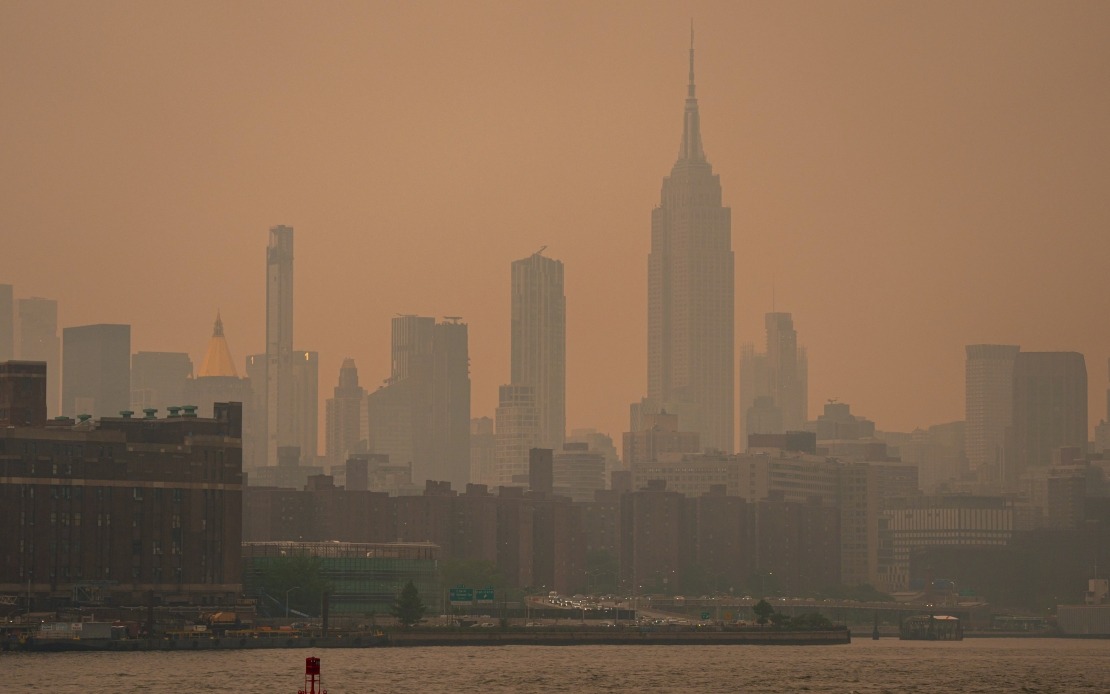
Mexican President Claudia Sheinbaum encountered significant travel complications on her way to attend Sunday's Argentina-Spain World Cup final in East Rutherford, New Jersey, as smoke billowing across the border from Canadian wildfires created hazardous air conditions over New York. The disruption underscores the widening reach of climate-related environmental challenges affecting the region, with transnational air quality issues now constraining even high-level diplomatic movements.
Sheinbaum's original itinerary called for a Saturday flight from Cancún to New York, but the journey was first delayed by two hours due to deteriorating atmospheric conditions. As smoke from ongoing Canadian wildfires accumulated over the New York metropolitan area, aeronautical authorities ultimately cancelled the flight entirely, forcing the Mexican government to devise an alternative transport arrangement. The situation highlighted the immediate practical consequences of the wildfire crisis extending beyond Canada's borders into neighbouring territories.
Confronted with the cancelled commercial routing, Mexico's presidential office pivoted to using an aircraft operated by the country's Defence Ministry to transport Sheinbaum overnight into early Sunday. This emergency arrangement allowed her to reach the World Cup venue despite the environmental obstacles, demonstrating the operational flexibility available to state actors when standard transport channels become unavailable. The overnight journey represented a departure from typical presidential travel protocols, undertaken out of necessity rather than preference.
The timing of Sheinbaum's disrupted travel coincided with an unusual diplomatic invitation. United States President Donald Trump had extended a surprise invitation for the Mexican leader to join him at the final, transforming what might have been a routine sporting event attendance into a notable bilateral engagement. The gesture reflected evolving diplomatic overtures between the two nations, despite underlying tensions that have characterised their relationship in recent years.
The World Cup final venue itself carried symbolic weight for the three-nation tournament structure. The competition was co-hosted by Mexico, the United States, and Canada, with each contributing infrastructure and sporting infrastructure to the event. Trump's invitation for Sheinbaum to attend the New Jersey match alongside Canadian Prime Minister Mark Carney created an unusual trilateral leadership moment centred on a sporting fixture, bringing together leaders of all three host nations.
Mexico-US relations have remained strained over persistent disputes spanning trade arrangements and security concerns. These underlying disagreements had limited direct engagement between Sheinbaum and Trump since assuming their respective positions. Their only previous in-person meeting had occurred in Washington the previous December during the World Cup draw ceremony, a formal occasion that provided limited opportunity for substantive bilateral discussion.
The Canadian wildfire situation that disrupted Sheinbaum's travel reflects a broader pattern of North American environmental stress reverberating across borders. The smoke affecting New York originated from uncontrolled fires burning across Canadian territories, creating transnational air quality degradation that temporarily constrained international travel and affected public health across wide geographic areas. The incident illustrated how environmental crises operate without regard to political boundaries.
From a Southeast Asian perspective, the incident serves as a cautionary precedent regarding climate-related disruptions to diplomatic and governmental movements. As wildfire seasons intensify and weather patterns become more volatile across the region, neighbouring countries from Indonesia to Thailand face analogous risks of smoke-related disruptions affecting transportation networks and bilateral engagement opportunities. The Mexican example demonstrates how environmental factors increasingly demand contingency planning in high-level governmental operations.
The deployment of Mexico's Defence Ministry aircraft represented pragmatic crisis management, yet it also highlighted the logistical vulnerabilities of international diplomacy when environmental conditions deteriorate rapidly. Sheinbaum's ability to ultimately attend the World Cup final through alternative arrangements underscored both the determination of state actors to fulfill diplomatic commitments and the adaptability required in an era of increasing climate variability.
The broader context extends beyond the immediate inconvenience of rescheduled travel. The World Cup itself, as a trilateral endeavour involving three North American nations, had already navigated substantial planning complexities given regional geopolitical dynamics. The environmental disruption added an unscripted complication to an event intended to symbolise continental cooperation and shared sporting heritage, while simultaneously demonstrating how external environmental factors can impose unexpected constraints even on carefully orchestrated international moments.
For observers across the Asia-Pacific region, the incident offers instructive lessons about climate resilience and cross-border environmental governance. As Southeast Asian nations increasingly host large-scale international events and expand diplomatic engagements, the potential for wildfire smoke, haze, or other transnational environmental hazards to disrupt governmental travel and scheduled activities warrants heightened preparation and contingency planning at both bilateral and multilateral levels.

