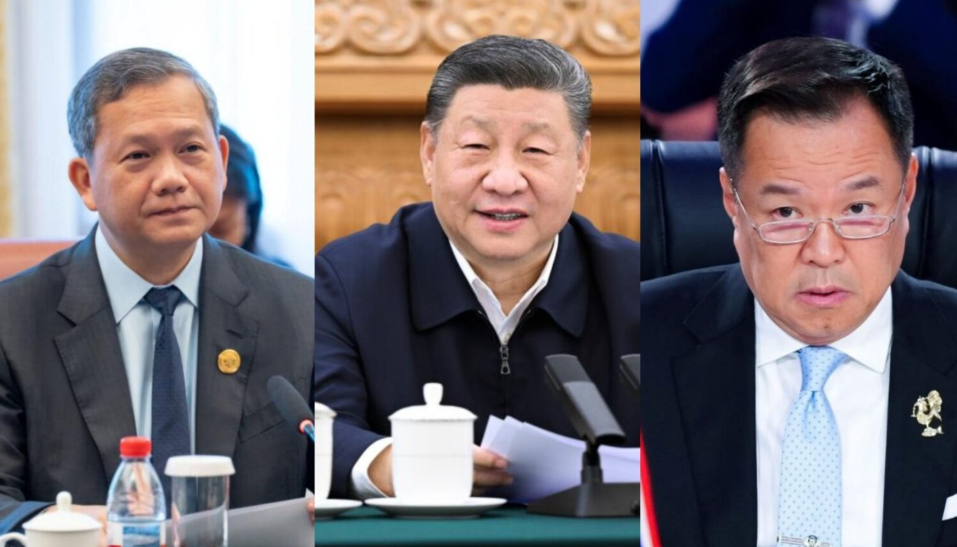
Cambodia and Thailand's prime ministers are heading to Shanghai in mid-July for the World AI Conference 2026, presenting a diplomatic opportunity that analysts believe could unlock progress on their intractable border dispute. Hun Manet and Anutin Chanvirakul have accepted invitations from Chinese President Xi Jinping to attend the opening session of the WAIC on July 17, marking their first appearance together since a handshake at an Asean forum in Hanoi produced no substantive discussion of their territorial tensions. The question looming over the Shanghai visit is whether China, a major trading partner and strategic ally to both nations, will seize this moment to push for meaningful negotiations rather than orchestrating ceremonial photo opportunities.
Mamet will travel with a substantial delegation including Foreign Minister Prak Sokhonn, Defence Minister Tea Seiha, and Sun Chanthol, first vice-chairman of Cambodia's Council for the Development of Cambodia. Thailand's Anutin is expected to bring his own foreign minister, Sihasak Phuangketkeow. Both leaders will secure separate meetings with Xi and Chinese Premier Li Qiang, creating multiple forums where border discussions could theoretically gain traction. Phnom Penh's official narrative frames the visit as an opportunity to deepen the Cambodia-China Comprehensive Strategic Partnership and strengthen what officials describe as an all-weather friendship. Bangkok similarly emphasises strengthening bilateral ties through the Thailand-China Comprehensive Strategic Cooperative Partnership. Yet behind this diplomatic language lies an uncomfortable reality: the two nations have not sat down at the negotiating table since December, when they endorsed the Chinese-brokered Fuxian Consensus.
The border dispute represents one of Southeast Asia's most intractable regional problems, with thousands of Cambodian civilians displaced from their homes by Thai military occupation of disputed territory. Some 20,000 Cambodian residents remain unable to return to their communities, a humanitarian dimension that adds urgency to calls for resolution. Despite international attention and multiple diplomatic initiatives, progress has stalled as fundamental disagreements persist over demarcation lines, sovereignty claims, and the political will required to implement agreements already on paper. The Fuxian Consensus, reached last December through Chinese mediation, outlined a framework for peaceful resolution, yet neither side has taken decisive steps to operationalise its provisions.
Kin Phea, director of the Royal Academy of Cambodia's International Relations Institute, identifies the core challenge: those nominally responsible for implementing agreements in Thailand lack the actual authority to enforce them. The Thai military, despite civilian government commitments, continues to deploy forces in disputed areas and ignores bilateral accords. Phea argues that this structural problem—the gap between Thailand's civilian leadership promises and military actions on the ground—cannot be resolved through ceremonial meetings alone. Instead, he contends that China must move beyond its traditional quiet diplomacy and adopt a more assertive mediatory posture, actively pressuring both governments to honour their commitments and return to the Joint Boundary Commission negotiating table.
Phea's prescription for Chinese involvement carries particular weight given Beijing's undisputed leverage over both capitals. As the leading trade partner and strategic investor for Cambodia, and a crucial economic and security partner for Thailand, China possesses the carrots and sticks necessary to incentivise compliance with diplomatic agreements. The December consensus itself emerged through Chinese initiative, suggesting that when Beijing prioritises an issue, movement becomes possible. Whether Shanghai will represent a catalyst for renewed pressure remains uncertain, particularly given that both countries have framed the visit purely in terms of economic and technological cooperation rather than conflict resolution.
The contrast between rhetoric and reality highlights a recurring pattern in Southeast Asian diplomacy. Regional forums frequently produce handshakes and joint statements while underlying disputes fester unresolved. The Asean Future Forum in Hanoi in early June exemplified this dynamic—both leaders appeared together, shook hands for photographers, yet neither side initiated substantive border discussions. Such moments often serve as safety valves, allowing tensions to be acknowledged without requiring difficult political choices. Shanghai risks becoming another such occasion unless the Chinese hosts choose to redirect the conversation toward serious negotiation.
For Malaysia and other Southeast Asian nations, the Cambodia-Thailand standoff carries broader implications. Unresolved border disputes undermine regional stability, tie up military resources, and create humanitarian costs that destabilise the wider neighbourhood. The presence of displaced populations and militarised borders complicates trade flows and security cooperation across the region. Malaysia, as an Asean member with its own maritime boundary considerations, has strategic interest in seeing the bloc develop effective conflict resolution mechanisms. A breakthrough in Shanghai would signal that Chinese-brokered mediation can deliver concrete results, potentially establishing a template for other regional disputes.
Phea emphasises that Thailand must withdraw military forces from occupied Cambodian territory and commit to undelayed engagement with the Joint Boundary Commission as prerequisites for genuine progress. These demands are not new, but their repeated articulation suggests frustration with the slow pace of implementation. The December consensus explicitly recognised these obligations, yet enforcement mechanisms remain weak. Without a credible threat of consequences for non-compliance, both sides may continue calculating that existing arrangements—despite their humanitarian costs—serve their respective interests better than settlement would.
The Shanghai conference thus represents a crucial test of whether regional powers can move beyond symbolic diplomacy toward substantive problem-solving. China's approach will reveal much about its preferred strategy: does Beijing view Southeast Asian stability as worth investing diplomatic capital to achieve, or does it accept low-level conflict as preferable to the complications of imposed settlements? For Hun Manet and Anutin, Shanghai offers an opportunity to demonstrate political will for resolution, though both leaders face domestic constraints and institutional resistance that complicate their flexibility. The World AI Conference may prove an unlikely venue for breakthrough negotiations, yet the concentration of regional leaders in one location creates possibilities that should not be squandered.

