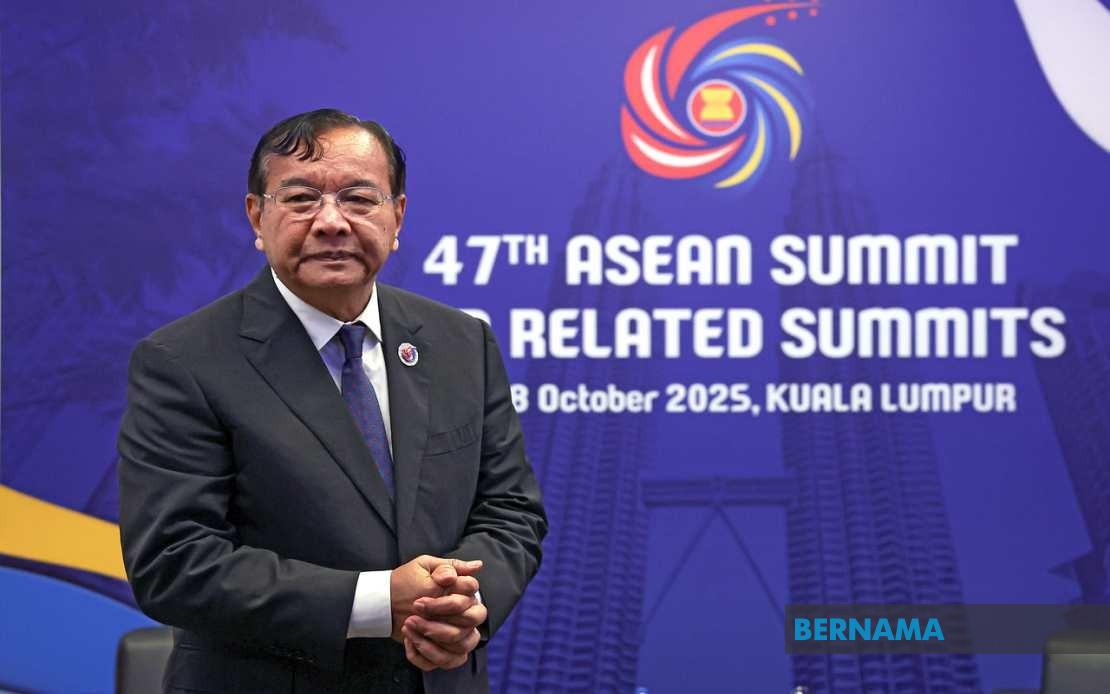
Cambodian Deputy Prime Minister and Foreign Minister Prak Sokhonn has arrived in Malaysia for a significant two-day official visit, marking a watershed moment in regional diplomacy as the two nations prepare to resurrect their Joint Commission for Bilateral Cooperation following two decades of dormancy. The third JCBC meeting will be co-chaired by Sokhonn and Malaysia's Foreign Minister Datuk Seri Mohamad Hasan on Tuesday in Kuala Lumpur, representing a deliberate effort by both governments to reinvigorate institutional mechanisms that have long fallen silent.
The revival of this bilateral commission carries symbolic weight that extends beyond routine diplomatic engagement. Having last convened in Siem Reap in 2006, the two-decade interval reflects a period of stalled institutional momentum between the Southeast Asian neighbours. The timing of this resumption comes strategically ahead of 2027, when Malaysia and Cambodia will commemorate seven decades of diplomatic relations, suggesting both capitals view this juncture as opportune for substantive renewal of their partnership framework.
Prior to the formal JCBC proceedings, Sokhonn is scheduled to meet Prime Minister Datuk Seri Anwar Ibrahim on Monday for a courtesy call. These discussions will provide an opportunity for the two leaders to reaffirm longstanding bilateral commitments and explore areas of mutual concern, setting the tone for more detailed technical-level conversations that will follow. The Prime Minister's engagement signals Malaysia's political commitment to elevating Cambodia relations at the highest decision-making level.
The economic dimension of Malaysia-Cambodia ties offers compelling evidence of why reviving institutional dialogue structures makes pragmatic sense. Bilateral trade expanded robustly to RM5 billion (US$1.17 billion) in 2025, a remarkable 27.4 percent year-on-year increase that reflects substantial commercial momentum. Malaysian exporters shipped RM4.13 billion (US$970 million) worth of goods to Cambodia, while Malaysian importers purchased RM880 million (US$200 million) in Cambodian products, indicating a trade relationship that benefits both economies and creates incentives for deeper cooperation.
Malaysia's investment footprint in Cambodia underscores the country's economic significance as a development partner within Southeast Asia. With cumulative foreign direct investment reaching US$3.20 billion (RM13.07 billion) across 162 registered projects as of 2024, Malaysia ranks as the third-largest foreign investor in Cambodia, trailing only China and Vietnam. This substantial capital commitment represents not merely financial transactions but reflects Malaysian businesses' confidence in Cambodia's economic trajectory and regional integration prospects. The concentration of Malaysian investment across 162 distinct projects suggests diversification across multiple sectors rather than dependence on single industries.
The JCBC mechanism itself serves a crucial coordinating function for bilateral relations that extends beyond trade statistics. By establishing a formal institutional architecture where both nations commit to regular dialogue on key cooperation areas, the commission creates accountability structures and tracks progress on previously identified priorities. The Agreed Minutes that both foreign ministers will sign upon conclusion of Tuesday's meeting will articulate specific outcomes and renewed commitments, providing benchmarks against which future progress can be measured.
For Malaysia, Cambodia's renewed diplomatic engagement aligns with broader Southeast Asian engagement strategies emphasizing intra-regional cooperation and development partnerships. Cambodia's position as a gateway to mainland Southeast Asia grants it strategic significance beyond its immediate bilateral relationship with Malaysia. Enhanced Malaysia-Cambodia institutional cooperation potentially facilitates expanded connectivity initiatives, investment corridors, and people-to-people exchanges that benefit the wider Asean community. The visit thus represents not merely bilateral interest but reflects Malaysia's commitment to deepening ties across the broader region.
Cambodia, meanwhile, benefits from Malaysia's technical expertise, capital availability, and manufacturing capabilities. The 27.4 percent growth in bilateral trade demonstrates that Cambodian producers have successfully accessed Malaysian markets and that Malaysian investors perceive genuine economic opportunities within Cambodia's evolving economy. As Cambodia pursues its development agenda and regional integration objectives, maintaining strong partnership ties with established economic actors like Malaysia becomes increasingly valuable for technology transfer, skills development, and market access.
The two-decade hiatus in JCBC meetings underscores how institutional mechanisms can atrophy without sustained attention, even among neighboring countries sharing historical ties and geographic proximity. The deliberate decision to resurrect this framework reflects both nations' recognition that formal structures facilitate cooperation more effectively than ad-hoc engagement. Regular institutionalized dialogue enables identification of emerging challenges, coordination on regional issues, and development of integrated responses to shared concerns affecting both countries.
Looking forward, the successful convening of the third JCBC meeting sets foundation for establishing regular review cycles and action-oriented cooperation frameworks. Both nations face common challenges including regional security considerations, climate adaptation, infrastructure development, and digital economy transformation. Establishing working groups within the JCBC structure dedicated to these thematic areas would enable officials and technical experts to collaborate systematically rather than sporadically, yielding more substantive outcomes than episodic bilateral consultations achieve.
The visit carries implications extending beyond the bilateral relationship into broader Asean dynamics and Southeast Asian regional stability. Malaysia-Cambodia cooperation strengthens the institutional fabric of Asean by demonstrating member states' commitment to deepening connections and resolving historical gaps. As geopolitical competition intensifies across the Indo-Pacific region, intra-Asean solidarity through strengthened bilateral relationships becomes increasingly significant for regional cohesion and autonomous decision-making capacity.
The Sokhonn visit ultimately represents a significant recalibration in Malaysia-Cambodia relations, transforming what had become dormant institutional pathways into active mechanisms for advancing shared interests. The convergence of political will, economic opportunity, and strategic timing suggests this revival possesses genuine staying power rather than constituting merely ceremonial gesture. Malaysian and Cambodian officials appear committed to demonstrating that after two decades of silence, the Malaysia-Cambodia bilateral relationship has genuinely entered a new phase of substantive institutional engagement.

