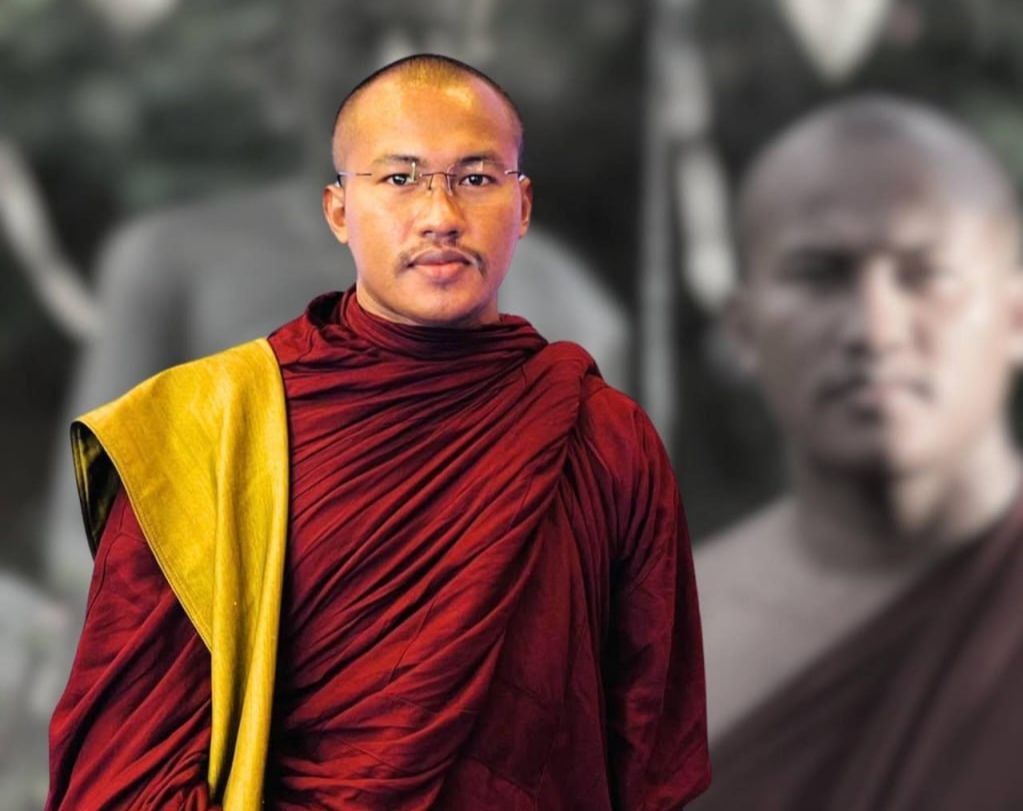
A coalition of fifty civil society organisations, labour unions, and community groups across Cambodia has issued a forceful joint statement demanding the immediate release of Chea Vuthy, a 27-year-old former monk and citizen journalist convicted on August 19 for comments he made in a private online messaging group. The Phnom Penh Municipal Court sentenced Vuthy to 18 months in prison and fined him two million riel, approximately $500, under Articles 494 and 495 of the Criminal Code on incitement charges. The case has become a flashpoint for concerns over freedom of expression in the Southeast Asian nation, with the convicting authorities appearing to treat private communications among a small group of around twenty people as a matter warranting criminal prosecution and imprisonment.
Vuthy's alleged transgression centred on a single comment he posted to a private Messenger group in August 2025 regarding provincial territories and displacement of people affected by fighting along the Cambodia-Thailand border. According to the joint statement released on August 20 by the Cambodian League for the Promotion and Defense of Human Rights (LICADHO), Vuthy acknowledged authoring the comment but consistently denied making it public. The prosecution's case relied entirely on this one private message as evidence, a fact that has drawn particular criticism from the organisations calling for his exoneration. This narrow evidentiary foundation raises fundamental questions about the threshold for criminal liability in Cambodia's current legal environment, where the line between private discussion and punishable speech appears to have blurred considerably.
The fifty signatory groups argue that a message confined to a small private group cannot reasonably justify an eighteen-month prison sentence under any legitimate legal standard. They contend that the conviction violates Cambodia's obligations under the International Covenant on Civil and Political Rights (ICCPR), to which the kingdom is a signatory state. Article 19 of the ICCPR permits restrictions on expression only when they are provided by law, pursue a legitimate aim, and satisfy tests of necessity and proportionality. The organisations assert that Vuthy's sentence fails all three prongs of this test, as the reach and potential impact of a private message exchanged among such a confined circle cannot reasonably be construed as meeting legal thresholds for incitement. This argument carries significant weight in international human rights law and presents a formidable legal challenge to the conviction.
The timing and context of Vuthy's prosecution form part of a broader pattern of criminal cases emerging from Cambodia's political environment. The Cambodian human rights community has documented multiple convictions stemming from social media posts discussing the Cambodia-Thailand border dispute, suggesting a strategic use of incitement laws to silence voices critical of government policies or border handling. In May, a chef received an identical eighteen-month sentence for border-related comments on social media. The following month, a deputy school director was sentenced to two years in prison for similar conduct. These parallel prosecutions indicate a coordinated or at least consistent approach by prosecutors to treat border-related speech—whether public or private—as a matter of national security warranting severe criminal penalties.
Vuthy's personal journey adds another dimension to the case. At the time his legal troubles emerged, he was serving as a Buddhist monk at Wat Por Veal pagoda in Battambang province, where plainclothes provincial police arrested him in April. The authorities subsequently forced him to leave the monastic order, a procedure known as defrocking that carries profound spiritual and social consequences within Cambodian culture. He was placed in pretrial detention and remains confined at Phnom Penh's Police Judicial Prison. Beyond his monastic duties, Vuthy worked as a citizen journalist, regularly documenting and commenting on environmental degradation, deforestation, and human rights issues. His arrest and conviction thus target someone actively engaged in accountability journalism and civil society participation—precisely the categories of persons whose freedom of expression proves essential to any functioning democratic system.
The judicial process itself has offered Vuthy limited avenues for relief. His lawyer, Em Chantha, promptly indicated an intention to appeal the conviction, arguing that the evidence against his client falls short of legal requirements and that comments within a Messenger group cannot meet the legal threshold for incitement charges. However, when Vuthy sought bail in June, the Phnom Penh Appeal Court rejected his request, effectively ensuring his continued imprisonment pending any appellate review. This sequence of events—swift conviction, bail denial, and imprisonment—leaves Vuthy with severely constrained options for contesting his sentence while remaining incarcerated. The signatory organisations contend that this process has failed to accord Vuthy the protections guaranteed by Cambodia's own constitutional guarantees of freedom of expression and the recommendations made during Cambodia's fourth Universal Periodic Review before the United Nations Human Rights Council.
The coalition backing Vuthy's release encompasses a broad spectrum of Cambodian civil society. Signatories include major human rights organisations such as the Cambodian Center for Human Rights (CCHR), the Cambodian Human Rights and Development Association (ADHOC), and the Cambodian Center for Independent Media (CCIM). Journalists' associations including the Cambodian Journalists Alliance Association (CamboJA) and the Overseas Press Club of Cambodia (OPCC) have joined the effort, reflecting particular concern within the media community about implications for press freedom. Labour unions such as the Center for Alliance of Labor and Human Rights (CENTRAL) and the Committee for Free and Fair Elections in Cambodia (COMFREL) have added their voices, indicating that the case resonates across multiple constituencies concerned with democratic governance and human rights protection. The breadth of this coalition underscores the depth of concern among organised civil society regarding the direction of Cambodia's legal system.
The Cambodian government has sought to deflect criticism by invoking principles of judicial independence. Ministry of Information spokesperson Tep Asnarith stated that the ministry, as part of the executive branch, does not interfere in judicial proceedings and that courts exercise independent authority over their rulings. He acknowledged Vuthy's right to legal representation and appeal, while urging civil society organisations to assess cases with balance and accuracy. This response sidesteps the substantive human rights questions raised by the case, instead relying on formal assertions about judicial independence that, in Cambodia's political context, carry limited credibility given the well-documented alignment of courts with executive preferences on politically sensitive matters.
The case presents implications extending well beyond Vuthy's individual fate. Private messaging platforms serve as spaces where citizens engage in frank discussion, share concerns, and develop informed opinions on matters of public importance. When governments prosecute individuals for private messages on border disputes or other sensitive topics, the chilling effect extends far beyond the convicted person. Citizens become reluctant to engage in candid discussion even in ostensibly private spaces, fearing that algorithms, platform cooperation with authorities, or informants within messaging groups could expose them to criminal liability. Malaysia and other Southeast Asian nations watching Cambodia's jurisprudence will note how broadly incitement laws can be applied when political will exists. For Malaysian readers, the Cambodian experience serves as a cautionary example of how criminal codes nominally protecting national security can metastasise to encompass private expression entirely divorced from any genuine public advocacy or incitement to violence.
Vuthy's case also illuminates the particular vulnerability of citizen journalists and human rights activists in the region. Individuals working outside traditional institutional frameworks face heightened exposure to selective prosecution, as authorities can target their activism through broadly interpreted criminal statutes. The combination of Vuthy's monastic status, his citizen journalism work, and his eventual prosecution for border commentary reflects a pattern of pressure against those attempting to document and discuss matters the state prefers to control. For Southeast Asian civil society more broadly, the case demonstrates how quickly and dramatically freedom of expression can contract when legal tools exist and political incentives align to deploy them.
The appeal process will determine whether Vuthy can obtain relief through Cambodia's judicial system, but the broader question concerns the trajectory of Cambodia's legal and political environment. The coalition of fifty organisations has called for authorities to review the case in accordance with Cambodia's domestic and international human rights obligations and to permit Vuthy to resume his work and social activities. Whether the government will heed these calls remains uncertain, particularly given the pattern of similar prosecutions targeting border-related speech across the judicial system. For now, Vuthy remains imprisoned in Phnom Penh's Police Judicial Prison, his case emblematic of the constraints on freedom of expression increasingly evident across Southeast Asia.

