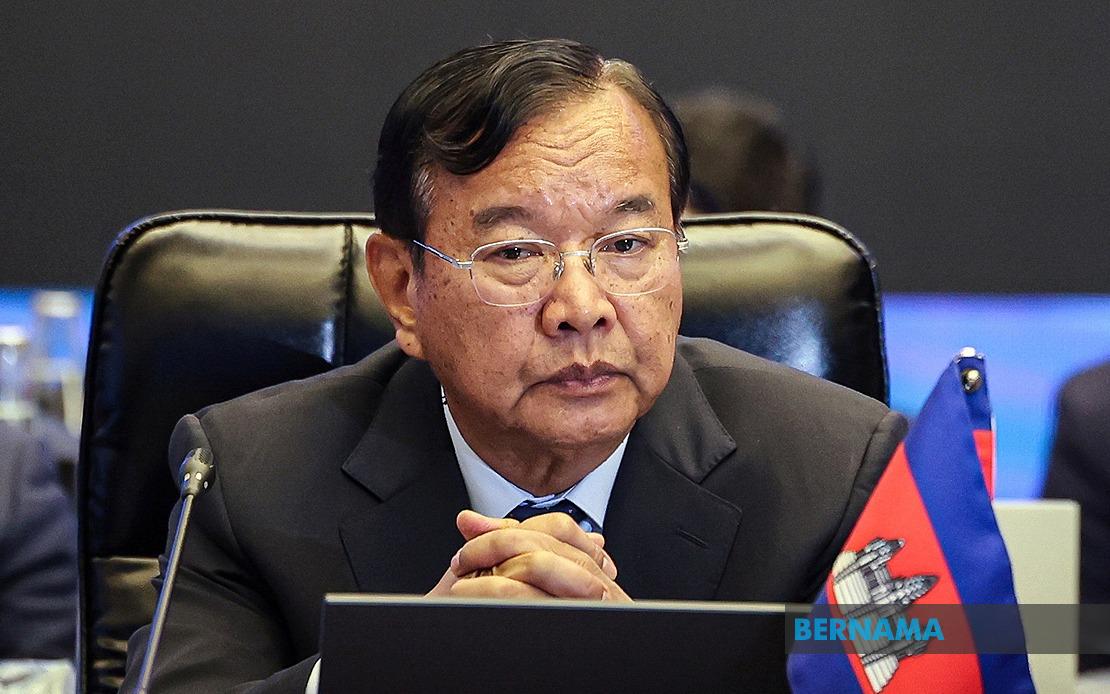
Cambodia's Deputy Prime Minister and Foreign Minister Prak Sokhonn is preparing to travel to Malaysia next week for high-level bilateral discussions aimed at reinvigorating the partnership between the two Southeast Asian neighbours. The official visit, scheduled to commence on August 3, represents a continuation of regular diplomatic engagement between Phnom Penh and Kuala Lumpur at the ministerial level.
Sokhonn's principal engagement during the two-day mission will centre on presiding over the third iteration of the Cambodia-Malaysia Joint Commission for Bilateral Cooperation in the Malaysian capital. This institutional mechanism serves as the primary framework through which the two governments coordinate on matters of mutual interest and evaluate progress made under existing accords. The meeting carries particular significance as it will provide an opportunity for both sides to take stock of implementation efforts following the second JCBC session.
The agenda for the joint commission meeting reflects an intention to conduct a thorough assessment of how Cambodia and Malaysia have progressed in fulfilling previously agreed commitments. Officials will examine the minutes from the preceding commission meeting to determine whether targets have been met and identify any obstacles requiring remedial action. Beyond this administrative review, the discussion will encompass the broader landscape of bilateral agreements concluded between the nations, ensuring that collaborative frameworks remain functional and responsive to evolving circumstances.
Looking forward, both delegations are expected to articulate new strategic directions for deepening cooperation. The joint commission serves as a vehicle for identifying sectoral opportunities—spanning trade, investment, education, security, labour, and cultural exchange—where the two countries can expand their footprint. By formalising concrete measures through the commission structure, Cambodia and Malaysia aim to translate political goodwill into tangible collaborative outcomes that benefit their respective populations.
For Malaysia, hosting this meeting reflects its broader engagement strategy within ASEAN, where Cambodia holds membership and represents a significant partner in efforts to enhance regional stability and prosperity. The timing of the visit also aligns with Malaysia's diplomatic calendar and its commitment to maintaining robust ties with all ASEAN colleagues. From Cambodia's perspective, the engagement underscores Phnom Penh's prioritisation of strengthening relationships with key regional and economic partners as it pursues development objectives and regional positioning.
During his stay in Kuala Lumpur, Sokhonn will undertake a series of bilateral meetings with senior Malaysian officials. He is scheduled to meet with Malaysian Foreign Minister Datuk Seri Mohamad Hasan, providing an opportunity for the two diplomatic chiefs to engage in substantive dialogue on matters of bilateral and regional concern. The bilateral format allows for more flexible discussion of sensitive issues and shared priorities that may not require the formal structure of the joint commission framework.
A courtesy call on Prime Minister Datuk Seri Anwar Ibrahim forms another component of the Cambodian delegation's itinerary. Such protocol visits carry symbolic importance in diplomatic relations, signalling the seriousness with which both governments regard the partnership. They also provide an avenue for high-level leaders to exchange perspectives on strategic matters and chart the overall direction of bilateral engagement at the apex of both governments.
The characterisation of Cambodia-Malaysia relations as "robust and multifaceted" reflects the diversified nature of ties spanning multiple domains. These countries share maritime boundaries, participate in joint regional forums, and maintain people-to-people connections through diaspora communities and tourism. Economic interdependencies have grown over recent decades, with Malaysian investment and business presence in Cambodia expanding alongside growing Cambodian labour migration to Malaysia in certain sectors.
From a Malaysian perspective, the visit holds relevance for how it demonstrates Kuala Lumpur's balanced approach to ASEAN engagement. Malaysia maintains substantive relationships across the bloc while avoiding alignment with any particular grouping, a positioning that underpins its credibility as a mediator on regional issues. The attention given to the Cambodia relationship affirms this inclusive approach.
For readers across Southeast Asia, this diplomatic engagement illustrates how ASEAN states maintain ongoing institutional dialogue even amid shifting regional geopolitics and global uncertainties. The joint commission model, replicated across numerous bilateral pairings within the bloc, represents a distinctive regional approach to managing state relations through structured, regularised exchanges rather than episodic encounters. This institutionalisation provides continuity and reduces transaction costs in diplomatic relations.
The outcomes of the third JCBC meeting will likely be documented in joint statements or minutes that outline agreed priorities for the coming period. Such documents typically identify working groups, timelines for implementation, and mechanisms for monitoring progress. Should the delegations agree on significant new initiatives—whether in trade facilitation, labour cooperation, security coordination, or people-to-people exchanges—these developments would merit subsequent reporting.
For Malaysian observers, the visit presents an opportunity to assess how bilateral mechanisms are functioning in practice and whether they are delivering measurable benefits to both populations. The quality of outcomes from such high-level meetings often determines whether they remain perfunctory exercises or evolve into substantive drivers of cooperative advantage.

