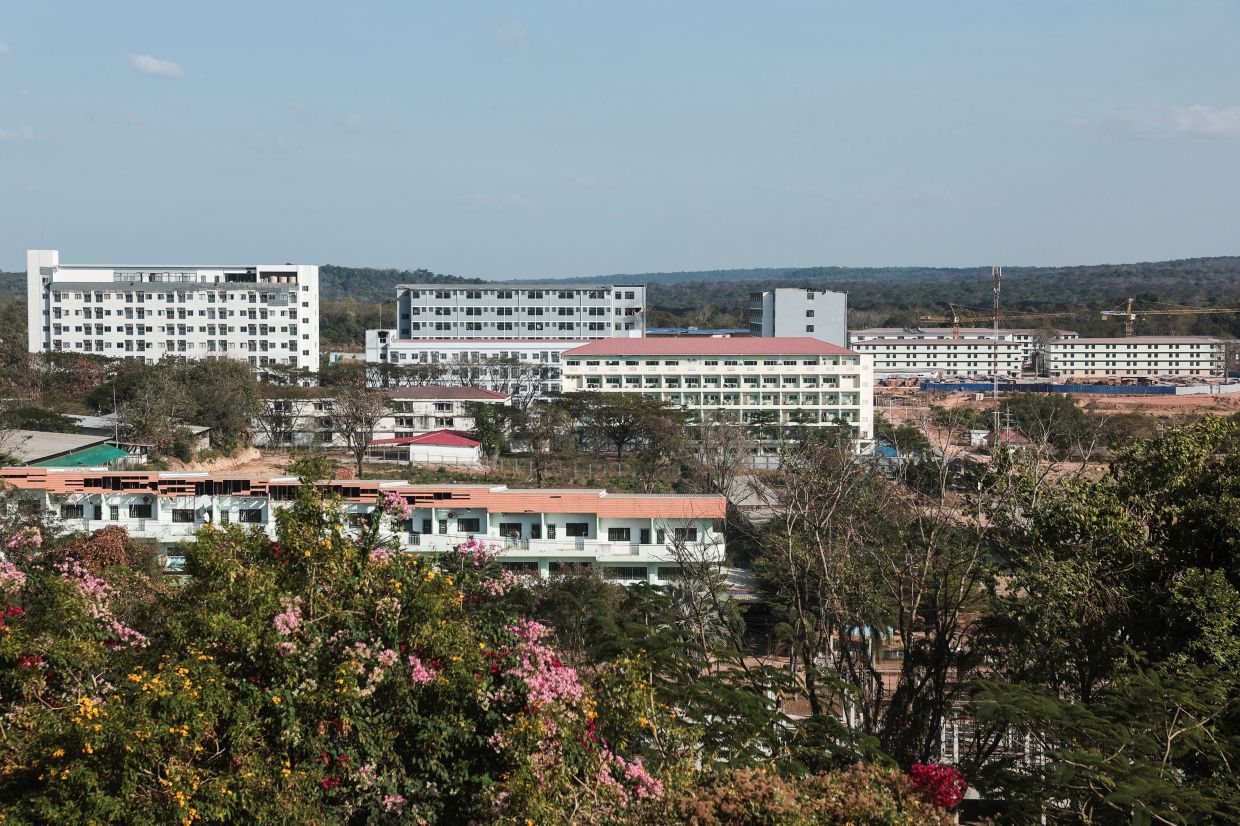
A comprehensive investigation by Reuters has exposed troubling connections between a major Cambodian gambling operation and an extensive criminal enterprise orchestrating scams and human trafficking on an industrial scale. The Royal Hill casino, situated near the Thai-Cambodian border in O'Smach, was the landlord of structures housing what authorities describe as a sophisticated fraud factory, according to documents and testimony gathered by the news agency. The compound, which sits metres from the Thai frontier, contained elaborately constructed backdrops designed to impersonate police stations and banking facilities from multiple nations—elaborate staging grounds used to perpetrate romance scams and law-enforcement impersonation frauds targeting victims across the globe. The revelation raises serious questions about the responsibilities of property owners in Southeast Asia's sprawling underground criminal networks, particularly when those owners maintain close ties to political and military establishments.
The rental agreement examined by Reuters, dated March 2024, shows that Royal Hill leased three buildings to a Chinese national for US$200,000 monthly—a rate substantially exceeding comparable commercial properties elsewhere in Cambodia. For context, a similarly sized mixed-use building in an upscale Phnom Penh neighbourhood was advertised for just US$25,000 per month during the same period, underscoring the inflated nature of the arrangement. The lease was signed by Seng Chanthy, then employed by the casino, on behalf of the property owner. This transaction appears to have been designed to accommodate the operational requirements of what Thai military officials and former workers have identified as a major criminal operation. The structures, enclosed by high fencing topped with razor wire, contained at least four buildings utilised for unlawful activities, according to Thai security personnel who now occupy the site following a brief military conflict in December.
The business entity behind Royal Hill is Lim Heng Group, controlled by a Cambodian tycoon whose wealth and political connections have positioned him as a significant player in the kingdom's gambling sector. Lim Heng maintains relationships with senior military officials and holds a royal title equivalent to a duke—a designation that reflects his standing within Cambodia's power structure. Records indicate he donated US$20,000 to Cambodia's military in the preceding year, demonstrating the depth of his institutional relationships. The connection between casino operations and criminal enterprises has become increasingly evident throughout Southeast Asia, where such gambling facilities often serve dual purposes: legitimate commercial ventures on the surface and money-laundering operations beneath. Experts note that casinos provide convenient mechanisms for converting illicit proceeds into ostensibly legitimate income, a concern that has drawn international scrutiny of the sector.
Neither Royal Hill nor Lim Heng Group has responded substantively to inquiries about their knowledge of criminal activities on the property. Reuters sent detailed questions via registered post, which was delivered but remained unanswered. The casino similarly declined to respond to telephone calls and emails regarding the scam and trafficking operations conducted within its confines. This silence is legally significant: Cambodian legal specialists, including Piseth Duch, an attorney specialising in business and human rights law, have noted that prosecutors can pursue charges against landlords if evidence establishes they possessed knowledge of criminal enterprise on their premises and permitted activities to continue. The threshold for liability does not necessarily require direct participation in the crimes themselves—awareness coupled with inaction may suffice under Cambodian law.
The property owner became aware of potential trafficking concerns by September 2024, when Lim Heng Group's representatives filed legal complaints against two Cambodian media outlets for reporting on the confinement of foreign nationals within the casino compound. Court documents dated September 16 indicate the complaints charged the publishers with incitement to discrimination, though the specific objectionable content was not detailed. One of the targeted journalists, Penn Nuon, confirmed the complaint's existence but subsequently removed the article following legal advice, seeking to resolve the matter. This manoeuvre—using legal pressure to suppress reporting about alleged crimes—has become a recognised tactic among those with resources to weaponise litigation, potentially obscuring evidence of wrongdoing and discouraging further investigation by media organisations operating with limited legal resources.
The scope of fraudulent operations across Southeast Asia underscores why the Royal Hill case warrants particular attention. The region has emerged as a global epicentre for orchestrated scamming, with primarily Chinese-led criminal syndicates operating what observers characterise as fraud factories. These enterprises detain trafficking victims—often deceived through false employment or romance scams—and coerce them into perpetrating financial crimes against targets worldwide. The United States government estimated that American citizens alone lost approximately US$10 billion to perpetrators operating from Southeast Asian bases during 2024. The victims of these operations experience profound trauma, subjected to physical confinement, psychological manipulation, and forced participation in criminal activity. The syndicate leaders, meanwhile, accumulate vast wealth that requires laundering, a function increasingly performed through casino operations and other hospitality enterprises throughout the region.
Cambodian legal scholar and academic Sophal Ear has observed that casino ownership in Cambodia frequently correlates with political connection and military affiliation. The nexus between gambling, organised crime, and political patronage creates an environment where accountability becomes difficult to establish and enforce. An investigation conducted by Amnesty International, drawing upon gambling regulator records and witness testimony, identified casino owners in direct operational control of at least a dozen scam centres, though Reuters has not independently verified these figures. The pattern suggests systematic integration of legitimate business enterprises with criminal infrastructure, rather than isolated incidents of landlord negligence. This integration implies tacit or explicit awareness at multiple institutional levels, from ownership to management to security personnel.
General Thatchai Pitaneelaboot of the Royal Thai Police confirmed that Chinese criminals orchestrated scamming operations at the Royal Hill location but declined to provide specific details regarding their identities or organisational structures. Thai security agency reports from 2024, which Reuters reviewed, establish Lim Heng's ownership of the property and document the criminal operations conducted there. The involvement of Thailand's military in seizing and currently occupying the compound reflects the international dimensions of the problem—Thai soldiers encountered evidence of scamming infrastructure while conducting operations in the border region. The military's decision to invite Reuters to document the fake police stations and banking offices served a dual purpose: providing international media coverage of the criminal operation whilst deflecting responsibility onto Cambodian authorities who might otherwise face pressure regarding the site's status and operations.
Cambodia's government has officially committed to eradicating scam centres and has taken some measurable steps toward this goal, including the extradition of casino owner and alleged scamming kingpin Chen Zhi to China and the passage of legislation specifically targeting online fraudsters. However, the official characterisation of Royal Hill as merely a hotel stands in sharp contradiction to the visual evidence broadcast globally depicting elaborate fake government offices and law enforcement facilities. Chhay Sinarith, a senior Cambodian minister responsible for combating online fraud, stated that the government remains committed to international cooperation while suggesting that Thai forces should return custody of seized locations to facilitate investigations. This position deflects responsibility whilst simultaneously implying that the Cambodian military or national police should be entrusted with sites that remain under Thai military control.
The broader context of Cambodian institutional weakness complicates efforts to achieve accountability. A Cambodian Human Rights Action Coalition representative noted that legal mechanisms exist to prosecute property owners who knowingly facilitate criminal enterprise, yet application of these provisions appears selective and inconsistent. Casinos controlled by politically connected individuals seem to operate with impunity, whilst less-protected enterprises face more rigorous enforcement. The Royal Hill case exemplifies this pattern: despite international media attention and documented evidence of large-scale human trafficking and fraud, no charges have been filed against Lim Heng Group or its representatives. The absence of accountability suggests either evidentiary insufficiency—difficult to credit given the documentation available to authorities—or institutional unwillingness to pursue politically connected individuals.
For Malaysia and other Southeast Asian nations, the Royal Hill situation offers cautionary lessons regarding regulatory oversight of the gambling sector and the potential for integration between legitimate business enterprises and transnational criminal networks. Malaysian authorities have invested considerable resources in combating human trafficking and online fraud, yet the sophistication of operations uncovered in Cambodia indicates that criminal enterprises continue evolving faster than regulatory responses can accommodate. The involvement of political and military elites in protecting such operations, whether through complicity or strategic silence, suggests that regional cooperation mechanisms must account for institutional corruption and competing political interests. Economic incentives for local elites to tolerate such operations—through rents, bribes, and other arrangements—must be directly addressed through transparent governance reforms and international pressure targeting individuals and entities facilitating these networks.

