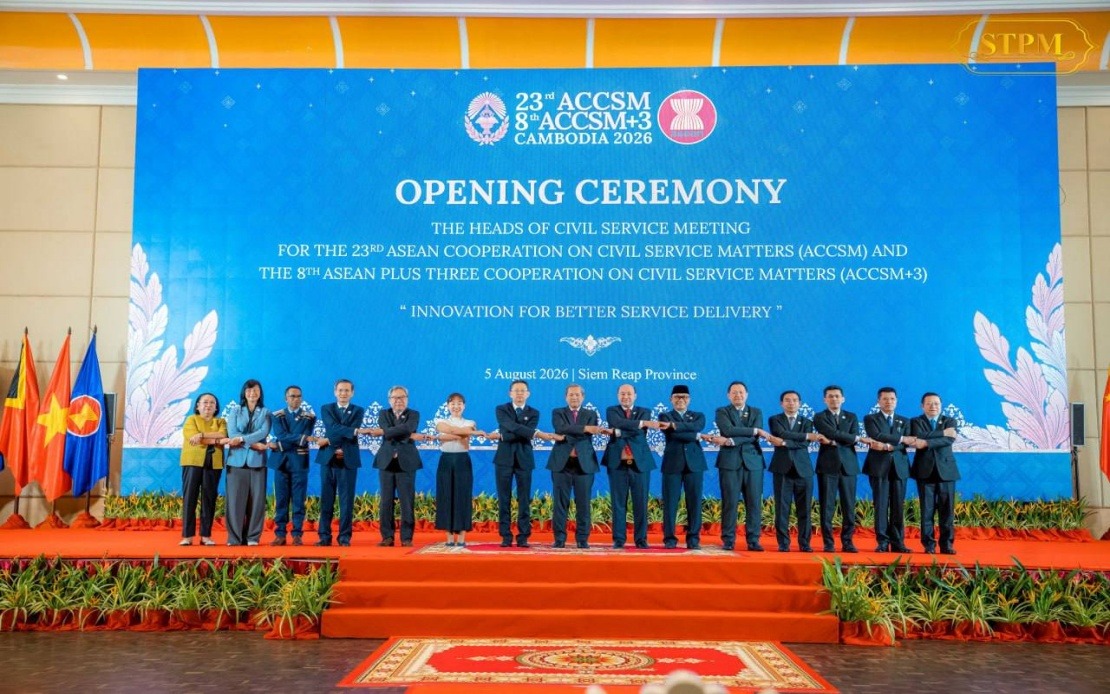
Cambodian Prime Minister Hun Manet has urged ASEAN member states to leverage artificial intelligence and digital innovation as catalysts for delivering superior public services that directly improve citizens' lives while simultaneously tackling the region's persistent development disparities. Speaking at a major civil service cooperation forum in Siem Reap, Hun Manet articulated a vision of digital transformation that transcends mere technological deployment, instead positioning innovation as a tool grounded in genuine public need and institutional readiness.
The remarks, delivered at the 23rd ASEAN Cooperation on Civil Service Matters and the 8th ASEAN Plus Three Cooperation on Civil Service Matters conference held from August 3-5, underscored a crucial tension within Southeast Asia's modernisation agenda. While governments across the region are increasingly investing in artificial intelligence and digital systems to modernise administrative machinery and enhance operational efficiency, the Cambodian leader stressed that technological advancement must remain tethered to human-centred outcomes rather than becoming an end in itself.
Hun Manet's emphasis on institutional capacity and human resources development reveals a pragmatic understanding of ASEAN's heterogeneous landscape. The bloc encompasses nations at vastly different stages of technological maturity, economic development, and administrative sophistication. A one-size-fits-all approach to AI adoption risks leaving less-developed member states behind or burdening them with expensive systems they cannot effectively maintain or operate. Instead, Hun Manet advocated for a calibrated pathway whereby each country embraces new technologies at a sustainable, contextually appropriate velocity.
This perspective carries particular resonance for Malaysia and other mid-tier ASEAN economies seeking to balance innovation ambitions with fiscal constraints and workforce capability gaps. The Cambodian premier's call for narrowing development gaps acknowledges that technological advancement itself can paradoxically widen inequalities if wealthier nations race ahead while others struggle with basic digital infrastructure or skilled personnel shortages. Sustainable adoption means building foundations—training programmes, institutional frameworks, and digital literacy initiatives—before deploying complex AI systems.
Beyond administrative efficiency, Hun Manet articulated a compelling case for innovation as a mechanism for regional cohesion and collective resilience. Southeast Asia confronts formidable transnational challenges—climate-related disasters, economic imbalances, and persistent poverty—that individual nations cannot unilaterally resolve. By positioning the ACCSM platform as a vital venue for knowledge exchange, policy harmonisation, and shared capacity-building, the Cambodian leader reframed digital innovation as fundamentally a collaborative enterprise rather than a competitive one.
This regional cooperation framework addresses a critical vulnerability in Southeast Asia's development trajectory. Without coordinated approaches to AI governance, data standards, and digital policy, member states risk fragmenting the ASEAN digital space, creating incompatible systems that impede cross-border service delivery, trade, and information flows. Joint capacity-building initiatives and mutual learning mechanisms help democratise access to expertise and best practices, particularly benefiting smaller or resource-constrained economies.
The timing of Hun Manet's intervention reflects accelerating momentum within ASEAN towards digital government transformation. Multiple member states have launched national AI strategies or digital government initiatives in recent years, recognising that technological modernisation is now central to competitive governance and economic development. However, enthusiasm for AI adoption sometimes outpaces deliberation about implementation challenges, including cybersecurity vulnerabilities, algorithmic bias, data privacy concerns, and workforce displacement in the public sector.
Hun Manet's insistence that innovation must strengthen collective resilience rather than merely improve internal efficiency suggests awareness of these multifaceted dimensions. A people-centred approach requires ensuring that AI-driven public services remain accountable, transparent, and accessible to all citizens regardless of technological literacy or digital connectivity levels. This is particularly salient across ASEAN, where urban-rural divides, income disparities, and varying internet penetration rates mean that digital-first service models risk excluding vulnerable populations.
The broader implications for Malaysia and the wider region extend to workforce transition planning. As public administrations increasingly automate routine functions through AI and digital systems, governments must proactively retrain civil servants and plan for employment shifts within the public sector. The Cambodian premier's emphasis on human resources and institutional capacity reflects this concern—technology must augment human capability rather than obsolete it without alternatives.
Furthermore, Hun Manet's call for harmonised policies within ACCSM mechanisms signals recognition that fragmented, nationally idiosyncratic approaches to AI governance and digital public services create inefficiencies for ASEAN as a functional bloc. Cross-border data flows, interoperable systems, and shared standards become increasingly important as the region deepens economic integration through initiatives like the ASEAN Framework Agreement on Services and ASEAN Digital Economy Framework.
The conference's theme, "Innovation for Better Service Delivery," encapsulates a philosophical reorientation: innovation's legitimacy derives from demonstrable improvements in how governments serve citizens, not from technological sophistication per se. This distinction matters enormously for public trust and democratic legitimacy. Citizens judge government effectiveness by tangible service outcomes—faster processing times, better healthcare access, improved educational resources—rather than by the elegance of underlying technological architecture.
As ASEAN navigates the transition from industrial-era governance models to AI-enabled administration, Hun Manet's framework offers a measured, inclusive approach that acknowledges both the transformative potential and the implementation complexities facing the region's diverse economies. Success will depend on whether member states can translate this vision into concrete capacity-building programmes, standards harmonisation, and equitable distribution of digital infrastructure investments across the bloc.

