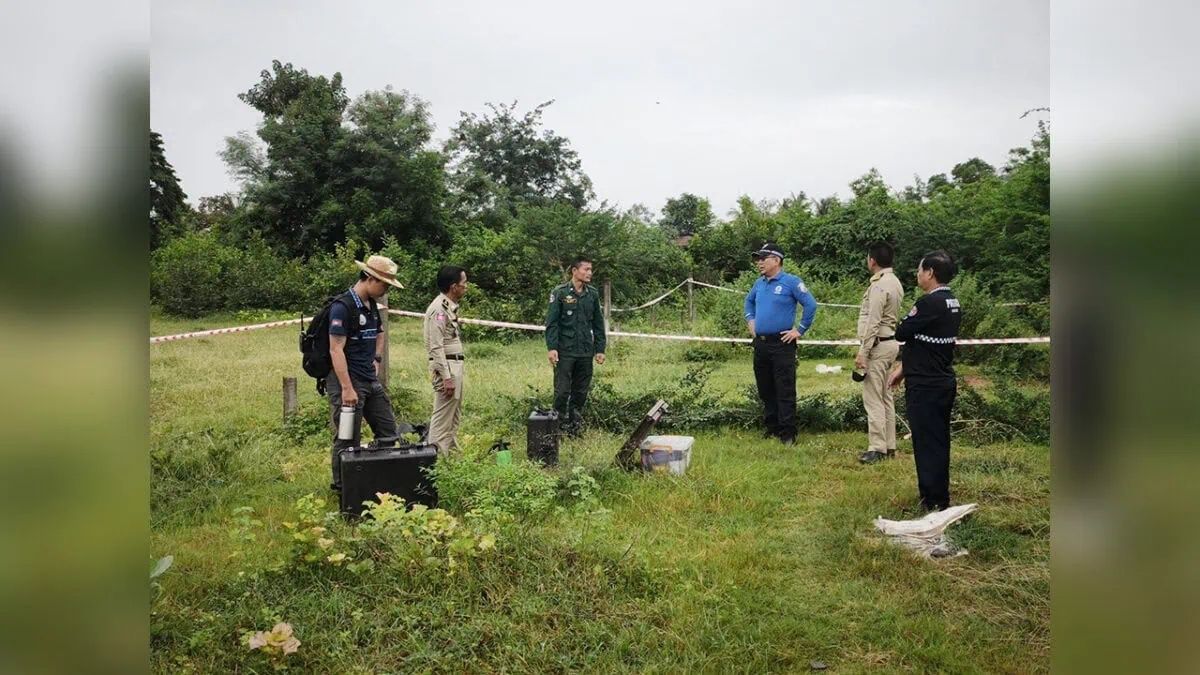
Cambodian law enforcement has opened parallel investigations into the deaths of two young children whose bodies were discovered on the same day in Banteay Meanchey province, marking a concerning development in child safety that has prompted coordinated action between national police and specialized protection agencies. The discoveries on July 28 triggered immediate mobilization of multiple investigative units, underscoring the gravity with which authorities are treating the incidents and the resources being committed to establishing what occurred.
The first body, belonging to a 15-month-old child, surfaced in a pond located in Mongkol Borei district at approximately 8 in the morning. Several hours later on the same day, authorities recovered the remains of a five-year-old child in Teuk Thla commune, whose disappearance had been reported three days earlier on July 25. The timing and proximity of the discoveries raised immediate questions about potential connections, though investigators quickly determined that the cases should be treated as separate incidents with their own distinct circumstances.
The Cambodian National Police moved swiftly to establish a comprehensive investigative framework, bringing together multiple specialized units to examine both cases. The Child Protection Unit, which operates as a dedicated body within the law enforcement structure, joined forces with provincial police authorities and the Department of Technical and Scientific Police operating under the Ministry of Interior. This multi-agency approach reflects standard protocol for serious crimes involving children and ensures that forensic expertise and child protection specialists coordinate their efforts from the outset.
Forensic teams conducted on-site examinations at both locations to gather physical evidence and establish preliminary timelines. While specific forensic findings have not been disclosed publicly, authorities determined following these examinations that both deaths would be formally classified and pursued as homicide investigations rather than accidents or natural causes. The classification carries significant implications for the investigative approach, as it commits resources toward identifying perpetrators and establishing criminal responsibility.
The Child Protection Unit clarified through an official statement on August 3 that despite the shared location and timeline, the two cases remain independent of one another. This distinction is important for investigative strategy, as it prevents possible misdirection that might occur if authorities incorrectly pursued a single perpetrator theory. Each incident presents its own investigative pathway, potential suspects, and possible motives, requiring separate resource allocation and specialized attention.
James McCabe, the director of the Child Protection Unit, issued a comprehensive statement affirming that both investigations would receive thorough, professional handling with all available resources deployed. He emphasized the commitment to pursuing investigations to their fullest extent and ensured that any individuals found culpable would face prosecution through Cambodia's judicial system. This public commitment serves both to reassure the public and to signal to potential perpetrators that consequences remain certain.
The involvement of high-level investigative bodies including the Minister of Interior's specialized department indicates that these cases have received elevated priority within the law enforcement hierarchy. The composition of the investigative team suggests that technical and forensic capabilities have been mobilized alongside traditional detective work, increasing the likelihood of evidence collection and analysis that might otherwise be unavailable in routine investigations.
For Malaysian and broader Southeast Asian readers, these incidents highlight ongoing challenges that affect child safety across the region. While Cambodia has made efforts to strengthen its child protection mechanisms and build institutional capacity through specialized units like the CPU, cases such as these underscore the complex realities facing developing nations in Southeast Asia as they work to establish robust investigative and prosecutorial systems. The presence of international cooperation frameworks and foreign experts within Cambodian institutions reflects a regional approach to capacity-building in critical areas.
The decision to withhold operational details during the investigation reflects established best practices in major crime investigations, where public disclosure of evidence or investigative direction can compromise outcomes or alert potential suspects. This approach, while limiting public information flow, protects investigative integrity and increases prospects for successful prosecution should culprits be identified.
The extension of formal condolences by both the national police and CPU to the families of the deceased children, combined with reaffirmation of commitment to securing justice, represents institutional acknowledgment of the tragedy and its impact on affected communities. Such gestures, while symbolic, carry importance in maintaining public confidence in institutions tasked with protecting vulnerable populations. The cases will likely remain under active investigation for extended periods as forensic analysis continues and leads are methodically pursued.
These homicides in Banteay Meanchey occur within a broader regional context of child protection challenges affecting Southeast Asia, where rural and border areas often face particular vulnerabilities due to limited resources and institutional reach. The rapid response and multi-agency coordination demonstrated in Cambodia's approach suggests an institutional will to prioritize such cases, though questions about investigative capacity and resource constraints in provincial areas remain persistent challenges facing the nation's law enforcement apparatus.

