Twelve U.S. states have mounted a significant legal obstacle to one of the entertainment industry's most ambitious consolidation efforts, filing suit in Oakland federal court to prevent Paramount's $110 billion acquisition of Warner Bros Discovery. The legal action directly undermines CEO David Ellison's strategy to position Paramount as a credible competitor against Netflix and Disney by combining two major content producers and distributors. What distinguishes this challenge is not merely its scale but its timing: it comes after the U.S. Department of Justice had already cleared the transaction, suggesting that state-level opposition is now becoming the primary battleground for deals that federal regulators have approved.
The plaintiffs—California, Arizona, Colorado, Connecticut, Massachusetts, Minnesota, Nevada, New Jersey, New Mexico, New York, Oregon, and Washington—contend that consolidation would fundamentally alter competitive dynamics across multiple segments of the entertainment ecosystem. According to their filings, the combined entity would command approximately 27 percent of theatrical film distribution in the United States, 30 percent of blockbuster film releases, and control 27 percent of the basic cable channel market. This concentration would place major networks including CNN, MTV, HGTV, Cartoon Network, and Nickelodeon under single corporate control, potentially giving Paramount-Warner Bros unprecedented leverage over how content reaches consumers.
The states' central argument rests on a straightforward economic premise: with reduced competition between two major studios, the surviving entity would gain pricing power across theatrical exhibition and cable television subscription services. Currently, Paramount and Warner Bros compete vigorously for prime release windows and premium screen placements at thousands of cinemas nationwide. The complaint emphasizes that eliminating this rivalry would permit the combined company to extract higher fees from theaters and distributors while simultaneously reducing the volume and quality of content, as there would be fewer alternative suppliers with comparable market reach. For consumers, this dynamic manifests as higher ticket prices and subscription costs; for theater owners and pay-TV providers, it means diminished negotiating leverage.
The lawsuit carries particular significance for Southeast Asian markets, where media consolidation trends in developed economies often presage similar patterns in the region. Malaysia's own media landscape, still characterized by relatively strong domestic players and regional competitors, could face pressure if American studios successfully vertically integrate content production with distribution infrastructure. The precedent set here—whether courts ultimately permit or block such mergers—will influence how regulators in developing economies approach similar consolidation proposals from multinational entertainment firms seeking to strengthen their competitive positions globally.
Paramount counters that the legal challenge fundamentally mischaracterizes competition within entertainment. The company argues that the states' lawsuit distorts established antitrust principles by ignoring the explosive growth of streaming platforms, which have fundamentally altered how audiences consume film and television content. According to Paramount's position, Netflix, Amazon Prime Video, Apple TV+, and other streaming services now represent the true competitive arena, making traditional metrics of theatrical and cable market share increasingly irrelevant. The company further committed to producing approximately 30 theatrical films annually post-merger, while simultaneously implementing cost reductions estimated at $6 billion through elimination of redundant infrastructure, marketing expenses, and corporate functions. However, the states characterize these production commitments as unenforceable promises that provide no meaningful safeguard against post-merger price increases or quality deterioration.
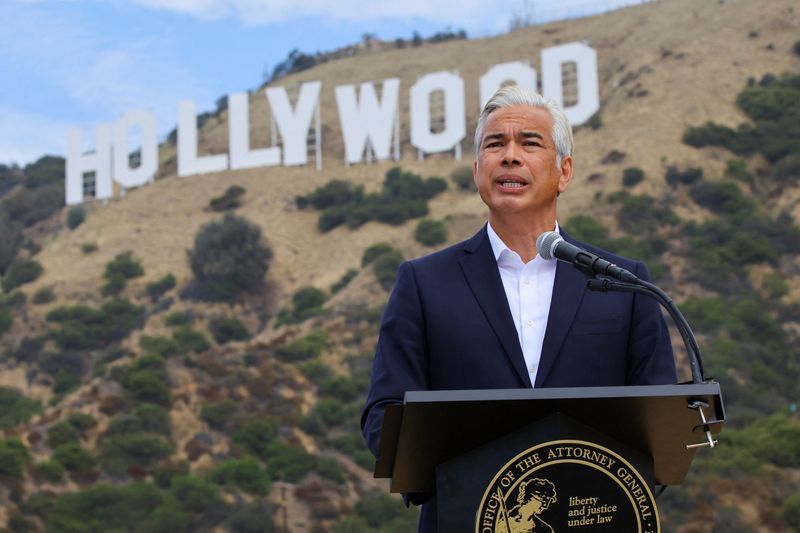
The political dimensions of this lawsuit merit close examination, particularly regarding how antitrust enforcement has become increasingly polarized along partisan lines. All 12 state attorneys general backing the challenge are Democrats, suggesting that opposition reflects broader Democratic skepticism toward major corporate consolidations under the Trump administration. California Attorney General Rob Bonta explicitly framed the case as part of a wider effort to counteract what he characterized as pro-business regulatory posture, noting that the Trump-era Department of Justice has greenlit numerous major mergers while he believes Democratic state attorneys general must serve as a counterbalance. Significantly, Republican state attorneys general who have cooperated with Bonta on other high-profile antitrust cases—particularly regarding Live Nation and Nexstar's acquisition of Tegna—have declined to participate here, raising questions about whether Republican-led states view this consolidation differently or prioritize other considerations.
The financial stakes of extended litigation are genuinely substantial for Paramount. The company faces approximately $650 million in quarterly termination fees owed to Warner Bros Discovery shareholders if the transaction fails to close by October, creating mounting pressure to resolve the legal challenge expeditiously. However, recent precedent suggests such resolution may take considerable time; comparable federal merger cases have averaged approximately eight months from legal challenge to judicial determination. Analysts warn that even if Paramount ultimately prevails, the accumulated delay costs—in management attention, financing uncertainty, stock price volatility, and the genuine possibility of deal renegotiation—could inflict hundreds of millions in financial damage. Paolo Pescatore of PP Foresight characterized this legal action as the most credible existential threat the merger has faced, suggesting that state-level challenges possess far greater capacity to derail transactions than previously anticipated.
The role of personal and political connections has been noteworthy throughout this saga. Paramount CEO David Ellison's father, billionaire Oracle co-founder Larry Ellison, has cultivated prominent relationships with Republican leadership, including President Donald Trump, relationships that critics suggest smoothed the path toward federal clearance. This dynamic has been frequently cited by Democratic state attorneys general as exemplifying how corporate political influence shapes regulatory outcomes, with antitrust enforcement increasingly weaponized as a counterweight to perceived executive favoritism. The states' legal action thus functions simultaneously as consumer protection litigation and as political pushback against what they characterize as a compromised federal regulatory process.
The broader implications extend beyond this single transaction to fundamental questions about how American antitrust law functions in the streaming era. Paramount's argument that theatrical and cable metrics are obsolete because streaming now dominates consumer behavior presents a genuine tension in contemporary competition policy. Should regulators evaluate merger impacts primarily through traditional supply-chain analysis—how many films reach theaters, at what cost—or through audience-level competition—are consumers truly facing more choice and better pricing? The states implicitly reject Paramount's framing, suggesting that control over theatrical exhibition and cable channels retains independent economic significance even in a streaming-dominated world, particularly because premium theatrical releases generate marketing momentum and revenue that support broader content ecosystems.
For investors and entertainment industry observers, the lawsuit introduces substantial uncertainty into the merger timeline and ultimate feasibility. Stock markets initially reacted positively—Paramount shares rose 2.9 percent and Warner Bros shares climbed 2.6 percent following the lawsuit announcement—suggesting that investors may have harbored doubts about the regulatory environment or viewed delay risk as already priced into valuations. Nevertheless, extended litigation creates genuine possibilities for deal collapse, particularly if financing commitments expire or if accumulated delays force renegotiation of economic terms that have become less attractive to either party.
The fundamental question animating this litigation transcends any individual transaction: whether American states possess the legal capacity and political will to block mega-mergers that federal regulators have approved, thereby creating a bifurcated enforcement regime where state and federal authorities operate at cross-purposes. If state attorneys general can successfully invoke antitrust law to veto transactions cleared by the Department of Justice, this would represent a significant shift in regulatory authority, potentially empowering state-level officials to second-guess federal decisions and imposing additional transaction costs on major corporate combinations. Conversely, if courts reject the states' legal theories, federal approval becomes effectively dispositive, reducing incentives for state participation in merger review.
For Malaysian policymakers and Southeast Asian regulators monitoring these developments, the litigation offers important lessons about the evolving sophistication of opposition to major media consolidations. As regional streaming services and content companies grow larger and pursue international expansion, they will increasingly encounter antitrust challenges that may be filed not merely by national competition authorities but by coordinated coalitions of subnational governments. Understanding how American courts balance traditional antitrust doctrine against arguments about competition in digital distribution channels will provide valuable guidance for jurisdictions attempting to craft regulatory frameworks appropriate to streaming-era economics. The outcome here could establish precedent affecting how media consolidation is evaluated globally.

