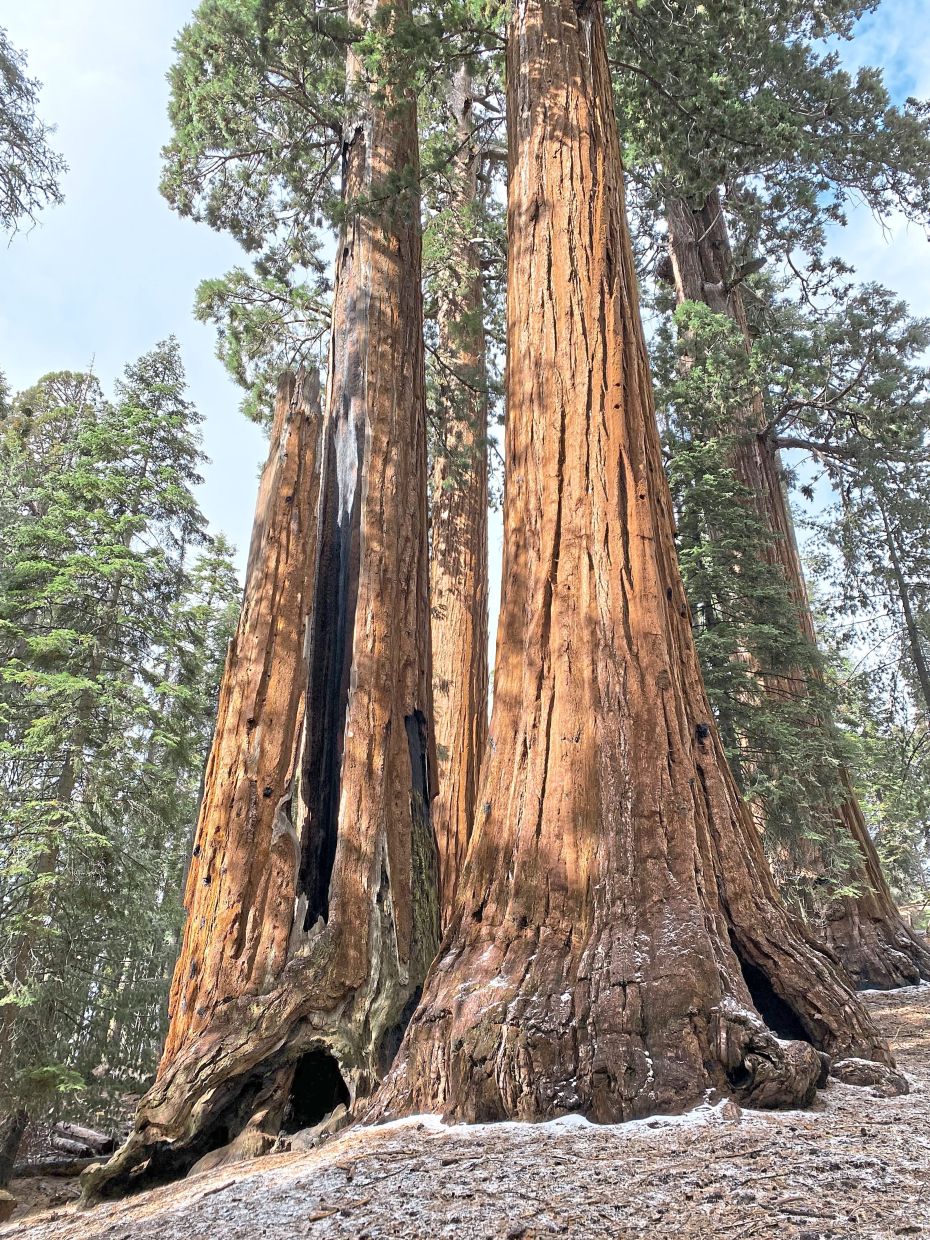
An unprecedented environmental crisis unfolded five years ago in California's Sierra Nevada mountains when catastrophic wildfires consumed thousands of giant sequoia trees—towering giants that can reach 91.5 metres and live for three millennia. The 2020 and 2021 fires that swept through Sequoia National Park, Sequoia National Forest and surrounding areas marked a turning point, claiming nearly one-fifth of the world's remaining giant sequoias and exposing the fragility of Earth's most massive living trees. The scale of destruction prompted a dramatic response: government agencies, scientists, park managers and environmental organisations have since banded together in an unprecedented partnership to prevent similar catastrophic losses. With another fire season now approaching, the coalition reports meaningful progress in their restoration efforts across California's 94 giant sequoia groves.
The partnership emerged from a collective recognition that the 2020-2021 fires represented something fundamentally different and more dangerous than fires of previous decades. Kevin Conway, state forests programme manager for Cal Fire, California's principal firefighting agency, described the emotional weight of witnessing these ancient giants perish despite human intervention efforts. The loss forced a reckoning within the forestry and conservation community: conventional fire-suppression tactics had inadvertently created the conditions for catastrophe. Since the partnership, formally known as the Giant Sequoia Lands Coalition, began its coordinated work in 2022, crews have systematically treated 44 of the 94 groves by thinning dense undergrowth and removing smaller tree species that serve as fuel for intensifying flames. Additionally, they have executed controlled burns using techniques refined by indigenous tribes over centuries and replanted more than 682,000 sequoia seedlings in severely burned zones. By May of this year, the coalition's work had reduced fire danger across 9,409 hectares—a substantial footprint that demonstrates the scale of intervention now considered necessary.
The Giant Sequoia Lands Coalition represents an unusual alignment of eight primary stakeholders: Cal Fire, California State Parks, the National Park Service, Tulare County, the Tule River Indian Tribe of California, UC Berkeley, the United States Forest Service, and the federal Bureau of Land Management. Nine additional organisations contribute scientific expertise, funding and logistical support. This coalition structure spans the geographic range where giant sequoias persist—a region stretching from Tahoe National Forest south to Bakersfield—encompassing land managed under different jurisdictions and ownership structures. The breadth of participation reflects recognition that the sequoia crisis cannot be solved by any single institution. Steve Mietz, formerly superintendent of Redwood National Park and now president of Save the Redwoods League, a San Francisco-based conservation group, characterised the restoration effort as a race against time, emphasising that future fires are inevitable but their severity remains preventable. His statement captures both the urgency of the moment and the coalition's underlying optimism that scientifically-informed intervention can shift outcomes.
Understanding why giant sequoias face unprecedented risk requires examining both their evolutionary history and the human interventions that have altered forest dynamics. Giant sequoias evolved alongside fire—their cones contain resin that requires heat to melt and release seeds, and their distinctive reddish bark can grow approximately 60 centimetres thick, functioning as natural insulation that protects living tissue within. Before European settlement and the Gold Rush of the 1850s, lightning strikes and carefully managed burns set by Indian tribes swept through the groves roughly every decade to two decades, maintaining forests in conditions that sequoias had adapted to over millions of years. Beginning approximately a century ago, however, aggressive fire suppression policies transformed forest composition fundamentally. By extinguishing fires, forest managers allowed accumulation of brush, smaller trees, and dead wood to unnatural densities. When wildfires now penetrate these overgrown groves, they burn with unprecedented ferocity, generating heat intense enough to kill even the most fire-adapted sequoias.
Climate change has amplified this vulnerability significantly. Kristen Shive, a fuels and forest specialist with the University of California Cooperative Extension Program at UC Berkeley, notes that elevated temperatures dry soils and vegetation, intensifying fire behaviour across the landscape. The droughts of 2012-2016 and again from 2020-2022 killed millions of non-sequoia tree species throughout the Sierra Nevada range, creating massive volumes of dead wood that become fuel for future conflagrations. The 2020-2021 fires represented a shock to the scientific community precisely because they demonstrated that the accumulated risks could crystallise rapidly and catastrophically. Shive described surveying burned groves and discovering that thousands-year-old trees had succumbed—not to fire itself, but to the consequences of a century of human forest management that departed from natural fire regimes. The emotional and scientific weight of witnessing such ancient life forms perish due to mismanagement has motivated the urgency now evident in coalition operations.
The technical solution to this crisis involves removing the accumulated excess vegetation that turns forests into tinderboxes. Coalition crews target overgrown species including white fir, red fir, incense cedar, and drought-killed sugar pines and ponderosa pines, removing them with chainsaws and heavy equipment. Much of this debris is consolidated into piles and burned outside the active fire season, when conditions permit safer combustion. Economically, larger timber pieces from private lands or Cal Fire-owned demonstration forests can be sold to lumber companies, partially offsetting the substantial costs of thinning operations across tens of thousands of hectares. After thinning, treated areas become candidates for controlled burns—the second phase of restoration that uses the same fire management techniques indigenous tribes employed for centuries. These deliberate, low-intensity burns reduce the density of remaining vegetation, lower fuel loads, and create conditions where giant sequoia seedlings receive adequate sunlight to establish and grow. Conway emphasises that the underlying goal extends beyond simple fire prevention: the aim is restoring forests to their natural, pre-suppression condition—thinner, more open stands that resist not only fire but also drought and disease.
Legal challenges have complicated some restoration efforts, reflecting the tensions between conservation approaches and environmental review processes. In 2022, the Earth Island Institute sued the National Park Service seeking to halt fuel reduction projects planned for Merced Grove within Yosemite National Park, arguing that environmental review had been insufficient. A federal district court dismissed the case, and in 2023, the Ninth Circuit United States Court of Appeals upheld that dismissal, effectively clearing the way for restoration work. Merced Grove specifically illustrates why such projects matter urgently: six separate wildfires have threatened the grove over the past 15 years alone, a frequency that underscores the escalating fire threat. Work to thin competing tree species and execute controlled burns began the previous year and continues ongoing.
For Malaysian and Southeast Asian observers, California's giant sequoia crisis offers instructive lessons about the long-term consequences of fire suppression policies and the complex interplay between climate change, forest management, and ecosystem resilience. Southeast Asia's own tropical forests face pressures from land-use change, climate shifts, and fire risk that differ in specifics but share underlying principles: ecosystems that evolved with disturbance become vulnerable when disturbance is eliminated. The restoration effort also demonstrates that large-scale environmental recovery, while challenging and expensive, remains possible when political will, scientific knowledge, and adequate resources align. The coalition model—bringing together diverse government agencies, indigenous communities, universities, and environmental groups—represents a governance approach increasingly necessary for complex environmental challenges in the region. Furthermore, the sequoia story underscores that protecting biodiversity sometimes requires active management rather than preservation alone, a principle with significant implications for tropical forest conservation strategies across Southeast Asia.

