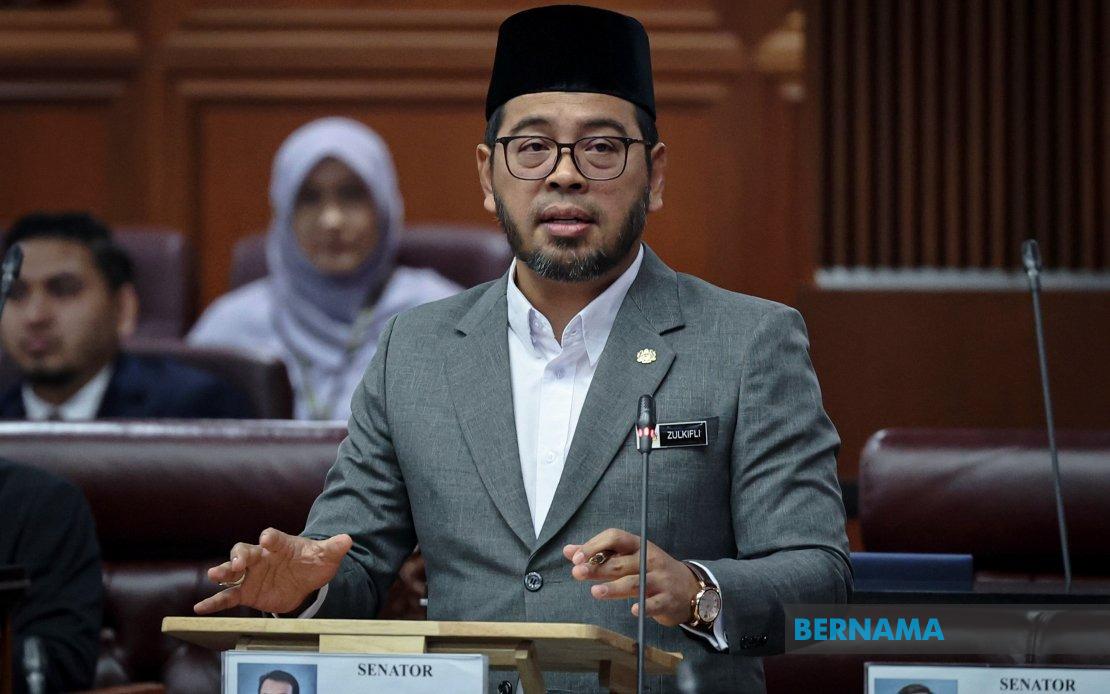
The Cabinet intends to consider a proposal to make the Royal Commission of Inquiry's final report on Tabung Haji available to the public, according to Dr Zulkifli Hasan, the Minister in the Prime Minister's Department (Religious Affairs). The move comes amid mounting confusion and claims surrounding the institution's asset transfers, with Zulkifli clarifying the government's position during parliamentary proceedings in the Dewan Negara on July 22.
The minister strongly rejected assertions that the former Treasury secretary-general had disposed of Tabung Haji's strategic assets for personal or institutional gain. Rather than a sale, Zulkifli characterised the 2018 restructuring as a carefully orchestrated financial rescue designed to preserve an institution serving Malaysia's Muslim depositors. The operation, he explained, became necessary after the institution had been severely compromised by what he described as reckless and unauthorised withdrawals of depositor funds in the years preceding 2018.
The severity of Tabung Haji's financial condition at that juncture cannot be overstated. When the Auditor-General and Bank Negara Malaysia conducted their evaluations in 2018, the institution faced an alarming asset-liability deficit of RM10.9 billion. This deterioration had triggered a significant crisis of confidence, with approximately RM6 billion withdrawn by depositors within a remarkably compressed timeframe. Simultaneously, attempts to secure emergency standby financing from international sources had failed, leaving policymakers with severely limited options.
Given these circumstances, the government faced an existential choice. Tabung Haji's deposits remained fully guaranteed under government backing—a commitment that would have imposed liabilities exceeding RM74.5 billion had the institution collapsed entirely. This potential liability represented an unacceptable fiscal risk for the national budget. Against this backdrop, the Cabinet made what Zulkifli characterised as a collective decision to restructure the institution's assets, transferring underperforming and problematic holdings to Urusharta Jamaah Sdn Bhd (UJSB), a government-owned special purpose vehicle established for this express purpose.
The outcomes of this intervention have substantially validated the government's approach, at least by the metrics available. Tabung Haji's deposit base has expanded dramatically since the rescue, rising from approximately RM69.4 billion in 2019 to surpass RM95.1 billion by mid-2025. This recovery signals restored confidence among Malaysia's Muslim savers, who view Tabung Haji as a critical institutional vehicle for managing their pilgrimage savings and broader financial security.
Beyond deposit accumulation, the institution's financial performance has improved markedly. The profit distribution rate available to depositors has climbed from a meagre 1.25 per cent in 2018 to 3.5 per cent scheduled for 2025, representing the strongest return offered in eight years. For the ordinary Muslim depositor planning the hajj, an equally significant achievement has been maintaining the cost of pilgrimage packages at stable levels throughout 2024, 2025, and 2026, despite the inflationary pressures affecting nearly all service sectors across the Malaysian economy.
The decision to release the Royal Commission of Inquiry report, should the Cabinet approve it, would represent a significant transparency initiative. The RCI was established to investigate the circumstances that led to Tabung Haji's severe financial deterioration and to assess the appropriateness of the government's rescue and restructuring decisions. Making this report public would allow lawmakers, stakeholders, and the Malaysian public to examine the detailed factual record and expert analysis underlying one of the most consequential financial interventions involving a Muslim-majority institution in recent national history.
For Malaysian citizens, and particularly for the millions of Muslims who maintain savings with Tabung Haji, the discrepancy between public perception and documented reality carries significant implications. The allegations circulating regarding asset sales have created reputational damage to both Tabung Haji and the government agencies involved in its administration. A public RCI report would either substantiate or definitively dispel these claims, providing the clarity necessary for restored institutional confidence.
The broader context is relevant for understanding Malaysia's financial governance more generally. Tabung Haji occupies a unique position in the national financial system as a quasi-public institution with explicit religious and social mandates. Unlike commercial banks or investment funds, its primary function extends beyond profit maximisation to encompassing the spiritual and financial aspirations of millions of Muslim Malaysians. Any intervention affecting its operations thus carries implications beyond standard corporate restructuring.
Zulkifli's emphasis on the collective Cabinet decision in 2018 serves to distribute responsibility across the government apparatus rather than attributing decisions to individual officials. This approach protects institutional reputation and suggests the restructuring represented genuine policy consensus rather than the isolated actions of any single bureaucrat. However, it also underscores that public release of the RCI report could expose the breadth of knowledge and deliberation surrounding the rescue, potentially affecting the political calculus of current and former officials involved.
The parliamentary exchange itself, triggered by Senator Datuk Seri Prof Dr Noor Inayah Ya'akub's questioning, reflects ongoing scrutiny of government decision-making regarding major financial institutions. This suggests that despite the passage of years since the 2018 restructuring, legislative oversight bodies remain engaged with the matter and seek greater transparency regarding official actions taken.
Moving forward, the Cabinet's deliberation on releasing the RCI report will likely balance competing considerations: the government's desire to vindicate its rescue decisions through transparent documentation, the protection of individual officials from potential blame, and the need to restore public confidence in Tabung Haji itself. The outcome will signal Malaysia's commitment to institutional transparency and accountability in managing the nation's significant financial responsibilities.

