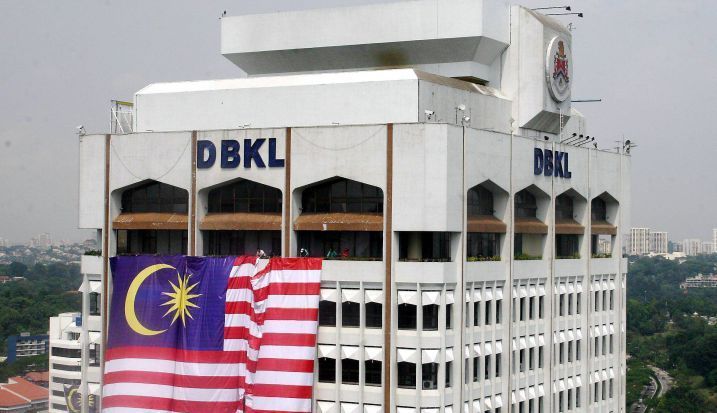
The Cabinet has taken a cautious approach to reforming Kuala Lumpur's administration, ordering the Federal Territories Department to focus on strengthening internal governance and accountability systems at the city authority before entertaining any modifications to the Federal Capital Act 1960. This decision follows the presentation of a four-month feasibility study that examined whether legal amendments were necessary to address long-standing concerns about how the capital is managed. The directive represents a significant moment in the ongoing debate over DBKL's administrative structure, signalling that policymakers believe institutional problems stem primarily from operational weaknesses rather than statutory limitations.
The feasibility study, conducted by International Islamic University Malaysia between December and March, provides the most comprehensive analysis to date of DBKL's administrative challenges. Rather than simply recommending legislative overhauls, the research team engaged directly with Kuala Lumpur's seven Members of Parliament and DBKL's management to understand the scope of problems. The investigation covered multiple dimensions of city administration, including the organisational hierarchy, how decisions are made, service quality, enforcement mechanisms, and where accountability gaps exist. This methodical examination reveals that the Cabinet's cautious stance reflects evidence-based assessment rather than political reluctance.
The timing of this study holds particular significance for Malaysian governance. Over recent years, several influential figures and parliamentary representatives have proposed restructuring how Kuala Lumpur operates. The Prime Minister's Policy Advisory Committee had suggested establishing a Supreme Council to oversee the mayor's office, fundamentally altering the legal framework. Separately, a group of Kuala Lumpur MPs put forward an alternative vision: a City Council comprising the seven parliamentary representatives who would advise the mayor on major decisions. These competing proposals created pressure for legislative reform, yet the feasibility study effectively reframes the entire discussion.
A central finding of the IIUM research challenges the conventional wisdom that has driven reform proposals. The study explicitly cautions against introducing a councillor system into DBKL's governance structure, arguing that adding another decision-making layer would create overlapping responsibilities and obscure accountability. This conclusion directly contradicts the parliamentary proposal, suggesting that expanding the number of voices involved in administrative decisions could paradoxically make it harder to identify who bears responsibility when things go wrong. For Malaysian observers accustomed to seeing structural reorganisation as the solution to institutional problems, this represents a departure from conventional thinking.
What the study found instead was that DBKL's difficulties trace primarily to administrative shortcomings rather than legal deficiencies. According to the research, the authority lacks clearly defined internal guidelines, standardised operating procedures, and proper protocols governing how meetings function and decisions are reached. This distinction matters enormously because it suggests that many problems can be resolved through internal reforms rather than Parliament passing new legislation. The absence of formal procedures and written standards creates ambiguity about how the organisation actually operates, potentially allowing inconsistency and poor decision-making to flourish. Minister Hannah Yeoh, overseeing Federal Territories in the Prime Minister's Department, has indicated that the Federal Territories Department and DBKL are now preparing a comprehensive transformation plan to address these gaps.
The study recommends that the existing Advisory Board serve as the focal point for governance improvements rather than establishing entirely new structures. Currently, this board comprises appointed members from professional fields and non-governmental organisations who provide counsel to the mayor. The research suggests introducing a formal governance framework that would clarify the criteria for appointing board members, specify quotas for professional representation, and establish transparent protocols for meetings and proposal consideration. Importantly, this framework would also delineate the working relationships between the board, the mayor, the Federal Territories minister, and DBKL management, creating clarity where ambiguity previously existed. This incremental approach would strengthen existing mechanisms rather than disrupting the established order.
The study proposes a middle ground regarding parliamentary involvement in DBKL's work. Rather than granting Kuala Lumpur MPs formal administrative powers or appointment authority, the research suggests MPs should have a strengthened monitoring and representation role. This could be accomplished through regular consultation meetings, dedicated monitoring committees where MPs review DBKL's performance, formal budget review sessions, and clearly established channels for raising constituent concerns. Such mechanisms would give parliamentarians meaningful involvement while preserving the administrative independence that DBKL requires to function effectively. The distinction between political representation and administrative execution remains crucial to preventing the kind of confusion that the councillor proposal would create.
Understanding DBKL's legal status illuminates why the Cabinet is proceeding carefully. Under Section 5 of the Federal Capital Act 1960, Kuala Lumpur operates as a "corporation sole", meaning legal authority concentrates in the office of the mayor rather than distributed across a council with voting powers. This arrangement stems from Kuala Lumpur's dual character as both the nation's capital city and a Federal Territory. The feasibility study warns that introducing elected or appointed councillors with real decision-making powers could inadvertently transform DBKL into a conventional local authority governed under the 1976 Local Government Act, potentially conflicting with the original statutory purpose and the 1974 agreement under which Kuala Lumpur was transferred to federal administration. Such a shift would have constitutional implications extending beyond mere administrative convenience.
The Cabinet's decision to defer legislative amendments in favour of administrative reforms reflects prudence regarding constitutional questions that the study raises. Any alterations to Act 190 require careful deliberation because they concern Kuala Lumpur's constitutional position and federal obligations. The study explicitly recommends that improvements be pursued first through administrative measures such as internal directives, improved guidelines, standardised operating procedures, and better coordination within the authority itself. This sequencing allows DBKL to demonstrate that internal reforms can meaningfully address governance problems before anyone pursues amendments that would reshape the legal foundation. Minister Yeoh has committed to providing the Cabinet with periodic progress reports, ensuring that political oversight remains in place while implementation proceeds.
For Malaysian residents concerned about DBKL's performance, this development offers both encouraging and uncertain prospects. The acknowledgement that internal problems require internal solutions is refreshing in an era where structural reorganisation is often pursued reflexively. Yet implementation of these reforms will depend on DBKL's commitment and the Federal Territories Department's ability to oversee genuine change. The study's findings suggest that better procedures and clearer guidelines, by themselves, can improve decision-making. However, whether DBKL will successfully adopt and maintain these improvements, and whether they will address underlying political or cultural factors affecting governance, remains to be tested. The Cabinet's periodic review mechanism should provide accountability, though the effectiveness of this oversight will become apparent only as reforms progress.
This approach also holds lessons for Malaysian governance more broadly. The study demonstrates that institutional reform does not always require legislative upheaval. Many Asian cities struggle with similar administrative challenges, and the finding that operational procedures and internal guidelines matter as much as legal structure could inform policy discussions across the region. Southeast Asian governments wrestling with how to improve local governance might find relevance in the evidence that clarifying existing structures often precedes, and sometimes supplants, formal reorganisation. For Kuala Lumpur specifically, the next phase will test whether the Federal Territories Department and DBKL can genuinely transform their operations, or whether the absence of new powers will prove an excuse for insufficient change. The Cabinet's periodic reviews will indicate whether this measured approach represents wisdom or merely postponement of necessary reform.

