The Malaysian Cabinet has moved decisively to address mounting concerns over airport security lapses, instructing the Ministry of Home Affairs and Ministry of Transport to present a comprehensive strengthening plan within a fortnight. Home Minister Datuk Seri Saifuddin Nasution Ismail made the announcement during a visit to Sabah's eastern region, underscoring the government's determination to reverse a troubling pattern of security breaches that have damaged the nation's international standing and raised questions about the effectiveness of existing protocols at border entry points.
The directive reflects Cabinet-level anxiety triggered by several recent incidents involving Malaysians that have drawn unwanted international attention. Most notably, a Malaysian pilot faced arrest following the interception of approximately 25 kilograms of MDMA at Indonesia's Soekarno-Hatta Airport, suggesting that inadequate screening procedures or enforcement gaps may be compromising airport operations across the region. These occurrences have created a perception, both domestically and abroad, that security controls at major Malaysian airports have been undermined or circumvented, prompting the urgent need for structural reform and enhanced coordination between relevant agencies.
Saifuddin characterised the Cabinet's intervention as reflecting serious concerns about breaches in security protocols, emphasising that immediate action would be taken to formulate a detailed improvement strategy. The initiative demonstrates recognition at the highest political levels that airport security cannot be treated as a static matter dependent solely on existing procedures. Instead, the government is signalling that a dynamic, multi-agency approach involving comprehensive auditing and modernisation of screening technologies and personnel training will be essential to restore public confidence and prevent future compromises.
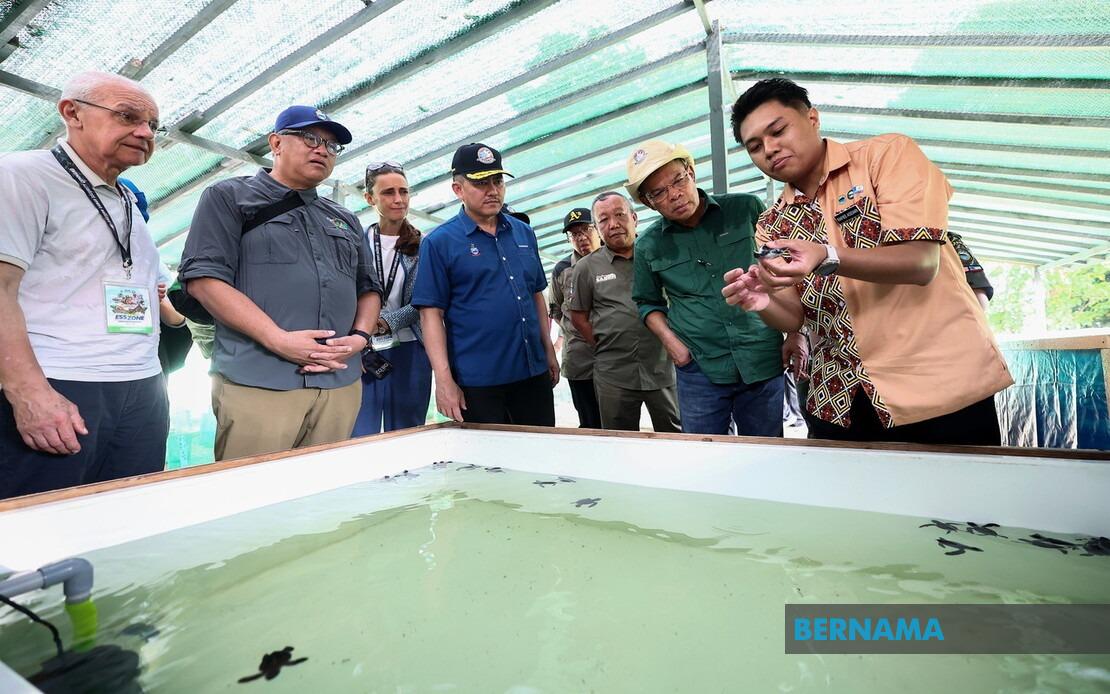
The timing of this announcement coincides with Saifuddin's diplomatic mission to the Eastern Sabah Security Zone, where he accompanied foreign representatives including diplomatic staff from Japan, Switzerland, and other countries. This dual-track approach reflects a broader Malaysian strategy to address security concerns while simultaneously working to rehabilitate the nation's image internationally. By inviting diplomats to witness firsthand the improvements being made in the ESS Zone, the government appears to be leveraging the security situation in Sabah as a means to reset travel advisories that have hindered tourism and investment.
The Eastern Sabah Security Zone, overseen by ESSCOM under the command of Datuk Victor Sanjos with chief executive Datuk Dr Jamaluddin Mohd Ali, has become the centrepiece of Malaysia's regional security narrative. Between January and June 30, ESSCOM carried out an impressive 897,293 inspections and executed 307 arrests, demonstrating intensive enforcement activity across the area. These figures underscore the resource intensity required to maintain effective border control and suggest that similar operational scales may be necessary if airport security protocols are to be substantially upgraded and modernised.
Saifuddin highlighted that seizures during the six-month period totalled RM23.37 million in value, reflecting the high stakes involved in contraband interdiction and the financial incentives driving smuggling attempts across Malaysia's borders and airports. These seizures, while demonstrating enforcement capability, also serve as a cautionary reminder that determined criminal networks continue to probe for vulnerabilities in the system. The challenge facing the new airport security plan will be to identify and close these gaps before they are exploited by increasingly sophisticated trafficking operations.
International travel advisories have emerged as a critical measure of Malaysia's security standing, directly influencing foreign investor confidence, tourism arrivals, and diplomatic relations. Several nations, including Japan and Switzerland, have already modified their travel warnings for eastern Sabah based on improved security conditions and sustained briefings demonstrating stability. However, these positive adjustments remain fragile and dependent on continued evidence of effective governance and enforcement. The airport security incidents have threatened to undermine this diplomatic progress, making swift and visible corrective action essential for maintaining the momentum of advisory revisions.
The diplomatic familiarisation programme involving fourteen foreign representatives visiting strategic locations and tourism destinations throughout the ESS Zone represents an unconventional but potentially effective strategy for countering negative perceptions. By allowing foreign officials to conduct personal assessments of security conditions and development prospects, Malaysia creates opportunities for these representatives to convey balanced and credible reporting to their home governments. This grassroots diplomatic engagement complements formal government statements and statistical data, providing third-party validation of Malaysian claims regarding improved security.
The federal government's commitment to the ESS Zone becomes evident through its cumulative RM723 million allocation over ESSCOM's 13 years of operation, dedicated to asset acquisition, operational expenses, and logistical support. This substantial investment demonstrates that security infrastructure in the region has been treated as a legitimate budget priority at the national level. The question now facing policymakers is whether comparable resources and political will can be mobilised for airport security upgrades, which may require significant capital expenditure on screening equipment, facility renovations, and personnel recruitment and training.
The two-week timeline imposed by Cabinet represents an ambitious scheduling target that will test the administrative capacity and inter-ministerial coordination capabilities of both KDN and MOT. Meeting this deadline will require rapid assessment of existing protocols, identification of vulnerability points, consultation with international aviation security experts, and preliminary budgeting for proposed improvements. Failure to deliver a credible plan within this window would signal organisational dysfunction and undermine confidence in the government's ability to execute more complex reforms. Conversely, a thorough and detailed proposal emerging on schedule could catalyse broader security sector modernisation.
For Malaysian business interests and travellers, the airport security initiative carries significant implications. Enhanced screening procedures, while necessary for safety, may introduce temporary inconveniences through longer processing times and more rigorous checks. However, demonstrable improvements in airport security could ultimately attract international airlines, facilitate business travel, and reduce insurance and logistics costs associated with supply chain security. Regional neighbours such as Singapore and Thailand have built competitive advantages through world-class airport security infrastructure; Malaysia's efforts to modernise and standardise its own protocols reflect recognition of this competitive dynamic.
The Cabinet's directive also reflects broader Southeast Asian security trends, where airport vulnerabilities have attracted increasing attention from both law enforcement agencies and international criminal networks. As the region experiences growing commercial aviation traffic and increased cross-border people movement, the window of opportunity for upgrading security infrastructure narrows. Malaysia's willingness to undertake this reassessment sends signals throughout ASEAN that security governance remains a live policy issue and that governments are prepared to invest in institutional improvements. This regional dimension underscores why domestic Malaysian security decisions carry implications extending far beyond national boundaries.

