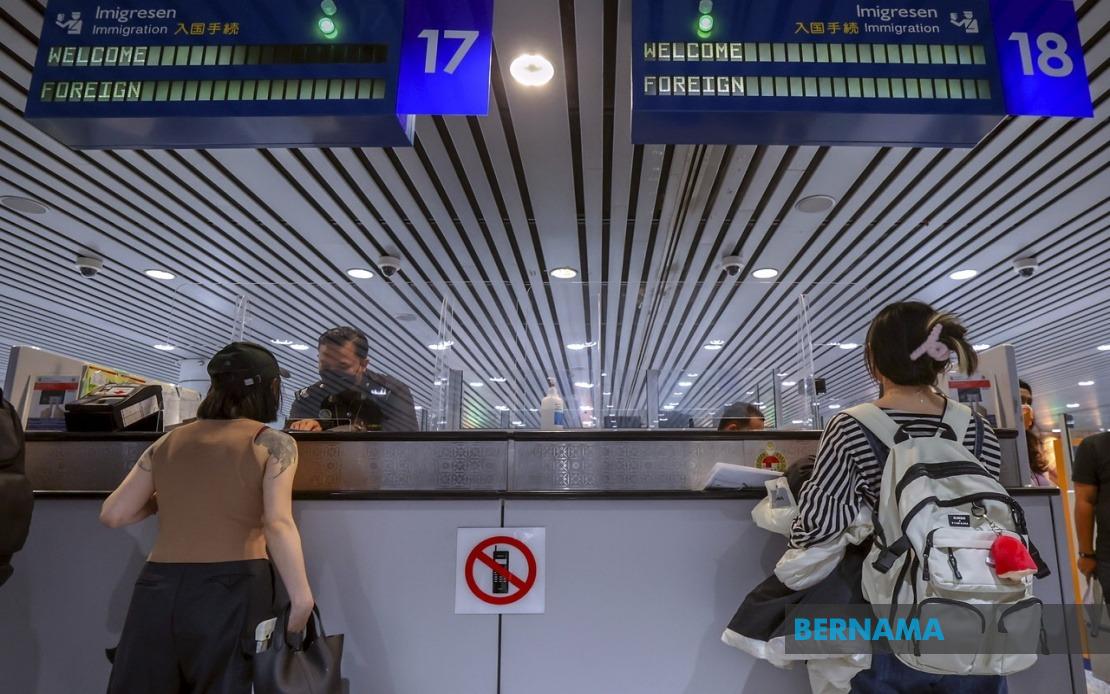
Malaysia's government has taken decisive action to address growing security vulnerabilities at its airports and international borders, with the Cabinet approving 17 recommendations aimed at fortifying controls at Kuala Lumpur International Airport and entry points nationwide. The joint initiative, developed by the Home Ministry and Ministry of Transport, represents a major overhaul of screening procedures and risk management systems that officials acknowledged require immediate and substantial improvement.
The security lapses that prompted this comprehensive review have exposed troubling gaps in the nation's defence against trafficking and other border threats. Most notably, Malaysian authorities are grappling with the high-profile arrest in Indonesia of a Malaysian pilot caught with approximately 25 kilogrammes of MDMA at Soekarno-Hatta International Airport, raising alarm bells about the potential exploitation of aviation sector workers by criminal networks. Additional cases involving Malaysian nationals have further underscored how quickly security integrity can deteriorate when screening mechanisms prove inadequate, compelling the government to act with urgency.
The approved action plan unfolds across three distinct phases, beginning with six immediate priority measures designed to deliver quick wins while longer-term structural changes take shape. These short-term interventions focus on enhancing risk-based passenger and cargo screening by intensifying inspections of flights, passengers, crew members and luggage flagged as presenting elevated risk. The rationale centres on allocating resources more strategically: rather than applying uniform screening to all travellers, security personnel will concentrate efforts on those most likely to pose threats based on intelligence and behavioural indicators.
A second immediate priority addresses the persistent challenge of insider threats within the aviation sector itself. The e-Vetting and access control initiative will tighten security vetting procedures for flight crews, airline staff, ground operations and handling personnel, airport employees, vendors, contractors and other individuals requiring access to restricted security zones. This measure acknowledges that personnel with legitimate access to sensitive airport infrastructure present unique vulnerabilities that standard passenger screening cannot address, a lesson underscored by the pilot arrest.
Drug screening programmes for flight personnel constitute the third pillar of the immediate response, establishing mandatory pre-employment testing alongside periodic and random screening for pilots, cabin crew and related aviation staff. The inclusion of random testing particularly signals a shift toward deterrence, making it impossible for at-risk personnel to predict when they might face detection. This approach aligns with international best practice in aviation security and reflects Malaysia's determination to disrupt supply chains that exploit aviation workers.
The remaining three urgent measures target systemic deficiencies in information management and operational coordination. Increasing visible security personnel at airports strengthens deterrence and rapid response capabilities, while enhanced information sharing between agencies addresses the fragmentation that often allows threats to slip through undetected. Establishment of a dedicated Home Ministry-Transport Ministry Technical Committee signals that sustained inter-agency coordination, rather than ad hoc responses to crises, will drive implementation and ongoing refinement.
Beyond these immediate actions, the medium-term phase prioritises technology enhancement, asset acquisition and human resource development—investments that will take months to materialise but promise substantial capability improvements. Officials acknowledge that screening technology, detection equipment and trained personnel represent the foundation upon which modern airport security rests. The government's commitment to resource allocation during this phase will prove telling, as budgetary constraints frequently undermine security modernisation efforts across Southeast Asia.
The long-term transformation encompasses system redesign, information-sharing architecture and institutional governance reforms, with ambitions to extend these enhanced protocols to all international entry points. This phased rollout, beginning with KLIA before gradual expansion based on threat assessments and operational feasibility, reflects pragmatic recognition that security overhauls require careful sequencing. Overwhelming staff with simultaneous changes across multiple locations risks implementation failures; concentrating initial efforts at the nation's largest and most critical gateway allows for refinement before broader deployment.
For Malaysia's travel, tourism and aviation industries, this security enhancement initiative carries mixed implications. The short-term intensification of screening processes may slow passenger throughput during peak travel periods, potentially creating temporary inconvenience for business travellers and holiday-makers. However, security breaches that lead to trafficking busts or, worse, terrorist incidents cause far more severe economic damage through loss of confidence and international aviation restrictions. The government's calibrated approach—targeting risk-based screening rather than blanket procedures—attempts to minimise disruption while maximising security gains.
Regional perspectives matter significantly here, as Southeast Asian airports increasingly feature on criminal networks' operational maps. Malaysia's position as a major regional hub makes it simultaneously attractive to international travellers and vulnerable to transnational trafficking operations. Drug smuggling through aviation channels represents merely one facet of broader security challenges ranging from human trafficking to terrorism financing. Demonstrating effective border control strengthens Malaysia's standing within international aviation governance frameworks and reassures foreign carriers that the nation takes security seriously.
The government's explicit commitment to implementing these measures "with integrity and based on the law, by taking into account the rights of individuals, data protection and the interests of passengers and the aviation industry" acknowledges legitimate concerns about surveillance overreach and discrimination. Balancing security imperatives against civil liberties remains perpetually contested terrain; the apparent inclusion of human rights safeguards in this announcement suggests authorities recognise the reputational risks of heavy-handed approaches that might deter legitimate travel or trigger accusations of unfair targeting.
Success will ultimately depend on sustained political commitment and adequate funding once initial enthusiasm fades. Many security enhancement initiatives across the region have faltered at implementation stage when resources dried up or bureaucratic inertia reasserted itself. The establishment of a dedicated technical committee and the structured phasing approach offer some protection against this familiar pattern, yet remained to be tested through the coming months and years.

