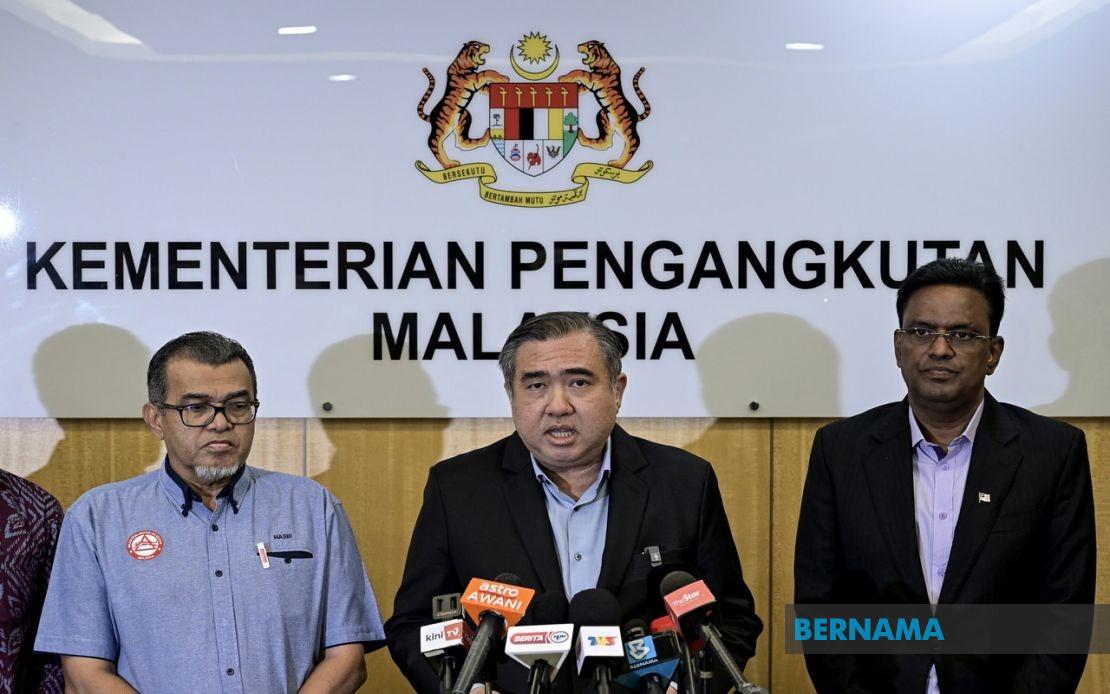
Malaysia's Cabinet has given its in-principle backing to significant amendments to the Road Transport Act 1987 (Act 333) that would fundamentally reshape how the judiciary handles compensation in road accident cases. The policy shift, announced by Transport Minister Anthony Loke in Putrajaya on Wednesday, represents a major departure from current practice by introducing court-ordered compensation as a standalone punishment mechanism rather than leaving financial redress solely to civil litigation or insurance claims.
Under the proposed framework, courts would gain discretionary authority to mandate that convicted road offenders pay compensation directly to accident victims or their bereaved families. This compensation mechanism would operate independently of—and in addition to—traditional sentencing tools such as imprisonment, monetary fines, and driving disqualification orders. The innovation addresses a persistent gap in Malaysia's traffic justice system: offenders could face jail time or fines yet leave victims financially devastated, with recovery options limited to protracted civil suits or insurance negotiations that often yield insufficient settlements.
Minister Loke emphasised that compensation awards would not follow a standardised government formula but would instead reflect judicial discretion informed by case-specific circumstances. Courts would weigh multiple factors when determining appropriate compensation levels, including the gravity of the traffic offence, the extent and nature of injuries sustained, fatalities incurred, quantifiable losses experienced by victims or surviving family members, and critically, the financial capacity of the offender to meet payment obligations. This graduated approach reflects international best practice by ensuring awards remain within realistic recovery parameters rather than creating unenforceable judgments against indigent offenders.
The reformed mechanism would apply to a broad spectrum of road violations, with driving under the influence of alcohol or drugs and reckless driving explicitly cited as covered offences. By casting a wide net across multiple violation categories, the legislation seeks to incentivise driver compliance across the entire spectrum of traffic law, not merely the most catastrophic infractions. The breadth of coverage signals government determination to create genuine financial consequences that extend beyond abstract punishment and directly benefit those harmed by unsafe driving.
Critically, Loke stressed that the new compensation regime represents a supplementary layer of accountability, not a replacement for existing penalties. Prison sentences would remain intact, monetary fines would persist, and driving bans would continue. This additive approach ensures that offenders face genuinely meaningful consequences that operate simultaneously across multiple dimensions—freedom restriction, financial penalty, licensing suspension, and victim restitution. The cumulative impact would substantially elevate the cost of dangerous driving behaviour, potentially generating stronger deterrent effects than any single punishment mechanism could achieve independently.
The Ministry of Transport intends to navigate a careful procedural path toward implementation. Rather than proceeding unilaterally, the ministry will initiate comprehensive consultation with relevant government agencies, regulatory bodies, and stakeholder groups including the insurance industry. These engagement sessions will address several outstanding technical questions that currently lack definitive answers. Policymakers must determine precisely which offence categories warrant compensation authority, develop clear definitions distinguishing serious injuries meriting higher awards from minor harm, and establish protocols for circumstances where offenders demonstrably lack financial means to satisfy court-ordered compensation.
The insurance industry consultation holds particular significance for Malaysian road accident victims. Clarity regarding how court-ordered compensation interacts with existing insurance obligations remains essential. Minister Loke confirmed that the new mechanism would not eliminate victims' rights to pursue parallel insurance claims or initiate separate civil lawsuits through established channels. However, detailed operational guidelines will need to address potential overlap, priority of claims, and whether compensation orders might reduce insurance payouts or vice versa. These clarifications will shape how effectively the reform actually improves victim financial recovery.
The parliamentary trajectory contemplates completion of legislative drafting and stakeholder engagement before year-end 2024, positioning the bill for introduction at parliament's final sitting. Significantly, Minister Loke has requested establishment of a special parliamentary select committee to conduct detailed scrutiny of the proposed amendments. This deliberate choice reflects recognition that road safety policy commands cross-party consensus and that transparent, collaborative legislative process would strengthen the reform's legitimacy and implementation prospects. By inviting all-party participation, the minister signals that road accident victim compensation transcends partisan political divisions.
A critical limitation constrains the amendment's scope: legislation cannot operate retrospectively under Malaysian constitutional principles. Consequently, compensation orders would apply exclusively to offences committed after Parliament enacts the legislation. This temporal boundary means victims of accidents occurring before the amendment's passage would remain outside its protective reach, potentially generating perceptions of inequitable treatment. Policymakers face ongoing pressure from victim advocacy groups to address this legacy gap, though constitutional doctrine presents substantial obstacles.
The Road Offence Demerit Points System (KEJARA) enhancement component of the proposal signals integrated thinking about road safety improvement. Rather than isolating compensation policy from broader traffic law reform, the government proposes strengthening KEJARA simultaneously, suggesting recognition that comprehensive behavioural change requires multi-faceted intervention combining financial accountability through compensation with the existing points-based licensing system that progressively restricts driving privileges.
For Malaysian society, the amendment addresses documented inadequacies in victim protection under current law. Families of individuals killed or catastrophically injured by reckless drivers frequently experience protracted financial hardship that neither criminal sentences nor civil judgments adequately alleviate. Insurance coverage gaps leave many victims with limited recovery prospects. By introducing court-ordered compensation as standard sentencing practice, Malaysia would align with advanced jurisdictions that view victim financial restoration as intrinsic to justice rather than incidental to it.
The reform also reflects evolving judicial philosophy regarding offender accountability. Rather than conceiving punishment in purely retributive or preventive terms, the amended framework embraces restorative principles obliging offenders to acknowledge and redress harm inflicted on identifiable victims. This philosophical shift, increasingly prevalent in Commonwealth jurisdictions, positions offenders as bearing direct responsibility for victim welfare rather than viewing compensation as society's charitable obligation.
Implementation success will substantially depend on enforcement rigour and court compliance. If judges prove reluctant to impose compensation orders or establish awards at nominal levels, the reform's deterrent and restorative potential would diminish considerably. Judicial training and clear sentencing guidelines will likely prove essential for consistent application. Additionally, mechanisms for enforcing compensation orders against non-compliant offenders require careful design, potentially involving wage garnishment or asset seizure provisions that raise separate policy considerations.

