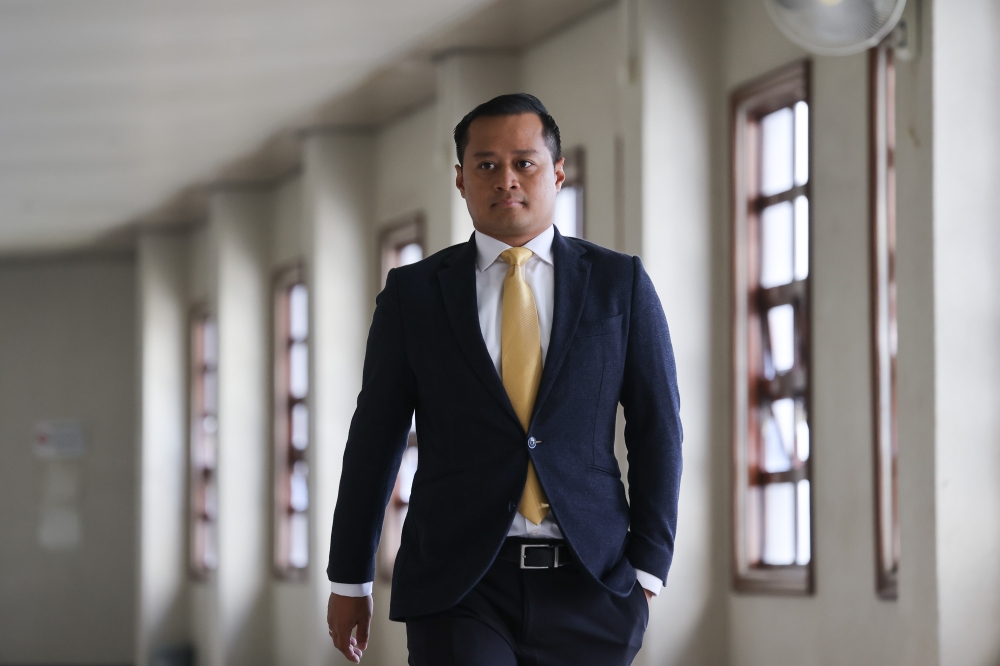
The trial of former Prime Minister Tan Sri Muhyiddin Yassin has taken a significant turn as a key witness provided testimony that challenges the transparency of major political donations in Malaysia. Businessman Shahrin Shamsuddin appeared before the High Court in Kuala Lumpur on July 14 to describe how he discovered that substantial company funds—totalling RM13.7 million—had been channelled to Bersatu, the political party Muhyiddin previously led, without his explicit consent or knowledge.
Shahrin's account of learning about the donation represents a crucial moment in the proceeding, as it establishes a pattern of how large sums move between private enterprises and political organisations in Malaysia with limited oversight or accountability. The businessman's testimony suggests that even within family-operated business structures, the transfer of significant resources to political entities can occur without the full agreement of all stakeholders. This disclosure underscores ongoing concerns about the lack of transparency in how Malaysian political parties raise and receive funds, particularly when those contributions originate from private companies.
The involvement of Shahrin's elder brother as the individual who arranged the donation introduces questions about internal family business governance and decision-making authority. When companies with multiple stakeholders make substantial political contributions, the absence of proper authorization protocols raises serious governance issues. In this instance, Shahrin's unfamiliarity with the transaction until discovering it suggests that critical financial decisions affecting the company's assets and strategic direction were made unilaterally, without consultation among responsible parties.
Bersatu, founded in 2016 and led by Muhyiddin until his replacement by Ahmad Zahid Hamidi, has faced increasing scrutiny regarding its financial operations and funding sources. The political party emerged as a significant player in Malaysian politics after multiple defections from established coalitions, but questions about its financial sustainability and donor base have lingered. Large donations from private companies, particularly those involving family disputes or undisclosed transactions, highlight vulnerabilities in Malaysia's political financing ecosystem that regulators have struggled to address effectively.
The RM13.7 million figure represents a substantial contribution that would have significant implications for any political organisation's operational budget and campaign capacity. For context, such donations dwarf the typical contributions made by individual supporters and rival those channelled by major corporate interests with vested interests in government policy. The magnitude of this transfer underscores how Malaysian political parties, despite legal frameworks ostensibly governing donations, continue to operate with limited public scrutiny of their funding arrangements.
Shahrin's court appearance comes as Malaysia grapples with broader questions about campaign finance reform and political party accountability. Unlike many developed democracies, Malaysia lacks comprehensive legislation requiring comprehensive disclosure of political donations above certain thresholds. The country's regulatory framework, administered by the Elections Commission, has proven inadequate at preventing undisclosed transfers or enforcing transparency standards consistently across all political organisations. This case illustrates the practical limitations of existing oversight mechanisms when private citizens and companies decide to support political movements.
The testimony also reflects internal family dynamics and the potential for disputes to surface through judicial proceedings. When business partners or family members operating enterprises together disagree about how company resources should be deployed, litigation often becomes the mechanism through which previously confidential arrangements emerge into public view. In Malaysia's context, such revelations during high-profile trials have repeatedly exposed financial flows and political relationships that might otherwise have remained hidden from public scrutiny.
Muhyiddin's trial itself stems from earlier political developments when the Perak-born politician served as Prime Minister from March 2020 to August 2021, a tenure marked by controversy and questions about governance and institutional integrity. His subsequent legal challenges have brought renewed attention to financial arrangements and decision-making processes within his political organisation during the period when he held executive power. The nature of political funding and how such resources influence policy priorities remain central concerns for Malaysian voters and governance observers.
For Southeast Asian observers monitoring Malaysia's political development, this case demonstrates how even middle-income democracies struggle with entrenching transparent campaign finance standards. Regional peer countries including Indonesia, the Philippines, and Thailand have similarly grappled with inadequate disclosure regimes and enforcement mechanisms that allow opaque political funding to persist. Malaysia's inability to prevent large undisclosed corporate donations to major political parties reflects a wider regional challenge in strengthening democratic institutions and safeguarding against corruption.
The implications of Shahrin's testimony extend beyond Muhyiddin's immediate legal situation. Regulators and lawmakers examining Malaysia's political finance landscape will likely reference this case when considering whether existing legislation requires strengthening. The fact that a major donation occurred without consent from a business stakeholder reveals gaps in both corporate governance standards and political finance oversight. Reform advocates will likely point to this trial as evidence supporting the case for mandatory donation disclosure, donation caps, and stronger enforcement mechanisms to prevent similar situations.
As the trial progresses through the High Court system, additional witnesses may provide further details about how Bersatu's finances were managed and which contributors supported the party's operations. Each subsequent testimony has potential to reshape public understanding of Malaysian political fundraising practices and the relationships between commercial interests and political movements. The attention generated by this case may catalyse broader conversations about institutional reform needed to strengthen Malaysia's democratic safeguards.

