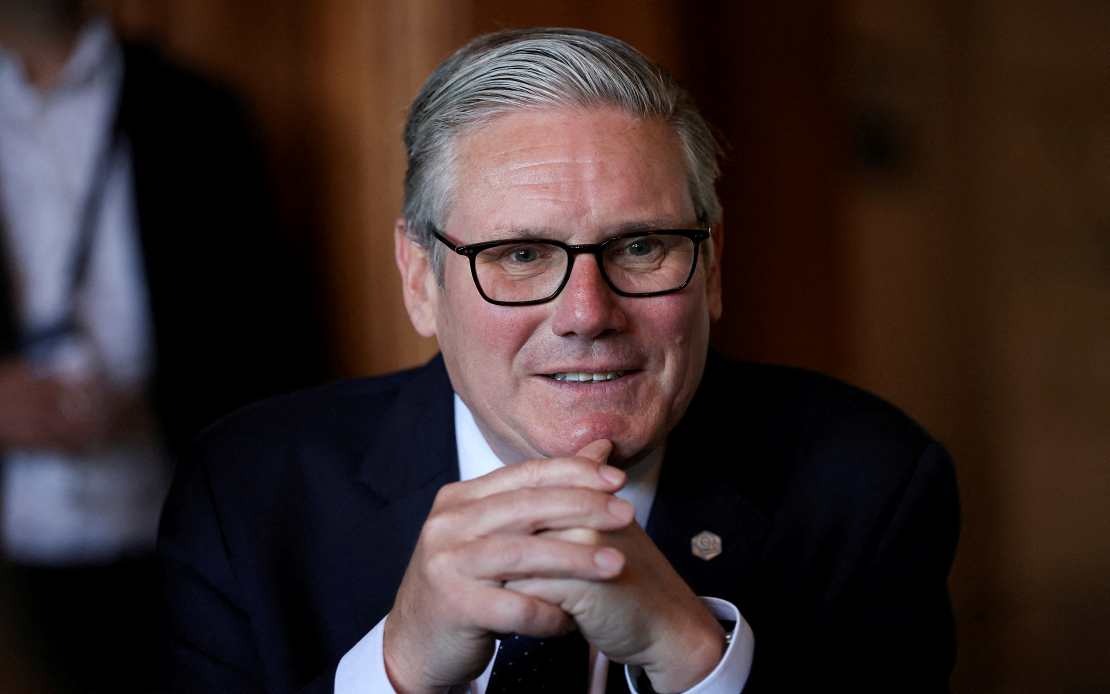
Andy Burnham, the former mayor of Manchester, has emerged as the frontrunner to lead the United Kingdom's Labour Party and potentially assume the role of prime minister within weeks. On Thursday, Burnham formally declared his candidacy for the party leadership, positioning himself as the only candidate in the running. Should no challengers come forward, he could be elevated to the nation's top political office by July 20, marking a significant acceleration in Britain's political timeline.
Burnham's entry into the leadership race carries substantial implications for Britain's foreign policy, particularly regarding the Middle East. In a video statement posted on X, the ambitious politician signalled a more confrontational approach towards Israel, pledging to pursue additional economic sanctions against the country. This stance places him at odds with the current government's measured diplomatic approach and suggests a potential realignment of British policy should he secure the party's top job.
The Manchester politician centred his criticism on Israel's conduct in Gaza and the West Bank, articulating concerns that resonate strongly across progressive political movements in Europe. He accused Israeli forces of systematically violating the ceasefire agreement in Gaza, pointing to civilian casualties among Palestinians as evidence of ongoing military operations. Burnham argued that the situation demands more aggressive international intervention and stronger consequences for those he views as responsible for breaches of international humanitarian law.
Settlement expansion in Palestinian territories formed another pillar of Burnham's critique. He highlighted what he characterised as a surge in violent actions by Israeli settlers in the West Bank and East Jerusalem, coupled with the continued construction of housing units on lands designated as occupied. According to Burnham, these developments displace established Palestinian communities and undermine the viability of any future political settlement between the two peoples. His framing connects Israeli settlement policy directly to violations of international legal norms.
The former Manchester mayor has explicitly called for the imposition of sanctions targeting those he deems responsible for war crimes during the Gaza conflict. This position represents a meaningful escalation beyond current British policy, which has targeted specific Israeli political figures including National Security Minister Itamar Ben-Gvir and Finance Minister Bezalel Smotrich, along with radical settlers and their associated organisations. Burnham's suggestion that broader punitive measures are warranted indicates his willingness to push the international community towards more extensive economic pressure.
Burnham's rhetoric also attacked Israeli Prime Minister Benjamin Netanyahu directly, accusing him of deliberately sabotaging the prospects for a two-state solution. This characterisation carries particular weight in international diplomatic circles, where the two-state framework remains nominally endorsed by most Western governments as the foundation for eventual Middle Eastern peace. By positioning Netanyahu as an obstacle to this goal, Burnham aligns himself with voices across the European left that have grown increasingly critical of Israeli government policies.
For Malaysian and Southeast Asian observers, Burnham's ascendancy to British leadership would signal a potential recalibration of Western diplomatic positions on Israeli conduct. Britain remains a significant player in international affairs, and shifts in its approach to Middle Eastern conflicts can influence broader multilateral responses through institutions like the United Nations. The region's sizeable Muslim population has consistently expressed concern about Palestinian welfare, making any change in British foreign policy a matter of regional interest.
The timing of Burnham's leadership bid also merits consideration within the broader context of Labour Party politics. His emergence as the sole candidate suggests a degree of party consensus around his vision, or alternatively, an absence of immediate challengers willing to contest the position. Either interpretation carries implications for the cohesiveness and direction of Britain's largest opposition party as it potentially prepares to govern.
Burnham's pledge to work with international partners to enforce adherence to international law and preserve the two-state solution framework represents an attempt to balance his strong rhetoric with diplomatic language. He frames his approach as supportive of international cooperation rather than unilateral action, a nuance that may appeal to foreign policy establishments uncomfortable with more radical positions. However, his explicit emphasis on additional sanctions suggests that rhetorical commitment to multilateralism would not preclude Britain taking independent action.
The prospective Labour leader's statements reflect broader shifts within Western progressive politics regarding Israel-Palestine questions. Unlike previous generations of Labour politicians who maintained more cautious positions on Middle Eastern disputes, Burnham appears willing to articulate explicit criticism of Israeli government actions and to advocate for concrete punitive measures. This positioning could influence how Britain navigates multilateral forums and bilateral relationships in the Middle East should he assume office.
Burnham's challenge moving forward will be translating campaign rhetoric into implementable policy while maintaining diplomatic relationships essential for effective international engagement. The balance between principled stands on human rights and the practical requirements of governance will test his leadership. His ascent to the Labour leadership would represent not merely a personnel change but potentially a meaningful shift in how one of the West's established democracies approaches one of the world's most enduring geopolitical conflicts.

