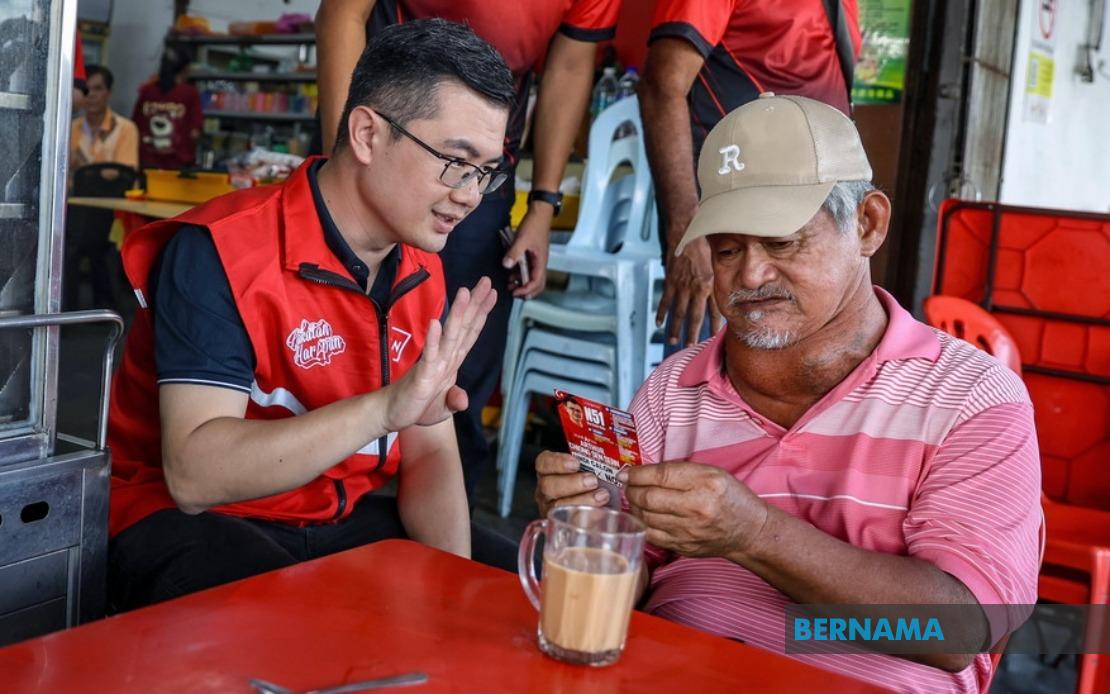
Pakatan Harapan's candidate for the Bukit Batu state seat, Arthur Chiong Sen Sern, has filed a police report after unknown individuals targeted his campaign infrastructure in what he described as deliberate sabotage. The incidents, occurring in Kampung Sri Paya and Taman Putri respectively, involved the destruction of party flags and campaign billboards—acts that Chiong characterised as irresponsible and treacherous. Speaking at his campaign operations centre here on July 5, the PKR-backed contender confirmed that authorities at Air Bemban police station have begun their investigation into the matter, signalling official recognition of the disruptions as a serious concern during the state-level electoral process.
The targeting of campaign materials represents a recurring flashpoint in Malaysian electoral competitions, where the enthusiasm of campaigning occasionally tips into confrontational territory. Chiong's willingness to formally document the incidents through police channels underscores growing awareness among candidates about protecting their campaign assets and establishing a clear record of electoral misconduct. By taking this procedural step, the candidate has created an official trail that authorities can reference, potentially deterring further similar actions and establishing accountability mechanisms that may extend beyond the immediate campaign period.
What distinguishes Chiong's response is his deliberate framing of the incidents within a broader discourse about democratic maturity. Rather than adopting a combative stance that might escalate tensions, he explicitly appealed to all competing parties to conduct their campaigns with civility and professionalism. This measured approach reflects a recognition that the Bukit Batu contest, like many modern Malaysian elections, operates within increasingly scrutinised public spaces where voter perception of candidate conduct carries electoral consequences. The appeal for harmonious campaigning without hostile elements suggests that Chiong views the integrity of the electoral process itself as a shared responsibility transcending partisan interests.
The Bukit Batu constituency has shaped up as a genuinely competitive five-way race, introducing complexity that may partly explain the tensions manifesting through material destruction. Beyond Chiong's Pakatan Harapan-PKR ticket, voters will choose between R. Kumaran representing the Barisan Nasional through MIC, M. Premanand fielding MUDA's independent platform, G. Tamili running under the Bersama banner, and Independent candidate Kamaruzaman Ali. This crowded field reflects deeper fragmentation within Malaysia's political landscape, where traditional two-bloc dominance has given way to multi-party competition. Each candidate presumably seeks to maximise visibility through campaign materials, creating potential friction points when different groups operate in the same geographic spaces.
The incidents in Kampung Sri Paya and Taman Putri, though geographically specific, carry implications for understanding electoral behaviour patterns in Johor more broadly. These neighbourhoods likely represent demographic or political constituencies that multiple candidates are vigorously courting, intensifying competition for attention and engagement. When campaign visibility becomes a zero-sum game—with one candidate's materials removed to reduce their presence—the underlying dynamic suggests high-stakes engagement among competing camps. The fact that Chiong acknowledged not knowing the perpetrators underscores a persistent challenge in Malaysian electoral enforcement: establishing accountability when campaign sabotage occurs without clear eyewitnesses or documented evidence beyond the damage itself.
Chiong's determination to proceed undeterred by these incidents carries its own political messaging. By publicly reaffirming his commitment to campaigning despite the provocation, he frames himself as steadfast and principled—qualities voters often reward when candidates demonstrate resilience against perceived unfair treatment. This narrative positioning transforms what could be interpreted as a weakness (being targeted for sabotage) into a strength (showing determination and moral clarity). Malaysian voters, particularly in urban constituencies like those comprising Bukit Batu, increasingly respond to candidates who project professional standards and respect for democratic norms, making Chiong's approach strategically astute beyond its mere ethical dimensions.
The broader Johor state election context amplifies the significance of these localised incidents. With 172 candidates competing across 56 state assembly seats and polling scheduled for July 11, the Bukit Batu constituency represents one pressure point within a statewide competitive environment. Johor, as Malaysia's second-largest state by population and a crucial political battleground, has historically served as a testing ground for electoral dynamics that subsequently influence national politics. Campaign conduct standards established or eroded during this election may establish precedents affecting how future contests unfold, making individual incidents like those in Bukit Batu part of a larger pattern worth monitoring.
The investigation initiated following Chiong's report will likely proceed through standard police procedures, though the challenge of identifying perpetrators without clear witnesses remains substantial. Previous Malaysian electoral cycles have demonstrated that campaign material sabotage often occurs opportunistically, sometimes involving peripheral supporters rather than official campaign machinery, complicating efforts to establish direct responsibility. Even if authorities successfully identify individuals involved, distinguishing between independent vandalism and coordinated party strategy typically proves difficult without direct evidence of organisational direction. This investigative complexity underscores why Chiong's emphasis on campaign conduct standards and voter expectations for electoral maturity may ultimately prove more influential than any enforcement action.
For Malaysian voters observing the Johor campaign, these incidents provide windows into candidate character and values during pressurised circumstances. The manner in which different contestants respond to campaign provocations—whether through escalation, measured documentation, or appeals to shared democratic principles—becomes part of their electoral narrative. Chiong's approach, combining formal accountability mechanisms with calls for civility, projects an image of professionalism and principle. As Johor voters prepare for July 11 polling day, such demonstrations of how candidates conduct themselves under adversity increasingly influence electoral choices, particularly among voters sceptical of traditional political tribalism and seeking representatives embodying higher standards of public conduct and democratic respect.

