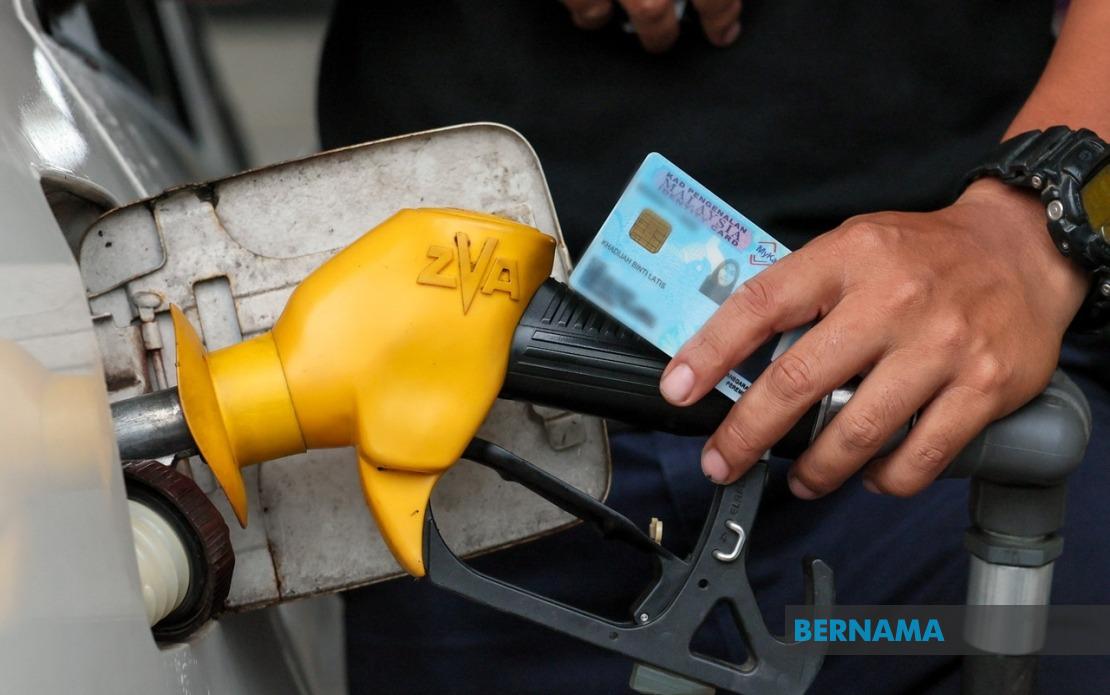
Prime Minister Datuk Seri Anwar Ibrahim announced yesterday that the government would restore assistance quotas under the targeted BUDI MADANI fuel subsidy programme, boosting allowances for both petrol and diesel consumers effective immediately. The announcement, delivered during the 2026 National Day address at the Putrajaya International Convention Centre, reflects the administration's ongoing efforts to manage household and business costs in an era of volatile global fuel prices.
Under the revised structure, eligible Malaysians will receive 300 litres of subsidised RON95 petrol monthly, up from the previous 200-litre allocation, while diesel quota recipients will access 400 litres instead of 300 litres. These increases represent a substantial expansion of the fuel assistance available to qualifying beneficiaries and come at a time when transport costs remain a significant household expense across Malaysia's urban and suburban populations.
The BUDI MADANI programme itself operates as a means-tested mechanism designed to channel fuel subsidies more efficiently to those who depend most heavily on personal transport for employment or business operations. Rather than subsidising fuel universally at the pump, the targeted approach allows the government to concentrate support on qualifying workers and small business operators while managing overall subsidy expenditure. This distinction has grown increasingly important as Malaysia navigates fiscal pressures and seeks to direct assistance where it will have maximum impact on struggling families and enterprises.
Among those welcoming the restoration, private sector worker Furzani Ahmad, 24, noted that the expanded quota addresses a genuine need for commuters travelling significant distances daily. With a commute of approximately 30 kilometres to his workplace, Ahmad indicated that the new 300-litre monthly allowance should prove sufficient for his transport needs, potentially leaving a modest surplus that could be redirected toward other essential expenses. This flexibility matters considerably to workers in Malaysia's expanding suburban and exurban communities, where workplace locations often require lengthy daily journeys.
Similar perspectives emerged from other beneficiaries facing comparable challenges. Darwisy Khairudin, 23, acknowledged that while his base commute spans only 20 to 25 kilometres, occasional work assignments and field duties create unpredictability in fuel consumption. The restoration of the quota provides him with greater financial certainty when planning monthly expenses, reducing the stress of rationing fuel between personal necessities and work requirements. This speaks to the broader experience of Malaysia's younger workforce, many of whom juggle multiple work commitments or assignments that extend beyond standard office locations.
The diesel quota increase carries particular significance for Malaysia's small and medium-sized business sector, which relies heavily on commercial vehicles for supply chains and logistics. Abdul Manan, a 63-year-old fruit trader operating from a stall market, highlighted how the expanded diesel allowance directly influences his operational margins and ultimately the prices he charges consumers. When transport costs comprise a substantial portion of his business expenses—particularly when sourcing supplies from distant growing regions—even modest increases in fuel subsidies can meaningfully reduce pressure on working capital and allow him to maintain competitive pricing for customers.
This dynamic underscores an often-overlooked dimension of fuel subsidy policy in Malaysia: the cascading effect on consumer prices throughout the economy. When small business operators face predictable, supported fuel costs, they can avoid sudden price increases on goods and services. Conversely, when subsidy quotas contract or become unreliable, merchants must absorb volatility by raising retail prices, which particularly burdens lower-income households dependent on these suppliers for essential groceries and services. The restoration of diesel quotas thus operates as an indirect cost-of-living measure beyond its immediate benefit to diesel users.
The timing of the announcement during the National Day address signals the administration's prioritisation of cost-of-living concerns ahead of the 2026 general elections, though the policy itself addresses genuine economic pressures facing Malaysian households. Fuel costs remain the second or third largest household expense for many working families, trailing only rent or mortgage payments. For those without access to extensive public transport infrastructure—particularly in Malaysia's smaller cities and rural areas—personal vehicles remain essential rather than discretionary, making fuel subsidies a critical component of household budgeting.
International observers have noted that Malaysia's targeted subsidy approach differs from the universal fuel price controls maintained in some neighbouring countries, reflecting both Malaysia's fiscal capacity and its policy philosophy. By concentrating support on verified recipients through the BUDI MADANI framework, the government aims to avoid the economic distortions and black market behaviour that sometimes accompany blanket fuel subsidies, while still providing meaningful assistance where need is greatest. The programme's restoration suggests confidence that economic growth and government revenues can sustain expanded subsidy levels without compromising fiscal stability.
Looking forward, the sustainability of expanded fuel quotas depends on several variables beyond government control, including global crude oil prices, the ringgit's exchange rate against the US dollar, and domestic consumption patterns. Should international oil markets experience sharp price spikes, the cost of maintaining these quotas could strain the subsidy budget. However, officials appear to have assessed that current market conditions and revenue projections allow for this expansion without creating unsustainable fiscal commitments.
The measure also reflects evolving political and economic realities in Southeast Asia's largest economy. As Malaysia competes for skilled workers and seeks to attract businesses to secondary cities and manufacturing hubs outside Kuala Lumpur, reasonable transport costs become a factor in regional competitiveness. Workers considering relocation or employers evaluating expansion sites take into account the full cost of living, including fuel expenses. By maintaining accessible fuel prices through targeted subsidies, Malaysia positions itself more attractively relative to regional competitors facing similar development challenges.
For Malaysia's broader policy agenda, the restoration of BUDI MADANI fuel quotas represents one component of a multi-pronged approach to managing living costs without abandoning fiscal discipline. It sits alongside other government initiatives addressing housing affordability, food security, and healthcare access. Collectively, these measures aim to ensure that Malaysia's development trajectory delivers tangible benefits to ordinary citizens, particularly those in the private sector and informal economy who lack substantial occupational protections or cost-of-living adjustments inherent to civil service employment.
The immediate response from beneficiaries suggests that the restoration addresses a genuine policy gap created by earlier quota reductions. Whether the expanded allocations prove sufficient over time will depend on actual fuel consumption patterns and whether price volatility returns to challenge household and business budgets again. For now, both commuters and small merchants have welcomed what they perceive as timely governmental responsiveness to their economic circumstances.

