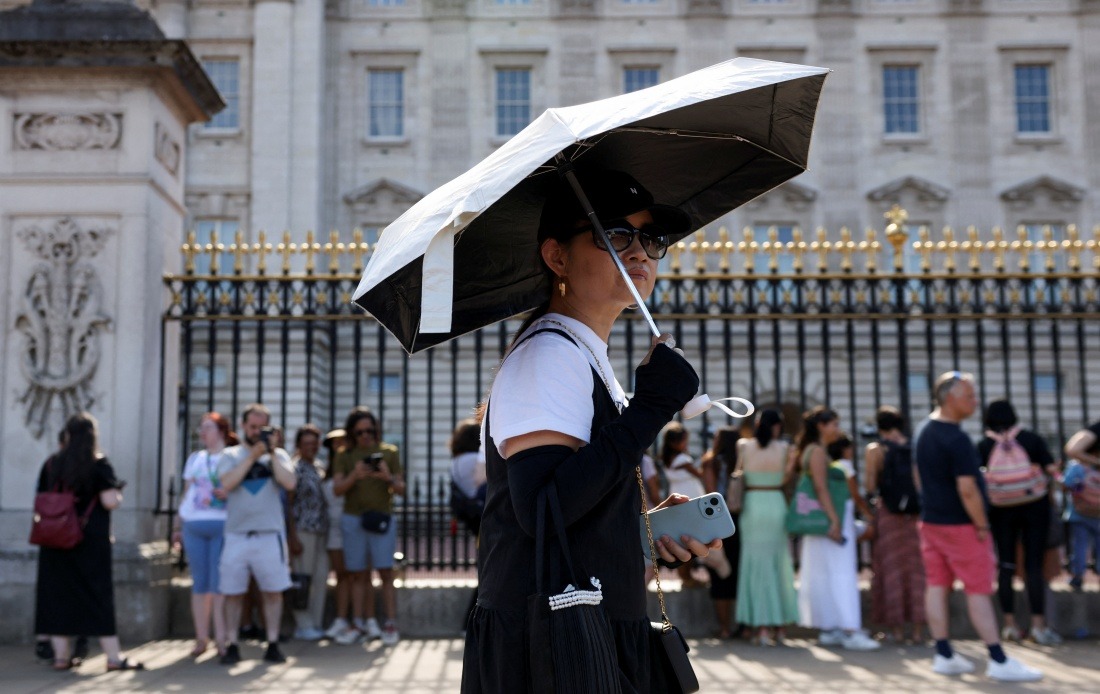
Britain's iconic ceremonial guard changes at Buckingham Palace have been cancelled this week as the country braces for an exceptionally dangerous heatwave, with the UK Household Division prioritising the wellbeing of soldiers, horses, and spectators over maintaining the traditional pageantry that draws thousands of visitors daily.
The decision to suspend operations across multiple sites reflects the unprecedented severity of the weather event. The Met Office, Britain's national weather service, issued a rare red alert on Monday—the highest level of heat warning—covering swathes of southern England including London, Wales, and surrounding counties. This classification indicates a genuine threat to life and critical infrastructure, not merely uncomfortable conditions.
Forecasters anticipate temperatures will climb to 39 degrees Celsius on Wednesday and Thursday, with some areas potentially exceeding these readings and potentially breaking the UK's June temperature record. For a nation where summer highs typically range between 20 and 25 degrees Celsius, such extremes pose severe risks to public health, particularly among vulnerable populations and outdoor workers exposed to direct sunlight for extended periods.
The Household Division's statement emphasised that maintaining ceremonial standards was secondary to protecting those involved in these operations. Soldiers standing motionless in full dress uniforms and ceremonial bearskin hats, along with the military working horses that feature prominently in guard changes, face acute heat stress risks. Large crowds of tourists and well-wishers who gather to witness these spectacles—often queuing in open spaces without adequate shade—would also have been vulnerable, particularly elderly visitors and young children.
While most guard changes remain suspended entirely through Thursday, organisers have devised a compromise for the Royal Horse Guards ceremony scheduled for Wednesday. Rather than proceeding at the customary time, this event will commence significantly earlier in the morning when temperatures remain relatively cooler. The modified schedule will also eliminate the elaborate ceremonial pageantry that typically accompanies these occasions, focusing instead on essential operational elements. Additionally, soldiers will be positioned in shaded areas wherever possible and rotated at more frequent intervals to prevent heat exhaustion.
The heatwave's impact extends far beyond ceremonial disruptions. Schools across southern England have shuttered en masse, unable to maintain safe environments for children and staff. Somerset county council announced closures affecting approximately 100 educational institutions, while Buckinghamshire reported similar numbers. Gloucestershire suspended classes in more than 80 schools. London, which falls within the red weather warning zone, saw nearly 10 major schools cancel in-person instruction. These decisions reflect genuine concerns that buildings without air conditioning or adequate ventilation could reach dangerous temperatures, particularly in classrooms where students congregate in confined spaces.
For Malaysian and Southeast Asian readers, Britain's struggle with extreme heat may seem counterintuitive given the region's tropical climate. However, the dangers are intensified by a population and infrastructure unaccustomed to such temperatures and unprepared to manage them. Unlike tropical nations where air conditioning, heat management protocols, and public awareness about heat-related illness are standard, British buildings, vehicles, public transport systems, and social services operate on assumptions of moderate weather. A sudden spike to 39 degrees Celsius thus creates cascading disruptions across all sectors simultaneously.
This episode illustrates how climate change is delivering unprecedented challenges to regions historically characterised by temperate conditions. The red alert itself represents a relatively new phenomenon for the UK, introduced only in recent years as extreme weather events increased in frequency. Scientists link such intensifying heat events to broader atmospheric changes driven by global warming, suggesting that what appears exceptional today may become routine within decades.
The decision to cancel guard changes also carries subtle diplomatic implications. These ceremonies represent core elements of British pageantry and national identity, with Buckingham Palace ceremonies particularly significant as they occur at the residence of the monarch. Suspending them for weather—rather than security, political, or ceremonial reasons—signals that British authorities now consider environmental dangers sufficiently grave to override even iconic traditions, a threshold rarely crossed in modern times.
For the UK's hospitality and tourism sectors, the cancellations represent significant disruption during peak summer season when international visitors, including many from Southeast Asia, typically visit London. Tour operators must reorganise schedules, and attractions lose revenue-generating crowds, compounding economic impacts of heat-induced closures in retail, hospitality, and service industries.
Looking ahead, the temporary nature of these suspensions underscores broader questions about infrastructure adequacy. As climate patterns shift, questions will intensify about whether Britain should invest substantially in heat-resilient infrastructure, including enhanced building ventilation, expanded air conditioning in public facilities, and revised protocols for outdoor ceremonial events. The cancellations this week may represent merely the opening chapter of a longer adjustment process as the nation confronts environmental realities that previously seemed remote.