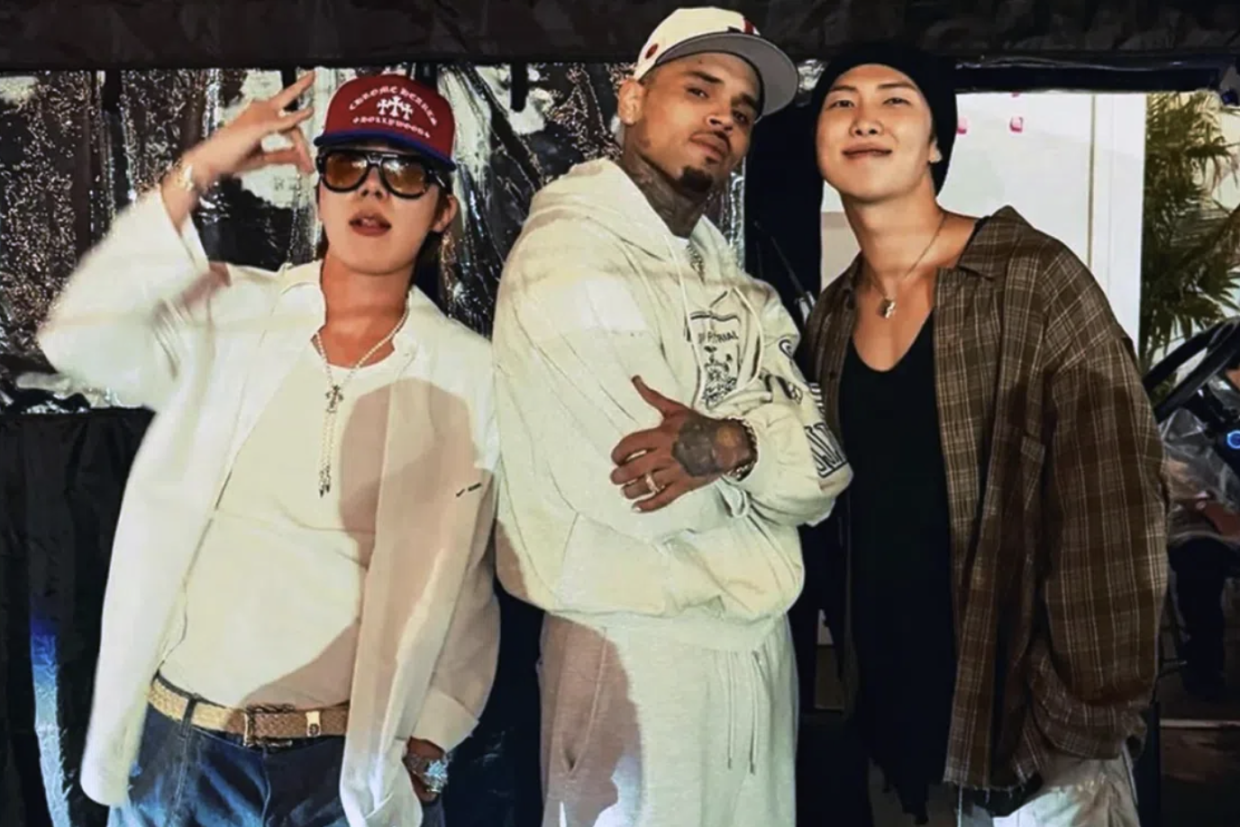
The K-pop phenomenon BTS found itself embroiled in controversy this week when two of its most prominent members were photographed attending a concert by American musician Chris Brown in Canada. The incident, documented on social media by Brown himself on August 13, has triggered a significant rift within the global fanbase, with many questioning the group's judgment in publicly associating with an artist whose personal conduct has been marked by repeated allegations and convictions related to violence.
Chris Brown's troubled history extends across more than a decade, beginning with his highly publicized 2009 conviction for assaulting his then-girlfriend Rihanna. Since that landmark case, which brought widespread attention to domestic violence in the entertainment industry, Brown has accumulated additional serious allegations that have kept him at the centre of ongoing controversies. In 2016, he was arrested following accusations that he had threatened a woman with a firearm at his Los Angeles residence, though he was subsequently released on bail. The pattern continued in 2018 when Brown faced allegations of sexual assault conspiracy involving guests at his home, a case that concluded only after legal settlement was reached.
The musician's legal difficulties continued internationally when he was detained in Paris in 2019 after a woman accused him of rape. Those charges were eventually dropped following his release. More recently, in 2022, Brown faced serious allegations of drugging and sexual assault involving a woman aboard a yacht in Miami, with the alleged victim expressing genuine fear for her safety during the incident. Just last year, a Los Angeles jury determined that Brown bore financial liability of US$12.9 million to the sister of his housekeeper, stemming from an attack by his dog.
For many within the global BTS fanbase, known collectively as ARMY, the sight of group leader Kim Namjoon and J-Hope openly attending Brown's concert felt like a betrayal of values they believed the ensemble represented. Social media erupted with expressions of disappointment and anger, with several fans indicating that their perception of BTS had fundamentally shifted following what they perceived as tacit endorsement of someone with a documented pattern of abusing women. One female fan shared a particularly poignant statement, revealing her own experience with sexual assault and explaining that she found it deeply troubling to see artists she admired publicly supporting individuals with histories of violence against women. "I am a woman before I am an Army," she posted, encapsulating the internal conflict many felt between their fandom and their personal values.
Within the fanbase, however, responses diverged sharply. Some supporters of BTS rushed to defend the members, arguing that musicians should enjoy the same freedoms as ordinary people to attend concerts of artists whose music they appreciate, without facing public judgment or scrutiny. This defensive posture, common in fandoms when their preferred artists face criticism, prompted sharp counterarguments from other voices on social media. Critics emphasized that celebrities occupy fundamentally different positions than ordinary people, given their enormous global influence and the millions of people who look to them as role models. They contended that with such visibility comes an unavoidable moral responsibility to consider the implications of their public actions and associations.
The debate transcended simple disagreement about concert attendance, evolving into a broader discussion about complicity and silence. Users on the platform X highlighted how defending artists under these circumstances effectively enabled abusive individuals to continue prospering despite their documented misconduct. Several commenters pointed out the problematic nature of fans publicly defending their idols' choices, noting that such posts would likely be seen not by the celebrities themselves, who would presumably never read individual tweets, but rather by fellow fans who had themselves experienced domestic violence or abusive relationships. These discussions underscored how public statements of support, even if well-intentioned, could inadvertently cause harm to vulnerable members of the community.
Other contributors to the online conversation deconstructed the philosophical underpinnings of selective activism, breaking down how silence in the face of misogyny is itself a form of complicity, regardless of whether an individual actively participates in making misogynistic statements. This argument resonated particularly within Southeast Asian and global discourse around accountability and the responsibility of influencers to use their platforms consciously. The discussion revealed growing awareness among younger audiences that neutrality on issues of abuse and exploitation is not actually neutral at all, but rather serves to protect perpetrators.
Notably, the controversy drew parallels to previous instances where artists have taken clear public stances against abusers. Swedish singer Zara Larsson, who has previously collaborated with BTS, shared on social media that she maintains a comprehensive list of abusers blocked on music streaming platforms, explicitly naming Chris Brown among those she refuses to support. Her principled stance highlighted the contrast between artists who actively distance themselves from accused abusers and those who appear indifferent to such concerns.
This incident arrives as BTS navigates another controversial association, having recently collaborated with Google's artificial intelligence system Gemini on an advertising campaign. That partnership similarly drew criticism from fans, who expressed concern about the environmental consequences of artificial intelligence technology, particularly the massive computational resources required to develop and operate such systems. The joint advertisement, designed to emphasize creative possibilities emerging from technology and art convergence, was displayed prominently on the Las Vegas Sphere, ensuring maximum visibility. Collectively, these recent decisions have prompted broader conversations within the fanbase about whether the group's actions align with the values and social consciousness many supporters believed the ensemble represented.
The situation underscores an ongoing tension within global pop culture: the gap between the carefully curated public images of celebrities and their private choices, and the expectations fans place on those they admire. For ARMY members wrestling with disappointment, the incident raises fundamental questions about where lines should be drawn, what it means to support an artist whose personal conduct one finds troubling, and whether commercial success and artistic talent should exempt anyone from accountability for their actions. As discussions continue across social media platforms, the controversy may force BTS members and their management to reconsider how their personal associations are perceived by their global fanbase.

