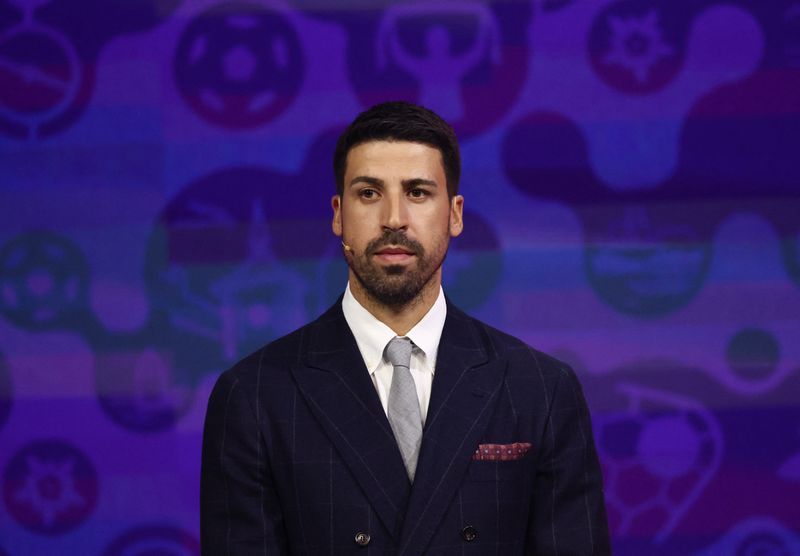
Sami Khedira, the German midfielder who won the World Cup in 2014, has become an unexpected voice championing one of football's most emotionally complex phenomena: brothers choosing to represent different nations on sport's grandest stage. Speaking at the Home of Football museum in New York, Khedira dismissed concerns about familial division, instead framing the issue as a natural consequence of globalisation, migration and the evolving nature of identity in the 21st century. His perspective carries particular weight given his own experience navigating dual heritage, having a German mother and Tunisian father, while his brother Rani represents Tunisia at the tournament.
Khedira's outlook reflects a fundamental shift in how football must grapple with questions of nationality and belonging. Rather than viewing brothers separated by international flags as problematic, he positions them as emblems of a wonderfully diverse modern world. This stance challenges traditional narratives that have long treated national team football as requiring singular, undivided loyalty. For Khedira, such expectations ignore the lived reality of millions of players whose families span continents and cultures. He articulated this position with characteristic directness: the phenomenon is neither a football problem nor an identity crisis, but rather a portrait of contemporary sport that mirrors genuine human experience.
The 2026 World Cup will showcase this diversity prominently, with eight sets of brothers participating across the tournament. Four brother pairs will compete together on the same international team, including Theo and Lucas Hernández for France, Jurrien and Quinten Timber for the Netherlands, and Laros and Deroy Duarte for Cape Verde. However, the four pairs separated by national allegiance tell equally compelling stories. Iñaki and Nico Williams represent perhaps the most striking example, both playing as teammates at Athletic Bilbao while Iñaki represents Ghana and Nico plays for Spain. Similarly, Guela and Désiré Diouf are divided between the Ivory Coast and France, while Derrick Luckassen and Brian Brobbey play for Ghana and the Netherlands respectively, despite sharing maternal lineage but carrying their fathers' surnames.
Khedira's own journey provides crucial context for understanding his measured perspective on these divisions. Born and raised in Germany to parents from different worlds, he has experienced firsthand the complications of navigating dual cultural identity. He recalls how his appearance and surname prompted questioning of his Germanness from some Germans, while Tunisians sometimes viewed him as German. Rather than experiencing this as contradiction or confusion, Khedira has integrated both identities as complementary aspects of his personality. He emphasised that carrying two nations and two mentalities simultaneously, rather than in opposition, makes individuals special and enriches rather than diminishes their character.
The emotional resonance of these divided families became vividly apparent to Khedira during a recent friendly match between France and the Ivory Coast, when the Diouf brothers sang both national anthems before kickoff. This moment transcended the tactical elements of football and became, in Khedira's words, a powerful multicultural statement that demonstrated sport's capacity to communicate something profound beyond match outcomes. The image stayed with him precisely because it captured football's unique ability to express human complexity and global interconnection on a platform watched by billions. Such moments, he argued, send strong messages to the wider world about diversity and acceptance.
The structural changes to World Cup competition have amplified these dynamics considerably. The expansion to 48 teams has enabled nations like Cape Verde, Curaçao and Haiti to compete on football's biggest stage, fundamentally altering the competitive landscape. This expansion has also created space for players with dual heritage to make genuine choices about representation rather than facing a binary decision between world powers or being forced to declare for traditional footballing establishments. Simultaneously, the gap between European and South American dominance and the improving capabilities of African and Asian sides has narrowed noticeably, a development Khedira attributes to expanding access to quality coaching, enhanced infrastructure and educational opportunities in developing football nations.
However, Khedira acknowledged a crucial responsibility that wealthier European federations must embrace. Rather than simply benefiting from talented players with dual nationality who choose to represent them, these established football powers have a duty to genuinely support development at source. This perspective addresses a legitimate criticism often levelled at international football: that rich nations systematically recruit promising players from developing countries, exacerbating competitive imbalances rather than genuinely growing the game. Khedira's framing suggests that authentic stewardship of global football requires investing in infrastructure, coaching and systems in emerging footballing nations rather than merely harvesting their talent.
The most challenging aspect of this modern reality, according to Khedira, falls upon young players themselves. Teenagers navigating recruitment approaches from multiple national federations face extraordinary pressure to commit to decisions whose long-term implications they cannot fully comprehend. Federations, media narratives and heritage all exert influence on choices that will define these players' identities and career trajectories. Khedira reflected on his own experience at eighteen, when making such a consequential personal decision felt overwhelming despite having grown up with clarity about his dual identity. He emphasized that no political pressure, heritage expectation or external force should dictate these choices; instead, they must ultimately emerge from internal conviction.
Khedira's counsel to young players faced with such decisions emphasised the primacy of instinct over obligation. Geography of birth matters less than the genuine emotional pull a player feels toward a nation and community. This gut-level authenticity cannot be manufactured through external pressure or compelled by political considerations. Yet simultaneously, he acknowledged the immense difficulty placed on young athletes who must navigate these emotions while managing the expectations of families, federations and nations. The tension between personal authenticity and external pressure remains fundamentally unresolved, and Khedira's perspective suggests it should remain so—these decisions must ultimately rest with the player, guided by their own sense of belonging rather than imposed from outside.
For Malaysian and Southeast Asian observers, Khedira's philosophy carries particular relevance. The region's increasing integration into global footballing networks means more players with regional heritage will face similar decisions about national representation. As Southeast Asian football develops and expands opportunities for players with dual heritage, the frameworks for thinking about these choices will become increasingly important. Khedira's emphasis on authenticity, respect for the complexity of multiple identities, and the illegitimacy of coercive pressure provides a useful philosophical foundation for navigating these questions with dignity and humanity.