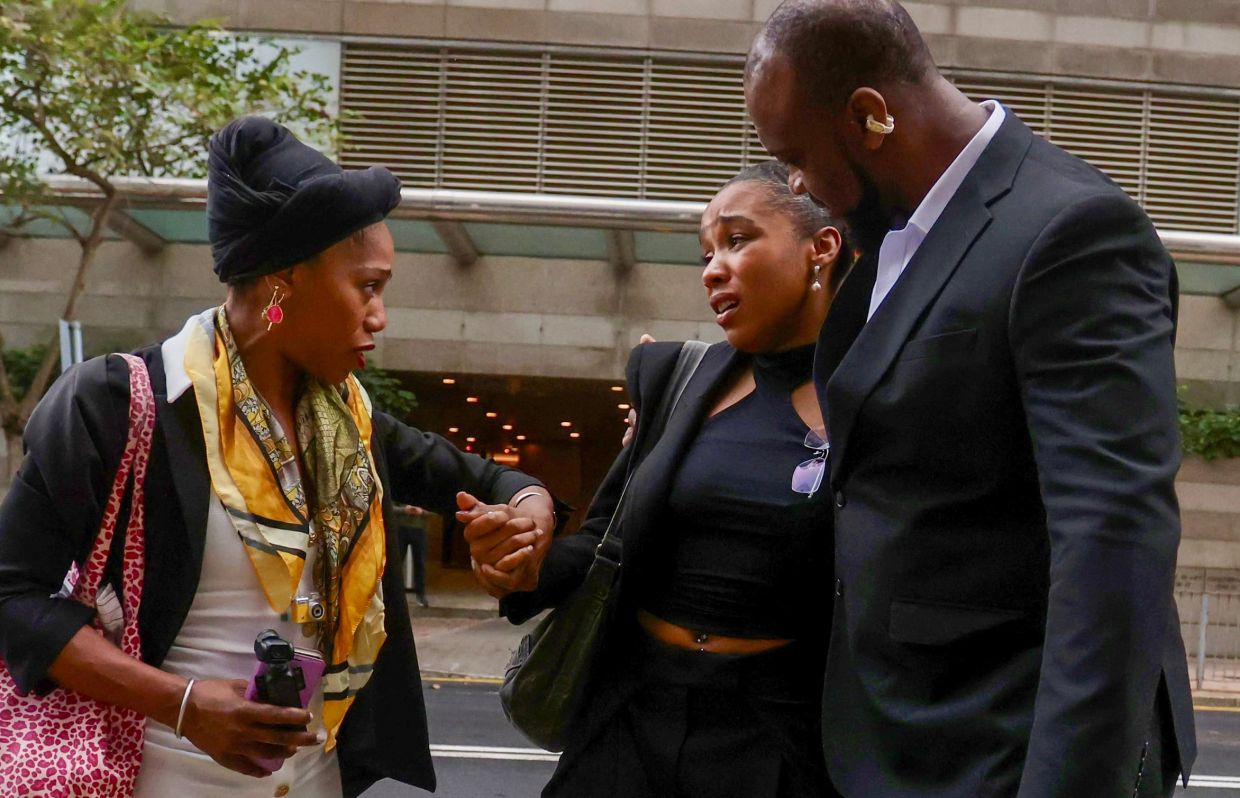
A Hong Kong court has handed down a six-year prison sentence to a 26-year-old British woman convicted of attempting to extort £100,000 from a compatriot by making false rape allegations. Judge Adriana Noelle Tse Ching delivered the verdict at the District Court, finding Isabel Anonia Barbra Eudora Rose guilty of blackmail and perverting the course of public justice in a case that underscores the potential for false accusations to cause serious harm while simultaneously raising questions about how such claims are investigated and prosecuted in Hong Kong.
Rose, who worked in event management in London, travelled to Hong Kong in late January 2024 following a chance meeting with the complainant during a previous visit to Thailand. Upon arriving on January 31, she visited the man at his Central district flat, where she later claimed he had assaulted her. Within hours, the pair had begun exchanging messages that would ultimately form the crux of the prosecution's case, with Rose's subsequent demands for increasingly large sums of money eventually reaching the £100,000 figure that triggered criminal charges against her rather than advancing a rape prosecution.
The court's assessment of the evidence proved pivotal to Rose's conviction. Judge Tse examined the contemporaneous text exchanges between Rose and the man, finding them fundamentally incompatible with Rose's allegations of sexual assault. The man had stated that he requested Rose perform oral sex but respected her refusal, later apologising for what he characterised as misreading signals and moving too hastily. Rose's own messages, which included questions about his emotional state rather than expressions of trauma or anger consistent with sexual assault, led the judge to conclude that the rape allegation had been deliberately fabricated from the outset.
The forensic evidence presented additional complications for Rose's account. Medical examination revealed bruising on her neck but notably no genital injuries—an absence the judge found significant given the nature of the alleged assault. The lack of physical evidence corroborating penetrative intercourse, combined with the messaging patterns, strengthened the court's finding that while the pair had engaged in some intimate contact, no rape had occurred. This determination would reshape the entire narrative of the case, transforming Rose from a potential victim into an alleged perpetrator of extortion.
The financial dimension of the dispute emerged gradually through the evidence. Initially, Rose and the man discussed compensation for travel and accommodation expenses, with him agreeing to pay £2,000 at her request. Rose quickly escalated this demand to £5,000, then deployed emotional language suggesting she had sacrificed everything for the encounter. However, the most damaging evidence involved an apparent demand for £100,000, which the man explicitly stated he could neither produce nor afford. Despite this figure not appearing in standard text records, Judge Tse accepted the prosecution's argument that Rose had made the demand through disappearing messages or voice communications that she subsequently deleted—a finding that emphasises how digital evidence can be reconstructed or inferred from circumstantial indicators.
The judge's characterisation of Rose's conduct revealed the court's severity in assessing her actions. Tse described the offence as "cruel and evil," emphasising that Rose had deliberately exploited the man's goodwill, emotional vulnerability, and romantic interest. The verdict stressed that Rose had pursued financial gain from the moment of her arrival in Hong Kong, methodically escalating her demands within two days and leveraging the threat of a false police report as leverage. This narrative painted a picture of calculated opportunism rather than a victim responding to trauma, fundamentally undermining any sympathy the court might have extended.
The sentencing framework reflected the judge's assessment of culpability. Tse established a five-year starting point for the blackmail conviction alone, with an additional year imposed for perverting the course of public justice to be served consecutively, yielding the six-year total. This approach signalled that the false rape report carried substantial weight in the sentencing calculus, as the judge explicitly condemned Rose's decision to lodge a police complaint as "vengeful and wicked behaviour" designed to punish the man for refusing to meet her financial demands. The judge's language—describing Rose as "an author of her own wrongdoing"—rejected any suggestion that circumstance or misunderstanding had driven her actions.
Rose's response to conviction and sentencing offered a stark contrast to the court's conclusions. After the guilty verdict in March, she broke down emotionally in the courtroom and was remanded in custody pending sentence. Subsequently, in an interview with the South China Morning Post, Rose expressed bewilderment at her circumstances, insisting that her original rape report had been genuine and that the rapid collapse of that charge into a blackmail prosecution made no logical sense. She described arriving in Hong Kong as a tourist facing imprisonment, suggesting a fundamental disconnect between her understanding of events and the judicial determination of what had actually transpired.
Rose's statement to the media revealed the contours of her defence narrative even after conviction. She expressed disbelief that police had effectively abandoned the rape investigation within 24 hours, suggesting that officers had indicated the blackmail case would receive priority attention. This framing implied that Rose viewed herself as having been redirected toward criminal liability rather than recognised as a victim, though the court's extensive analysis of the messaging evidence had demonstrated that no credible rape allegation had ever existed. Her use of phrases such as "suck it all up" in reference to her imprisonment conveyed a sense of resignation rather than acceptance of guilt, indicating that Rose maintained her conviction of unjust treatment.
The case carries significant implications for how Hong Kong handles the intersection of sexual assault allegations and extortion claims. While false rape accusations represent a serious matter warranting prosecution, the case also illustrates the investigative complexities involved in distinguishing between genuine trauma responses and deliberate fabrication. The judge's reliance on messaging patterns and the absence of physical injury to overturn an initial rape complaint suggests a particular evidentiary threshold that may influence how future complaints are assessed. For expatriate communities in Hong Kong and other regional business hubs, the verdict underscores the legal jeopardy involved in allegations of sexual misconduct, as well as the potential consequences when such allegations are deployed for financial purposes.
The broader context of this prosecution within Hong Kong's legal framework also warrants consideration. The conviction under common law principles of blackmail and perverting the course of justice reflects prosecutorial confidence in circumstantial evidence and inferred communications, demonstrating the territory's willingness to pursue complex digital forensic arguments. For Malaysian and Southeast Asian readers, particularly those engaged in business, education, or tourism in Hong Kong, the case exemplifies how what begins as a dispute over intimate relations can escalate rapidly into serious criminal charges with imprisonment consequences measured in years rather than months. The verdict's emphasis on the defendant's character and motivations, as distinct from circumstances or misunderstandings, suggests that Hong Kong courts scrutinise the credibility and consistency of accusers with considerable rigour when evidence is contested.

