Fay Manners, a 39-year-old British mountaineer, has become the first British woman to establish an entirely new climbing route on the legendary Eiger North Face in the Swiss Alps. Partnering with Swiss climber Roger Schaeli, Manners spent 13 days in August scaling and mapping a previously unclimbed section of the mountain, creating what they named "Solar Eclipse"—a demanding 2,952-foot, 33-pitch route that showcases both technical skill and creative vision in alpine climbing.
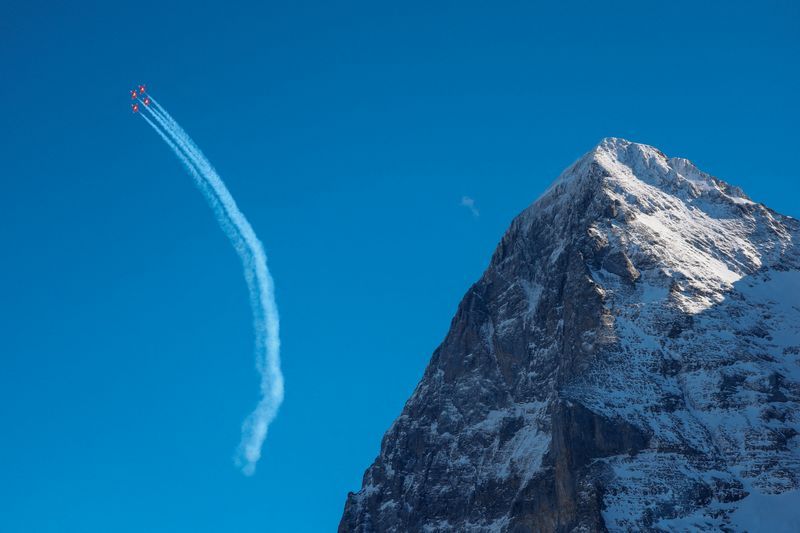
The Eiger North Face itself carries formidable historical weight. This 5,900-foot wall of rock and ice, part of the Swiss Alps, has long represented one of mountaineering's ultimate challenges. Notorious for extreme weather conditions, cascading rockfall, and treacherous terrain, the face claimed numerous lives during early climbing attempts before a German-Austrian team succeeded in the first ascent in 1938. The mountain's reputation as a proving ground for elite climbers remains undiminished to this day, making Manners' accomplishment particularly noteworthy.
Manners first encountered the Eiger North Face four years earlier when she ascended the established Heckmair Route. That experience proved transformative. Rather than accepting the mountain as merely a destination to check off, she became fascinated by the wall itself, researching it exhaustively and envisioning the possibility of charting her own path across its surface. This shift in perspective—from climbing someone else's line to creating an original one—distinguishes her achievement and reveals her deeper commitment to advancing the sport on her own terms.
Establishing a new route differs fundamentally from repeating an existing climb. Whereas climbers following established paths benefit from accumulated knowledge, published difficulty ratings, and guidance from predecessors, those forging new ground operate in uncertainty. Manners must anticipate hazards, determine optimal protection placement, and confront the genuine possibility of finding her chosen line impassable. "You don't know how hard it's going to be, you don't know the sort of protection that you'll need to put in, you really don't know if you're going to be able to make it to the top," she explained to Reuters. This uncertainty, combined with the technical demands, elevates new route establishing above standard mountaineering.
Beyond the physical achievement, Manners views her accomplishment through a lens of professional equity and cultural representation. Within mountaineering, the authors of new routes occupy a special status—they earn recognition through guidebooks and climbing history. Yet when women examine these records, they encounter predominantly male names. This visibility gap silently communicates a message about who belongs in elite climbing and who drives innovation within the sport. Manners recognises this psychological toll. "If you're looking in the guidebook and every single name of the person that's opened a route is male ... somehow that's telling you that men are opening routes and women aren't," she noted. Her point extends beyond individual recognition; it concerns how women internalise limitations about their own capabilities.
Women have nonetheless been part of the Eiger North Face narrative for decades, though often overshadowed. In 1964, Daisy Voog became the first woman to successfully climb the face—an achievement that itself reflected gender barriers within the sport, as she had previously been rejected from a mountaineering club simply for being female. Five years later, Japanese climber Michiko Imai became the sole female member of the team that established the Japanese Summer Direttissima route. These milestones demonstrate that women possessed the skill and courage for such undertakings, yet faced institutional and cultural resistance that discouraged their participation.
Manners' own journey to professional mountaineering illustrates how subtle gender assumptions shape career trajectories. Growing up in England with genuine athletic talent and aspirations, she confronted repeated messaging that women's sports careers offered limited financial prospects. Heeding this advice, she pursued data science instead, moving to Chamonix while maintaining dual careers. Only when The North Face offered her sponsorship did the possibility of full-time climbing feel real. "I really only realised that it was possible when it was happening," she reflected, "because I still had in my mind that there was no way that a female could have a career in sports." Her delayed recognition of her own potential testifies to how pervasive gendered assumptions operate, even among talented individuals.
Manners probes deeper into how these cultural narratives shape behaviour and self-perception. From childhood, women often receive subtle messages—"you can't carry as much, so I'll carry more"—that accumulate into internalized doubts about capability. These stereotypes prove insidious precisely because their subtlety renders them nearly invisible. The damage occurs not through explicit bans but through normalised assumptions that women absorb unconsciously. Manners suggests that eliminating such disparities requires establishing genuine equality from the start, so that women never develop the foundational doubts that later constrain their ambitions.
Looking forward, Manners envisions the Solar Eclipse route attracting other climbers, and her aspirations reveal her commitment to advancing the sport for women. She explicitly hopes that all-female teams will attempt to repeat the route, creating peer models and mentorship networks for emerging women climbers. This vision extends beyond personal achievement; she recognises that pioneering routes has lasting impact through the inspiration and pathways they create for others. For Manners, success ultimately means generating opportunities for subsequent generations of climbers.
For Southeast Asian readers and the broader Asia-Pacific mountaineering community, Manners' accomplishment carries regional resonance. The pioneering Japanese climber Michiko Imai appears in this same historical lineage, suggesting that representation matters across cultures. As mountaineering gains popularity throughout Southeast Asia, the visibility of women establishing routes—not merely climbing them—becomes increasingly important. Countries with growing alpine communities may observe how gender barriers operate even within elite sports, and how intentional efforts to diversify route-establishing endeavours strengthen the sport's foundation. Manners' example demonstrates that barriers dissolve through participation, visibility, and deliberate challenge to assumptions about who belongs in mountaineering's most demanding domains.

