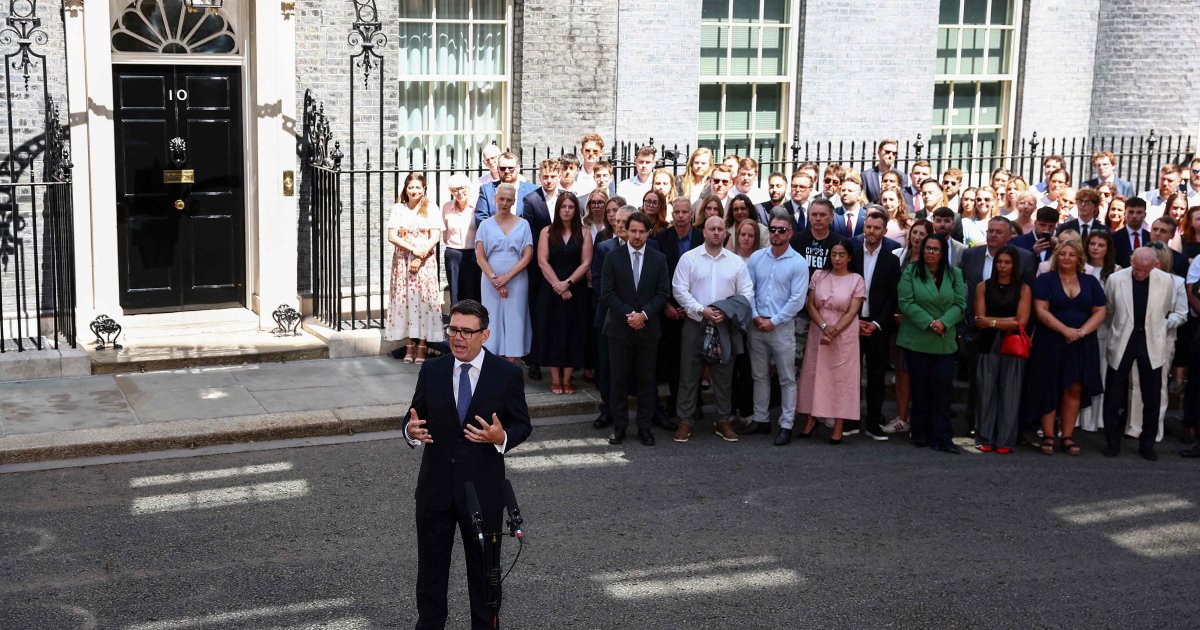
Britain's electorate greeted the arrival of Andy Burnham as prime minister on Monday with a mixture of resignation and exasperation, marking yet another transition in a leadership carousel that has left voters depleted and disengaged. The appointment represents the seventh occupant of 10 Downing Street since early 2016—a pace of political turnover that has become emblematic of a nation struggling with institutional stability and public confidence. Citizens across the country, from London to the Scottish Highlands, have expressed weariness at the continuous cycle of prime ministerial transitions, each arrival bringing fresh pledges and policy directions that frequently diverge from their predecessors.
The frequency of these transitions—roughly one every eighteen months—stands as a stark reflection of deeper fragmentation within Britain's political system. This is not merely a matter of electoral cycles or natural succession; rather, it reveals how internal party dynamics, ideological fracturing, and volatile public opinion have combined to produce a state of perpetual governmental instability. The contrast with previous decades is instructive: Britain historically witnessed substantially longer prime ministerial tenures, with leaders like Margaret Thatcher and Tony Blair each commanding the office for over a decade. The recent pattern deviates sharply from this historical norm, suggesting structural changes in how British politics now operates and how parties manage their internal power structures.
Voters interviewed across the country articulated a common sentiment—exhaustion with the endless cycle of announcements, policy reversals, and recalibrations that accompany each new administration. For many households struggling with cost-of-living pressures, the rapid succession of leaders has coincided with economic difficulty, making the political churn feel particularly frustrating. Citizens have grown cynical about whether any new prime minister can deliver meaningful solutions or whether each administration will merely rehearse familiar patterns of promise and disappointment before yielding to the next transition.
The implications for governance extend beyond public morale. Frequent leadership changes disrupt policy continuity, complicate long-term strategic planning, and potentially weaken Britain's standing in international affairs. Other nations observing this instability may question whether the United Kingdom can maintain coherent positions on trade, security, and diplomatic engagement. Within the European sphere and amongst Commonwealth partners, the perception of British political dysfunction may influence negotiations and bilateral relationships.
For Malaysian observers, the British situation offers instructive parallels and contrasts. While Malaysia's own political landscape has experienced significant transitions in recent years, the pace and nature of changes differ from Britain's scenario. The institutional frameworks, constitutional arrangements, and party systems across the Commonwealth exhibit both similarities and divergences. Malaysia's political experience with coalition governments and coalition adjustments presents different dynamics but also creates vulnerabilities to instability. The British case demonstrates how even long-established democracies with strong institutional traditions can experience periods of leadership volatility, suggesting that no system remains immune to such pressures.
The underlying causes of British political turbulence are multifaceted. Ideological divisions within major parties, particularly over issues like Europe, immigration, and economic policy, have generated internal conflicts that frequently culminate in leadership challenges. The rise of factional politics within the Conservative Party and Labour's own internal struggles have both contributed to the destabilization of traditional parliamentary authority. Social media amplification of political divisions and the 24-hour news cycle have accelerated conflicts that might previously have remained within party structures, instead becoming immediate public spectacles.
Andy Burnham's appointment arrives amid expectations that he will attempt to restore some coherence to British governance and address pressing national concerns including the National Health Service's funding crisis, regional inequality, and economic growth. His background as mayor of Greater Manchester and previous positions within government provide experience navigating complex institutional arrangements, though observers acknowledge the inherent difficulty of establishing stability within an already-fractured political environment.
The voter fatigue evident in Britain reflects a broader phenomenon affecting democracies globally—a declining patience with political uncertainty and a hunger for stable, competent governance focused on tangible results. Citizens increasingly demand administrations that prioritize bread-and-butter issues over internal party politics. When leadership succession becomes frequent and visible, it inevitably channels public attention toward political processes themselves rather than substantive policy outcomes, deepening cynicism about whether politicians prioritize national interests.
For British institutions and international observers, the question now becomes whether Burnham's administration can interrupt the cycle of instability. Success would require consolidating party unity, developing coherent long-term policy frameworks, and delivering measurable improvements in areas most affecting ordinary households. Failure to interrupt the pattern would likely perpetuate voter disengagement, further eroding public confidence in democratic processes and political leadership—consequences that extend well beyond Westminster and reverberate through Britain's relationship with its allies and the broader international system.

