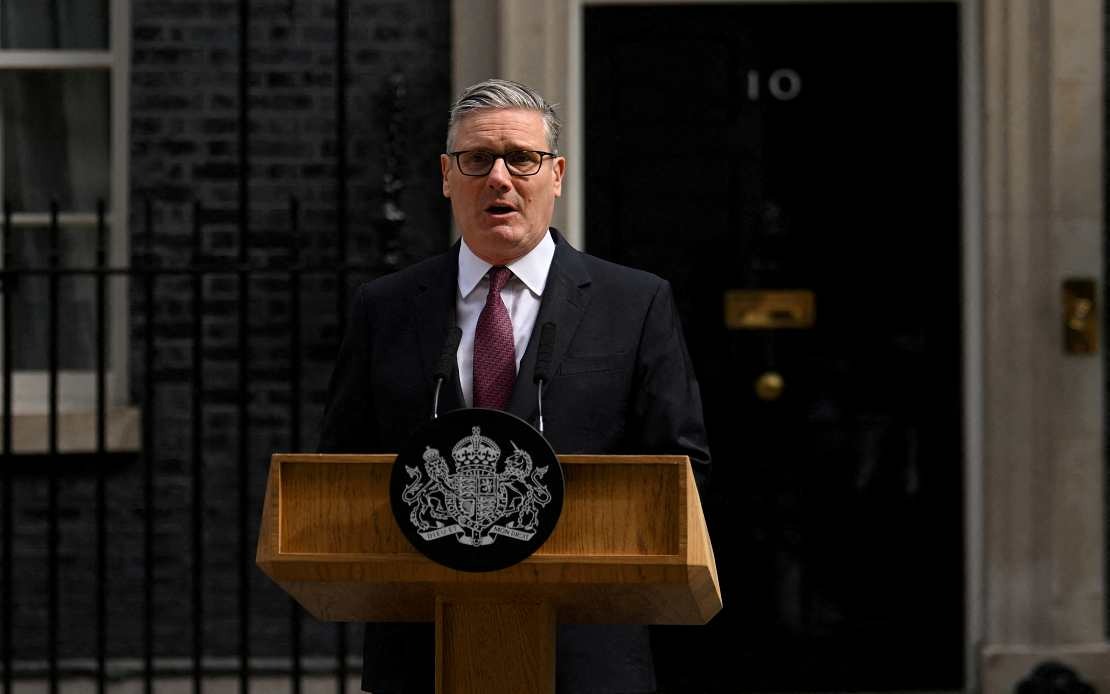
Keir Starmer's tenure as Britain's Prime Minister is drawing to an abrupt close. The Labour leader, who swept to office less than two years ago on a wave of optimism and promises to restore stability after years of Conservative-led turmoil, announced on Monday that he will step down once a new party leader is chosen, with the transition to be completed before parliament returns in September. The announcement marks a stunning reversal for a politician who entered Downing Street with a commanding electoral mandate and a public yearning for competent governance.
Starmer's precipitous fall from grace reflects a broader crisis of confidence in his ability to address the issues that matter most to British voters. His approval ratings have collapsed to levels unprecedented for any serving British prime minister, a decline that accelerates each month as the public grows increasingly frustrated with the government's handling of the cost-of-living crisis and public services. Where Starmer once embodied the promise of renewal, he has become synonymous with disappointment and administrative paralysis.
The catalyst for Starmer's departure came on Friday when Andy Burnham, the Mayor of Greater Manchester, won a parliamentary by-election with a decisive margin. Burnham's victory was particularly striking because he defeated a candidate from Nigel Farage's Reform UK party, a political force that has dominated British opinion polling for more than a year and represents a genuine threat to Labour's working-class electoral base. The result galvanised the momentum building within Labour's parliamentary caucus, which had been growing restless for weeks, offering what many saw as proof of concept that a change in leadership could arrest the party's decline.
Burnham's political profile appeals to Labour MPs desperate for renewal. A seasoned politician with a reputation for clear communication and an ability to connect with ordinary voters, he represents a stark contrast to Starmer's more technocratic style. Labour strategists believe that Burnham possesses the skills and political capital necessary to rebuild public trust and reconnect the party with its traditional supporters who have drifted towards Reform UK or abstained entirely from voting. His parliamentary victory demonstrated he can still win in competitive contests.
Yet Burnham's ascension comes freighted with immense challenges and significant uncertainties. Beyond his call for fundamental economic restructuring and efforts to reduce living costs, he has offered little clarity on his vision for foreign policy, defence strategy, or economic management. This ambiguity reflects both the enormous difficulty of the problems he would inherit and the reality that many voters are drawn to him simply as an alternative to the discredited Starmer. The substance of what a Burnham government would actually do remains largely undefined.
The fiscal straightjacket constraining any new prime minister cannot be overstated. Britain carries the highest government borrowing costs within the Group of Seven wealthy nations, a reflection of elevated sovereign debt, substantial interest payments, anaemic economic growth persisting for years, and the state's difficulty in reducing public expenditure. Simultaneously, critical areas such as defence require urgent investment. These pressures have created a toxic combination where governments have minimal room to manoeuvre and must constantly reassure international bond markets that their fiscal commitments remain credible.
Burnham has previously suggested that Britain must escape its dependence on global bond markets, describing the country as being "in hock" to investor sentiment. However, whether he would act on this conviction or prove pragmatic once confronted with the reality of market discipline remains unclear. Economists at Citibank expressed particular scepticism, warning that a Burnham administration would face "a precarious fiscal situation with few tools to deliver meaningful change," suggesting that rhetorical appeals for radical economic restructuring may collide with harsh fiscal realities.
Starmer's departure represents another milestone in Britain's unprecedented political instability. He will become the seventh prime minister since the 2016 Brexit referendum, a turnover rate unmatched in nearly two centuries of British parliamentary history. This constant churning of leadership reflects a deeper pathology in British politics—successive governments have proven incapable of improving living standards, modernising public services, or managing immigration in ways that satisfy public expectations. Each new leader inherits this accumulated dissatisfaction, which inevitably overwhelms their capacity to govern effectively.
The timeline for Starmer's transition was reportedly influenced by strategic considerations around Britain's relationship with the European Union. The political advisory group Eurasia noted that allowing Starmer to remain until September would permit him to attend a UK-EU reset summit scheduled for July, enabling British diplomacy to proceed without the complications of an active leadership contest while simultaneously giving his successor several weeks to prepare for the machinery of government. This phased approach reflects an attempt to manage the transition with minimal disruption to international commitments.
For Malaysia and Southeast Asian observers, Britain's dysfunction offers cautionary lessons about political governance and economic management. The region's leaders can note how quickly public support evaporates when governments fail to deliver tangible improvements in citizen welfare, and how even substantial electoral mandates provide no insulation against the consequences of poor execution. Britain's struggle with debt, sluggish growth, and the challenge of maintaining investor confidence while addressing voter demands for change mirrors dilemmas confronting middle-income nations throughout Asia. The speed with which Starmer's majority has become almost meaningless serves as a reminder that electoral victories must be followed by effective implementation and visible results.