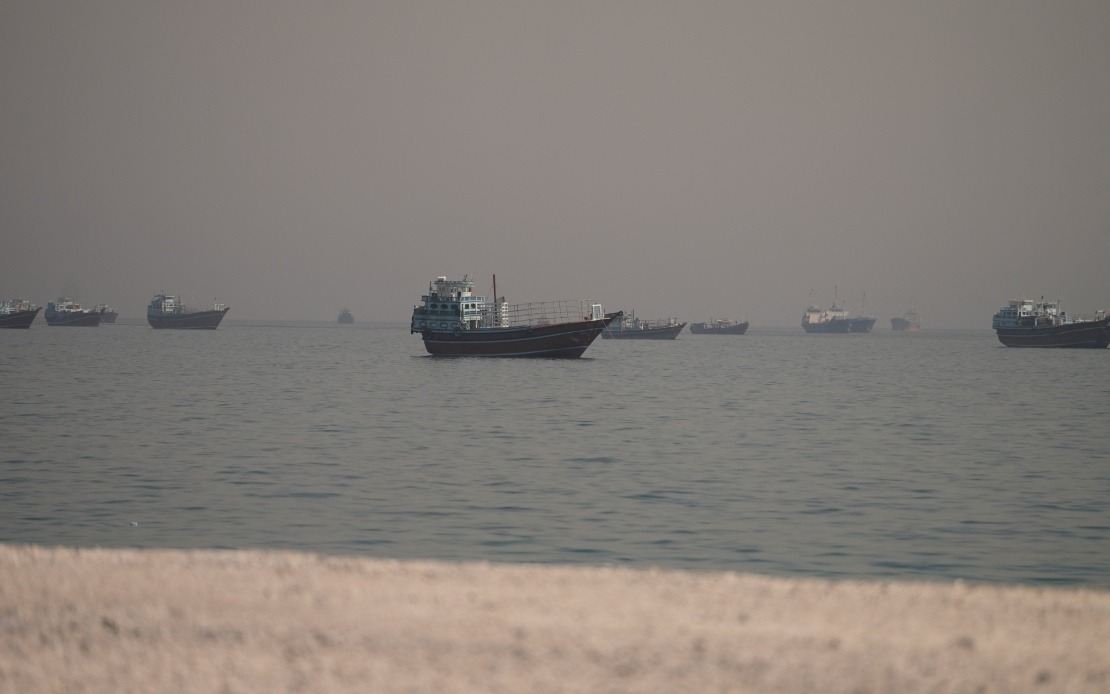
Britain and France have signalled their determination to establish a multinational military presence in the Strait of Hormuz, a pivotal chokepoint that underpins global commerce and energy supplies. In a joint statement released on Friday, Prime Minister Keir Starmer and President Emmanuel Macron framed the initiative as essential to maintaining international security and freedom of navigation, notwithstanding Iran's longstanding opposition to foreign military activity in the waterway that lies at the heart of Middle Eastern geopolitics.
The strategic significance of the Strait of Hormuz cannot be overstated for regional and global economies. Through this narrow channel between Iran and Oman flows approximately one-third of the world's traded oil and substantial quantities of liquefied natural gas, making it one of the planet's most economically vital maritime passages. Any disruption to traffic through the strait reverberates immediately across international markets and affects energy security from East Asia to Europe. The British and French governments have positioned their proposal as a response to recurring threats and incidents that have complicated transit through these waters, creating uncertainty among shipping operators and energy traders.
Crucially, the announcement emphasizes that Oman has agreed to cooperate with London and Paris in facilitating safe passage through Omani territorial waters. This partnership with Oman represents a significant diplomatic achievement, as the sultanate maintains delicate relationships with both Iran and Western powers and has traditionally sought to remain a neutral mediator in regional disputes. By securing Oman's consent, Britain and France have legitimized their initiative under international maritime law, anchoring the operation in the sovereign jurisdiction of a riparian state rather than projecting power unilaterally into contested waters.
The European powers have framed their commitment in terms of defending rules-based international order and respect for sovereignty of all nations. Their joint statement explicitly reaffirms dedication to regional stability and adherence to international law, suggesting that the mission is intended as a stabilizing rather than destabilizing measure. This rhetorical positioning attempts to distinguish their proposed operation from the zero-sum competition characteristic of great power rivalry, instead presenting it as maintenance of the existing framework that has enabled peaceful commerce.
Iran's consistent objections to foreign military involvement in the Strait of Hormuz stem from Tehran's assertion that only littoral states—principally Iran and Oman—should bear responsibility for maritime security in the region. Iranian officials have repeatedly characterized extra-regional military deployments as violations of sovereignty and provocative assertions of hegemonic power. Tehran has framed the waterway not as international commons requiring outside oversight, but as a regional space where Iran's legitimate security interests must be paramount. This fundamental disagreement about authority and responsibility in the strait reflects deeper anxieties about Western military dominance in the Middle East.
The timing of the British-French announcement occurs amid escalating tensions between Iran and Western powers over nuclear diplomacy, regional proxy conflicts, and accusations regarding maritime harassment of commercial vessels. Multiple incidents in recent years have involved Iranian paramilitary forces approaching or seizing commercial ships, generating alarm among ship operators and insurance companies. Conversely, Iran contends that Western naval forces have repeatedly harassed Iranian vessels and that the presence of external militaries creates the dangerous dynamics that lead to confrontation rather than preventing them.
For Southeast Asian economies, particularly Malaysia, Singapore, and other regional states dependent on energy imports and international shipping, the stability of the Strait of Hormuz carries existential importance. Disruption to oil and gas flows through this gateway directly impacts regional fuel prices, manufacturing competitiveness, and economic growth. Malaysian policymakers have long monitored the geopolitical dynamics of the Persian Gulf with concern, recognizing that regional rivalries thousands of kilometers away can reverberate through supply chains and energy markets that sustain Southeast Asian prosperity.
The proposed multinational mission reflects a broader Western strategy of maintaining freedom of navigation through strategically vital waterways against what Western powers characterize as coercive Iranian behavior. This approach echoes similar initiatives in the South China Sea, where the United States and partners conduct regular freedom of navigation operations asserting the right to traverse international waters despite competing territorial claims. The parallel raises questions about consistency in applying maritime law principles across different regions and potential implications for how other powers might justify military operations in contested waters.
Iran's capability to disrupt the Strait of Hormuz, whether through conventional naval forces, asymmetric tactics, or closure threats, represents a genuine strategic lever that Tehran has occasionally brandished during periods of acute tension. The credibility of this threat gives Iran significant bargaining power in negotiations with Western powers and regional states. A sustained multinational military presence, from Iran's perspective, represents an attempt to neutralize this leverage by physically interposing armed forces between Iran and commercial shipping, fundamentally altering the strategic balance in the region.
The success of the British-French initiative will likely depend on whether other significant maritime powers—potentially including India, Japan, or Gulf Cooperation Council states—choose to participate or lend support to the operation. Broader participation would expand the legitimacy and resources available to the mission, though it could also amplify Iranian perceptions of encirclement by hostile powers. Conversely, limited participation might undermine the mission's effectiveness and credibility as a genuinely multinational endeavor rather than a Western-led operation.

