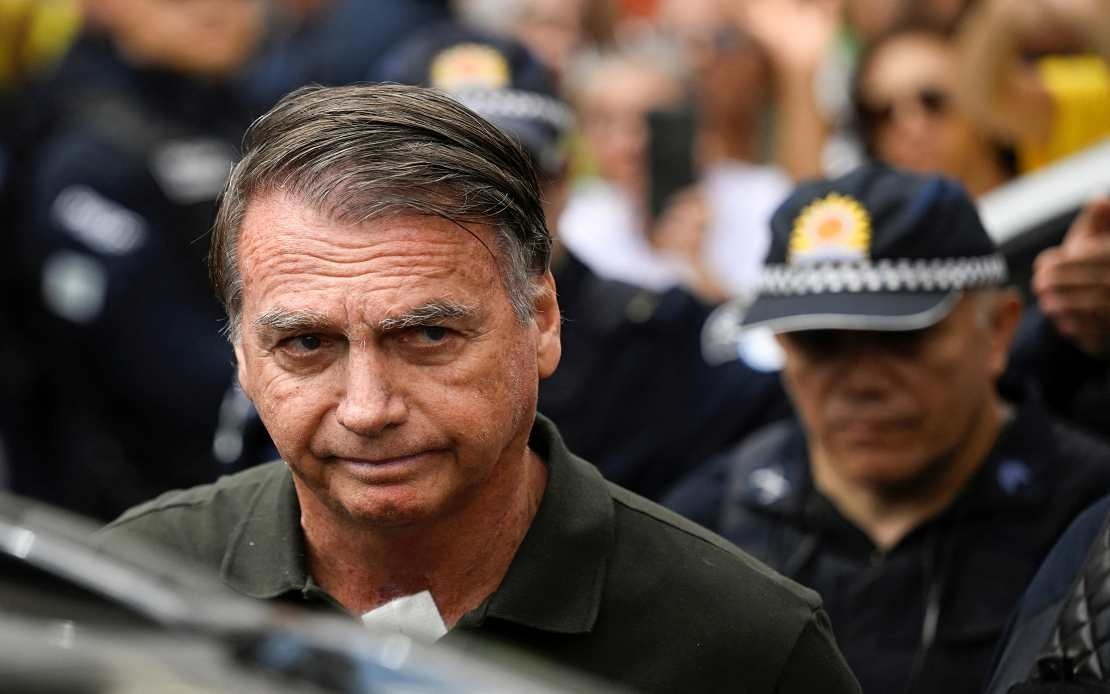
A Brazilian court has prevented Argentine President Javier Milei from visiting former Brazilian President Jair Bolsonaro, who is confined to his residence under judicial supervision. Judge Alexandre de Moraes rejected the request for the meeting, which had been scheduled for July 25 at Bolsonaro's home in Brasília, citing newly imposed restrictions on political visitors and communications.
The ruling marks an escalation in the legal constraints surrounding Bolsonaro, whose political movement remains influential despite his absence from office. Moraes tightened the house arrest conditions on the preceding day, implementing sweeping prohibitions on any visits connected to political or electoral matters through the conclusion of the presidential election cycle in October. These restrictions also prevent Bolsonaro from conveying political messages through intermediaries or representatives, substantially limiting his ability to engage in public discourse during a critical election period.
The immediate catalyst for the court's stricter measures was a handwritten letter authored by Bolsonaro expressing endorsement for his son Flávio's presidential candidacy. When Flávio publicly shared this correspondence on social media platforms, it triggered judicial intervention. The court characterised the publication as a deliberate circumvention of house arrest conditions, treating it as evidence that Bolsonaro was orchestrating political activity from his residence despite formal prohibitions.
Milei's planned visit represented a significant symbolic gesture within South American conservative politics. Both leaders rank among the continent's most influential right-wing figures, and their connection signals transnational coordination among populist and anti-establishment movements. The Argentine president had publicly announced his Brazil trip with the explicit intention of demonstrating solidarity with Flávio Bolsonaro's electoral ambitions, attempting to position himself as an international ally of the family's political resurgence.
Flávio Bolsonaro's presidential candidacy carries substantial implications for Brazilian politics. The incumbent President Luiz Inácio Lula da Silva is preparing to contest the election, and analysis suggests that Flávio will emerge as his primary rival. The younger Bolsonaro's campaign would benefit considerably from international validation and visible support from prominent regional leaders, making Milei's intended appearance strategically valuable despite the ultimate legal impediment.
The elder Bolsonaro's current status derives from his conviction on charges related to an attempted coup, for which he received a sentence exceeding 27 years of imprisonment. Rather than serving this term in institutional confinement, he secured house arrest on humanitarian grounds citing health considerations. This arrangement grants him residence in his Brasília residence while maintaining strict judicial oversight, a compromise that critics argue permits continued political influence incompatible with genuine judicial restraint.
The court's determination that Moraes dismissed the defence's visit request as legally insubstantial reflects a judicial perspective that separates purely personal encounters from those carrying political weight. By characterising the Milei meeting as inherently electoral in nature, the judge effectively prevented any reunion that would inevitably generate media coverage and political narratives beneficial to Flávio's candidacy. This reasoning demonstrates how Brazilian courts are instrumentalising house arrest conditions to constrain not merely Bolsonaro's actions but also the actions of others seeking to associate with him.
For Southeast Asian observers, this situation illuminates the complex relationship between judicial authority and political competition in democratic systems facing polarisation. The Brazilian scenario reveals how carefully calibrated legal measures can isolate political figures from allied movements, a tactic that raises questions about judicial independence when restrictions appear coordinated with one political faction's electoral interests. Malaysia's own experiences with preventative detention and restrictions on political prisoners provide comparative context for understanding how constitutional democracies navigate the balance between security measures and political participation rights.
The restrictions placed on Bolsonaro fundamentally reshape the dynamics of the 2026 Brazilian presidential race by limiting the elder Bolsonaro's capacity to actively campaign for his son while preserving his legal status as a private citizen. Moraes' interpretation of house arrest as extending to preventing visits from international political figures represents an expansive reading that transcends typical confinement arrangements. This approach acknowledges the modern reality that political influence operates through networks and symbols as much as through direct public participation, yet raises constitutional concerns about proportionality and the appropriate scope of judicial power during election periods.
The blocked visit between Milei and Bolsonaro underscores how judicial decisions in one nation can have diplomatic reverberations with neighbouring countries. While not technically preventing Milei from entering Brazil, the court order effectively discouraged his visit by eliminating its stated purpose. This outcome demonstrates how judicial systems can constrain interstate relations and political coordination among regional actors, a dynamic with implications extending beyond Brazil's borders.

