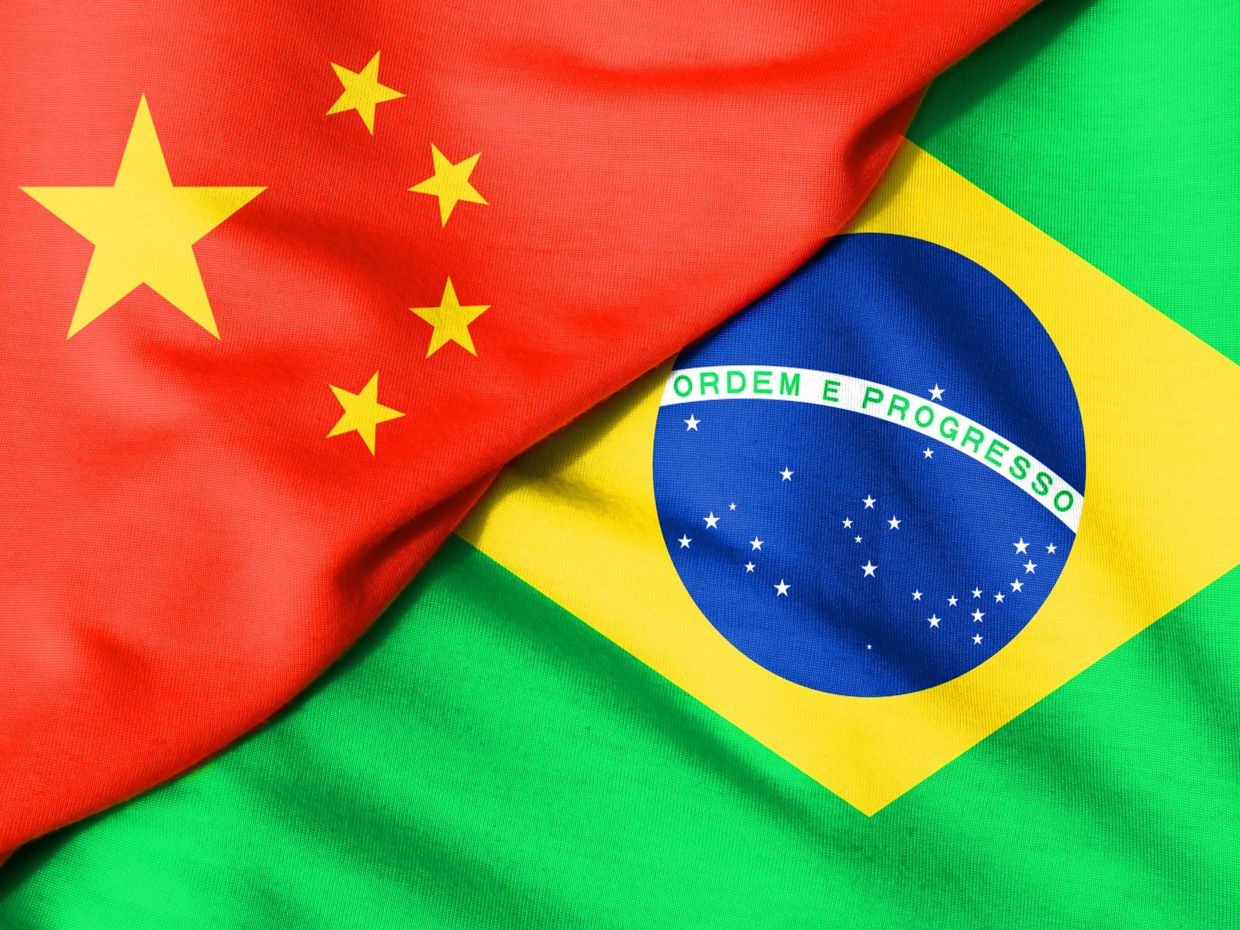
Brazil is preparing to enter the Chinese bond market as a regular issuer, with its debut yuan-denominated sovereign debt expected within the coming months. The decision represents a deliberate diversification of the South American nation's funding sources and reflects deepening financial ties with Beijing. Treasury officials have positioned the issuance not as an urgent funding requirement—Brazil's external debt represents only four percent of its federal stock—but rather as a strategic opening of doors for corporate borrowers seeking cheaper capital in Asia's second-largest economy.
Francisco Segundo, deputy secretary for public debt at Brazil's National Treasury, characterised the initiative in qualitative rather than quantitative terms during a recent webinar. The real value lies in attracting new classes of investors and establishing the institutional infrastructure that allows Brazilian companies to access panda bonds, the Chinese renminbi-denominated securities that have proven cheaper than dollar alternatives. By creating a sovereign yield curve in yuan, the government seeks to provide private borrowers with a domestic reference point that foreign investors can use to price corporate debt offerings. This mechanism has proven crucial elsewhere; when companies can point to their sovereign's borrowing costs in a given currency, institutional investors gain confidence in credit assessment.
The pricing advantage of yuan borrowing has proven compelling across emerging markets. Foreign issuers have averaged coupon rates of 1.97 percent in the Chinese market this year, starkly lower than the 4.5 to 5.5 percent costs typically incurred when borrowing in dollars. However, these deals remain modest in scale—typically one-fifth of comparable dollar issuances and generally structured with three to five-year maturities. The modest size of Brazil's inaugural offering, potentially between five billion and ten billion yuan depending on which treasury official's estimate proves accurate, reflects this pattern of cautious market entry by debut sovereigns.
Brazil's formal application arrived in June when Finance Minister Dario Durigan delivered a letter of intent to Pan Gongsheng, governor of the People's Bank of China. The central bank signalled readiness to facilitate the transaction, clearing a crucial political hurdle. However, the treasury has provided conflicting signals about the issuance size, with Durigan initially citing five billion yuan (approximately US$735 million) while Treasury Secretary Daniel Leal subsequently indicated a target of ten billion yuan (US$1.48 billion). This discrepancy matters considerably because Indonesia's July issuance of seven billion yuan holds the record for the largest sovereign panda bond debut, and Brazil's final amount will determine whether it surpasses this benchmark.
The procedural groundwork for the issue has been substantially completed, according to Segundo, though the treasury still must engage a Chinese rating agency—an institution that has never previously evaluated Brazil's creditworthiness. The specific tenor and ultimate use of proceeds remain undisclosed, introducing some uncertainty about final timing. While treasury officials maintain the objective is completion before year-end, Segundo cautioned that procedural complications could delay the transaction, emphasising that issuers cannot guarantee market access once the formal process begins.
Brazil's strategy reflects lessons learned from European experience, where prolonged absences from bond markets created distortions in sovereign curves through artificial scarcity. The treasury has determined that returning repeatedly to external debt markets—ideally every year—prevents such disruptions while maintaining the availability of a reliable pricing benchmark for corporate borrowers. This discipline separates opportunistic borrowing from the deliberate construction of deep, liquid markets where multiple issuers compete transparently. The assumption underlying the entire plan is that corporate issuances follow soon after sovereign transactions establish market conditions, a pattern borne out in empirical data across multiple markets.
Alexandre Lowenkron, chief executive of Bocom BBM, the Brazilian subsidiary of China's Bank of Communications, points to consistent evidence that more than half of corporate panda bond issuances concentrate within months after their sovereign's market debut. This clustering reflects investor demand for corporate paper once a pricing reference becomes available. Suzano, the pulp and paper company that pioneered Latin American panda bond issuance, has raised 2.6 billion yuan across three transactions since 2024, with initial pricing at 2.8 percent on its inaugural green bond. Suzano executives report that investors consistently inquired about Brazil's forthcoming sovereign issuance during roadshow presentations, recognising that an anchor transaction would reshape pricing expectations across the corporate market.
Emilio Yeh, Suzano's chief financial officer for Asia operations, disclosed that the company achieved pricing more than fifty basis points below its dollar curve even after currency hedging costs—a substantial advantage that underscores why Brazilian borrowers have pressed their government to establish this market infrastructure. Chinese institutional investors, according to Lowenkron's assessment, apply three primary screens to foreign issuers: absolute scale, credit rating, and what practitioners term "China flavour," meaning operational integration with the Chinese economy. Brazil itself falls short on credit rating, as all three major agencies assign sub-investment-grade ratings, placing the country below the threshold many large institutional funds must observe. This structural disadvantage means that Brazilian companies lacking their own investment-grade ratings face insurmountable barriers in yuan markets without a sovereign curve to anchor valuations.
Vale and Suzano both enjoy rating advantages over their sovereign, positioned one and two notches higher respectively, which partly explains their issuance capacity. Petrobras, the state oil company, carries the same rating as Brazil itself, while Fitch alone judges Petrobras as investment-grade on its standalone merits. These rating disparities reveal why Brazilian policymakers emphasise that corporate borrowing depends critically on establishing the pricing and credibility infrastructure that a sovereign issuance provides. The absence of this foundation has constrained even major multinational companies in accessing cheaper Chinese capital.
Finance Minister Durigan has acknowledged that Brazilian corporations specifically requested their government undertake yuan issuances, both to make their own external borrowing economically viable and to reduce domestic currency volatility. The pressure reflects genuine competitive disadvantages faced by Brazilian multinationals against peers from nations with established yuan borrowing curves. Suzano's experience as the sole Latin American company to issue panda bonds across two years underscores the isolation that Brazilian companies face without institutional support. The government's willingness to establish this market infrastructure signals recognition that financial globalisation increasingly requires competing across multiple currency and geographic markets simultaneously, a reality that no single borrower can address independently.

