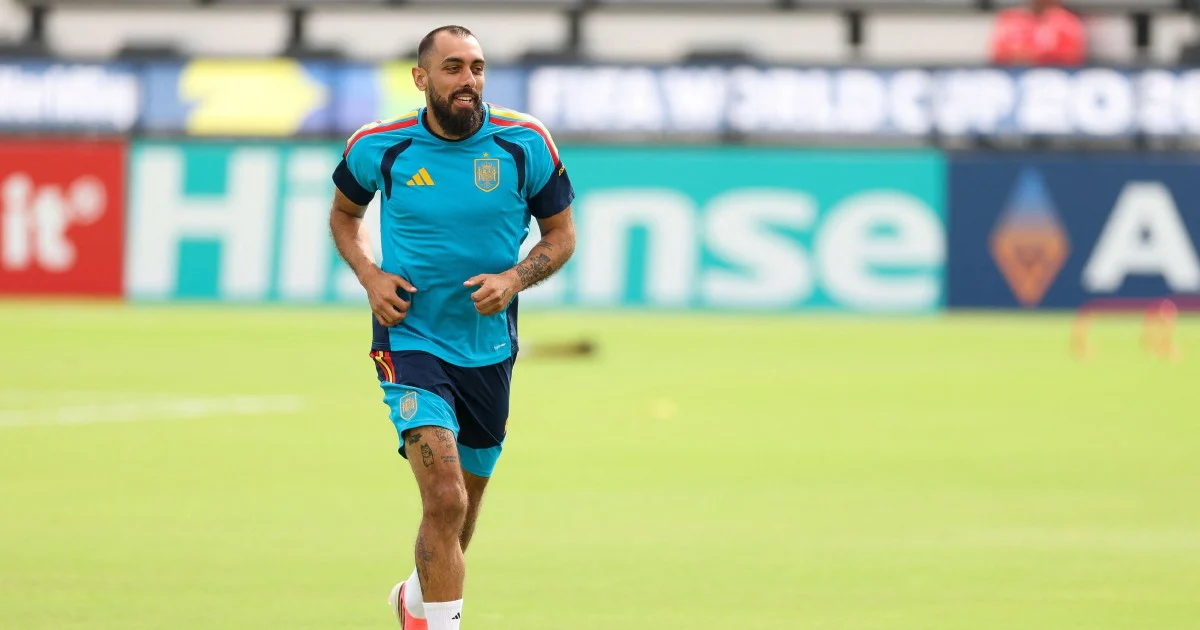
Borja Iglesias has become an increasingly rare figure in professional football: an athlete willing to use his platform to engage with politically and socially contentious subjects without calculation or concern for commercial consequence. The Spanish striker, who represented his nation at the World Cup, has gained attention not only for his performances on the pitch but also for his willingness to paint his nails in defiance of conservative conventions and to speak candidly about issues ranging from the Israeli-Palestinian conflict to homophobia within sport. His openness has earned him the somewhat backhanded description of being "the alien of football"—a phrase that reveals as much about the sport's reluctance to embrace social activism as it does about Iglesias himself.
The footballer's approach represents a departure from the carefully managed public personas that dominate modern professional sport. Rather than adhering to the conventional wisdom that athletes should remain apolitical or restrict themselves to sanitised statements approved by their clubs' communications departments, Iglesias has chosen engagement over silence. This willingness to risk controversy stems from a conviction that those with visibility and influence carry responsibility to speak about matters affecting society, regardless of whether doing so might generate negative headlines or alienate segments of the fanbase.
His commentary on Gaza reflects a broader awakening within European football to the Israeli-Palestinian conflict, particularly following escalations in the region. Unlike many professional players who navigate such discussions cautiously or avoid them entirely, Iglesias has demonstrated a commitment to addressing what he views as injustice, treating his role as a public figure as intertwined with his moral obligations. This stance has resonated with some supporters who appreciate his authenticity whilst provoking criticism from others who believe athletes should focus exclusively on sport.
Equally significant is Iglesias's engagement with homophobia in football, a subject that remains surprisingly contentious despite widespread social progress in many Western democracies. His willingness to discuss LGBTQ+ inclusion openly and his visual rejection of traditional masculine codes—through gestures such as nail painting—serve as small but meaningful acts of resistance against the heteronormative culture that has long dominated professional sport. For a player at the highest levels of competition, such visibility carries real significance in a world where homophobia remains embedded in the culture of many clubs and fan communities.
The nickname "the alien of football" captures something essential about football culture itself. The phrase suggests that Iglesias's behaviour—which might be unremarkable in many other professional contexts—appears strange or foreign within the sport. This observation highlights how conservative football remains in its social attitudes, and how much work lies ahead in modernising the game's relationship with activism and identity politics. The term also inadvertently validates Iglesias's project by acknowledging that his presence is genuinely different from the norm.
Iglesias's willingness to speak openly has implications beyond his individual career. Young players looking to build their own platforms, and athletes from underrepresented communities seeking role models within football, now have an example of someone prioritising authenticity over palatability. This becomes particularly important in Spanish football, where conservative elements remain influential both within clubs and among traditional fan bases. His World Cup participation gave him a stage that extends his influence beyond club football into the national consciousness.
The challenges Iglesias faces are not merely reputational but potentially practical. Sponsorship deals, transfer opportunities, and media coverage can all be affected by the perception that an athlete is "difficult" or politically engaged. In an industry where commercial interests often supersede sporting merit, maintaining this stance requires both financial security and considerable personal conviction. Iglesias appears to possess both, though the extent to which other players feel similarly empowered to speak out remains limited.
His emergence as a socially conscious voice occurs within a broader context of generational shift within football. Younger players increasingly display awareness of social issues and willingness to address them, though often within carefully defined parameters. Iglesias represents a more expansive interpretation of what speaking out entails, refusing the false choice between maintaining a lucrative career and engaging with matters he considers important. This represents a genuine challenge to the sport's traditional silencing mechanisms.
The reception to Iglesias's activism within Spain specifically merits attention, as Spanish society grapples with questions of national identity, immigration, and international relations. A World Cup player openly discussing Gaza and using his platform to challenge established norms influences conversations beyond football's boundaries. His actions demonstrate that sport cannot exist in a purely apolitical bubble, and that attempts to enforce such separatism increasingly ring hollow to audiences aware of football's profound social role.
Moving forward, the question becomes whether Iglesias represents an isolated example of individual courage or the vanguard of genuine cultural change within professional football. The sport has demonstrated considerable capacity to incorporate cosmetic social justice messaging whilst resisting substantive challenges to its power structures and traditional hierarchies. Iglesias's insistence on authentic engagement with difficult subjects, rather than performative activism, presents a genuine test of whether football institutions can accommodate genuinely principled voices without attempting to domesticate them into something safer and more commercially palatable.

