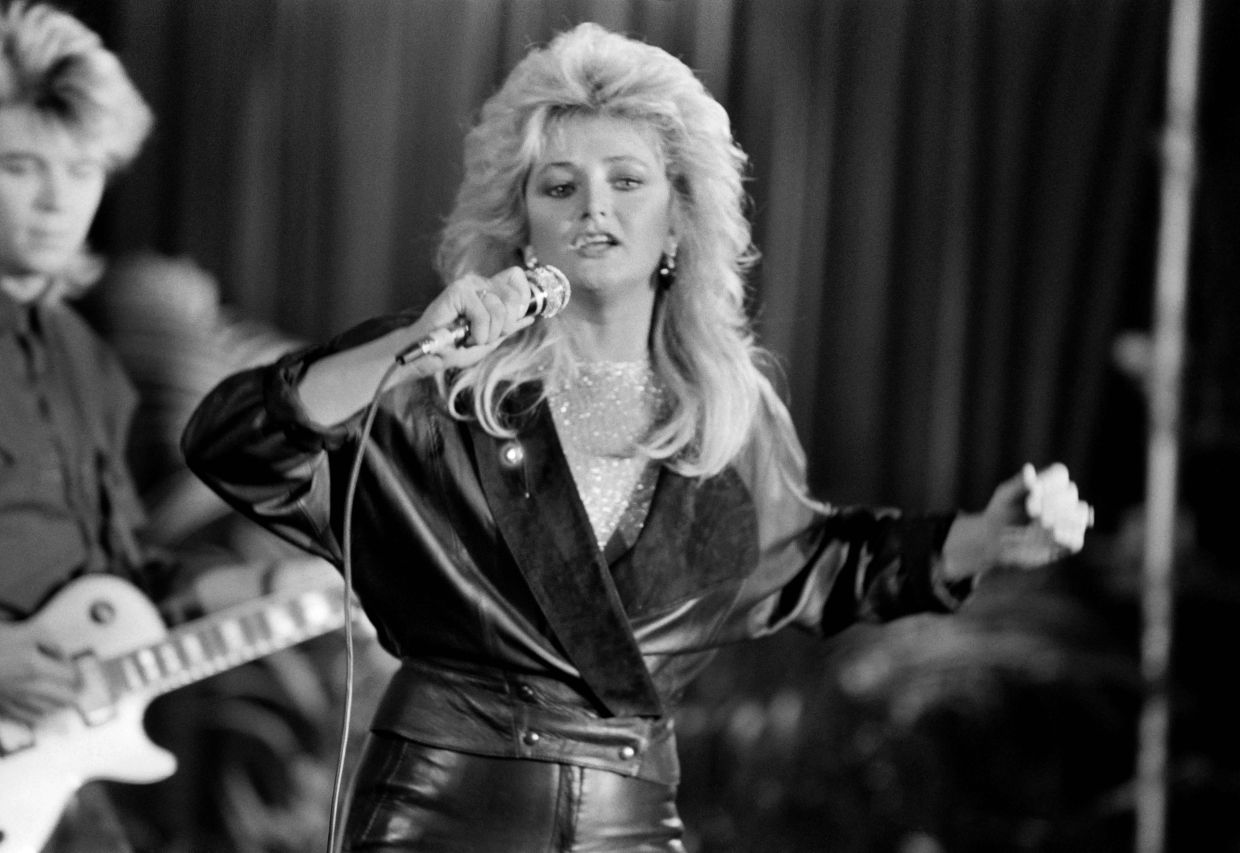
Bonnie Tyler, the Welsh pop sensation whose distinctive husky voice made her the voice of one of pop music's most enduring anthems, has died at the age of 75. The Grammy-nominated artist passed away unexpectedly in a hospital in Portugal, where she had been receiving treatment for an illness. Her family announced the news through her official website, confirming that Tyler had been hospitalised in May in Faro, the Portuguese coastal city where she maintained a home, requiring emergency intestinal surgery before being placed in an induced coma from which she did not recover.
Tyler's legacy will forever be bound to "Total Eclipse of the Heart", the chart-topping power ballad released in 1983 that transcended its era to become a cultural touchstone spanning decades. The song spent four consecutive weeks at number one on the charts, its accompanying music video accumulated more than one billion views, and the track itself has surpassed one billion streams globally—figures that would be impressive for any era, but especially remarkable given that the song's popularity has been cyclically renewed with each solar and lunar eclipse, most notably during the major eclipses of 2017 and 2024. The song's cultural penetration ran so deep that when music publication Stereogum re-examined it in 2020, the outlet described it as "an extinction-level event rendered in musical form", characterising the track as "pop music as heart-pounding, chest-thumping, blood-gargling, heavens-falling passion explosion".
Beyond her signature hit, Tyler achieved significant recognition throughout her career. She earned three Grammy nominations, represented the United Kingdom at the Eurovision Song Contest in 2013 where she performed "Believe in Me", finishing in 19th place, and received an MBE from Queen Elizabeth II in 2023 in recognition of her contributions to the music industry. The breadth of her honours underscored a career that extended well beyond a single commercial success, though "Total Eclipse of the Heart" remained her most indelible creation. The song's durability became apparent through its countless covers and cultural appearances: English singer Nicki French recorded her own version in 1995, Irish-boyband Westlife reimagined it in 2006, and the track appeared in mainstream films including a memorable sequence in "Bandits" where Cate Blanchett sang it while hitting Billy Bob Thornton with her car, plus appearances in "Old School" and performances by One Direction on a UK edition of "The X Factor".
Understanding Tyler's rise requires examining her humble beginnings in industrial Wales. Born Gaynor Hopkins to a coal miner's father in public housing in Skewen, a small town seven miles outside Swansea, she grew up in modest circumstances alongside three sisters and two brothers. Her early musical influences came from the records available to her household: the Beatles dominated her childhood listening, with her first album purchase being "A Hard Day's Night", while her first single purchase at age thirteen was "Hippy Hippy Shake" by the Swinging Blue Jeans. She absorbed the vocal styles of blues and soul legends including Janis Joplin, Nina Simone, Tina Turner, Wilson Pickett and Otis Redding, spending countless hours singing into a hairbrush in her bedroom, a common ritual that would ultimately shape her artistic identity.
A pivotal moment arrived in 1976 when Tyler underwent surgery to remove nodules from her throat—a medical procedure that, rather than diminishing her vocal abilities, contributed to the development of the distinctive raspy, gravelly timbre that would become her signature sound. This unique vocal quality, which she initially did not regard as remarkable during her youth, ultimately became one of her most recognisable characteristics. After performing as the lead singer for a soul band under the stage name Sherene Davis, she was discovered by talent scout Roger Bell, who facilitated her move to London for professional demo recordings. Her career trajectory accelerated when RCA Records expressed interest in signing her, at which point she adopted the stage name Bonnie Tyler.
Her debut album "The World Starts Tonight" released in 1977 produced her first charting success with "Lost in France" and earned her a nomination for breakthrough artist at the BRIT Awards. Subsequent commercial success followed with "It's a Heartache" reaching number three in 1978, though her momentum stalled during the early 1980s. The turning point arrived when she signed with Sony Records and, inspired after witnessing Meat Loaf perform "Bat Out of Hell" on BBC television, specifically requested to collaborate with Jim Steinman, the songwriter and producer behind Meat Loaf's theatrical rock sound. Steinman became instrumental in crafting the artistic vision that would define Tyler's legacy, introducing her to "Total Eclipse of the Heart", which would serve as the lead single from her fifth studio album, "Faster Than the Speed of Night".
The genesis of "Total Eclipse of the Heart" reveals Steinman's compositional sophistication and pop sensibility. He had repurposed the pivotal lyric "Turn around, bright eyes" from his 1969 student musical "The Dream Engine", written while he attended Amherst College in Massachusetts, integrating it into a song he originally conceived as part of a prospective musical adaptation of "Nosferatu". Working in his characteristic maximalist style—what Tyler later described to The Guardian as laying down basic rhythm tracks, recording nine separate vocal takes, selecting the strongest version, and then "putting the kitchen sink on there, like Phil Spector used to"—Steinman crafted an arrangement featuring E Street Band members Roy Bittan on piano and Max Weinberg on drums. The resulting composition functions as a sophisticated meditation on romantic loss and longing, with Tyler's voice delivering the poignant opening lines: "Once upon a time there was light in my life / But now there's only love in the dark".
The music video for "Total Eclipse of the Heart" became nearly as iconic as the song itself, achieving constant rotation on MTV during its formative era. Filmed in a genuinely unsettling gothic former psychiatric asylum in Surrey, the production was so creepy that guard dogs reportedly refused to enter the downstairs rooms where the facility had previously administered electric shock treatments. The visual presentation embodied theatrical excess through slow-motion sequences of released doves, candlelit imagery, dancing ninjas, greasers, Tyler herself wearing exaggerated power-suit shoulder pads, fencers, gymnasts, wind machines, and shirtless male performers wearing swim goggles while being doused with water. This combination of bombastic visual spectacle and emotional vulnerability in Tyler's performance created a complete artistic package that transcended typical pop music of the era.
Despite the colossal success of both "Total Eclipse of the Heart" and its album, which earned a Grammy nomination for best rock vocal performance, Tyler could not replicate those commercial heights in subsequent decades. She lost the rock vocal category to Pat Benatar's "Love Is a Battlefield" and competed unsuccessfully in the best pop vocal performance category against Irene Cara's "Flashdance - What a Feeling". Nevertheless, she maintained her presence in popular culture through strategic soundtrack placements, most notably "Holding Out For a Hero" from the 1984 film "Footloose" and "Here She Comes" from "Metropolis", also released in 1984. Her later career demonstrated artistic versatility: her 2019 album "Between the Earth and the Stars" showcased duets with veteran artists Rod Stewart, Cliff Richard and Francis Rossi of Status Quo, while in 2013 she recorded a country-influenced album titled "Rocks and Honey" in Nashville, featuring collaborations including a duet with Vince Gill and the Eurovision entry "Believe in Me".
Tyler's representation of the United Kingdom at Eurovision 2013 marked a significant moment in her career renaissance, introducing her artistry to a pan-European audience during a period when her original signature hit was experiencing renewed cultural relevance. The selection of "Believe in Me", co-written by American songwriter Desmond Child and British songwriters Lauren Christy and Christopher Braide, showcased her continued capacity to deliver emotionally resonant ballads. That same year, she ventured into country music territory with her Nashville-recorded material, demonstrating her willingness to explore different genres and collaborate with established artists across multiple musical traditions. Her 2019 performance of a Christmas concert before Pope Francis at the Vatican underscored her evolution into an elder stateswoman of popular music, respected across religious and cultural boundaries for her artistic contributions and longevity in an industry notorious for discarding artists once their initial commercial moment passes.

