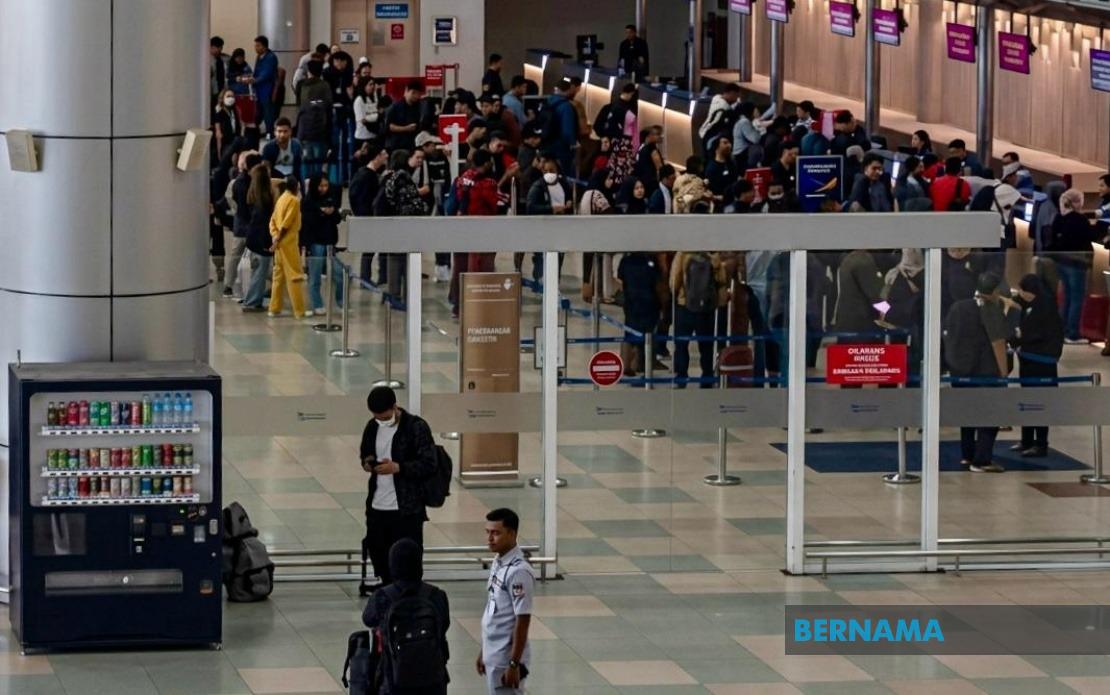
Flight operations ground to a halt at Labuan Airport on June 26 after authorities discovered bombs situated approximately 150 metres from the runway, prompting an immediate temporary closure of the facility. The Royal Malaysian Air Force issued a Notice to Airmen at 5pm the same day, instructing all aircraft to cease runway operations until further notice. The discovery triggered a comprehensive joint inspection involving both RMAF personnel and airport authorities, with runway reopening contingent on the successful completion of safety checks and formal clearance protocols.
The disruption rippled across the airport's flight schedule, resulting in the outright cancellation of services connecting Labuan to Miri and Kota Kinabalu. Beyond these cancellations, several additional flights experienced operational complications, including diversions to alternative airports and schedule delays. According to Bernama's checks conducted at the airport, at least five scheduled departures—originally timetabled for 4.05pm, 5.15pm, 6.05pm, 6.15pm and 7.25pm—fell victim to the closure, with these flights bound for destinations including Kuala Lumpur, Kota Kinabalu and Miri.
For Malaysian travellers accustomed to seamless regional connectivity, the incident underscores the delicate balance between maintaining airport capacity and ensuring public safety. Labuan Airport serves as a critical gateway for the federal territory, facilitating connections not only within Malaysia but also to broader Southeast Asian networks. The temporary shutdown, though necessary, exposes the vulnerability of single-runway operations when security concerns emerge, a reality shared by several other regional airports operating with limited redundancy.
Passengers holding tickets for affected services faced immediate uncertainty about their travel plans. Airport authorities and the aviation regulator directed all travellers to contact their respective airlines directly to ascertain updated flight statuses and to arrange alternative travel arrangements. This advisory reflected standard protocol when operational disruptions occur, though the underlying cause—the discovery of explosives—elevated the incident beyond typical mechanical or weather-related delays.
The involvement of the Royal Malaysian Air Force in both the inspection and the issuance of the closure notice highlights the security-focused nature of the response. While details regarding the nature, size and precise location of the discovered bombs remained limited in initial reports, the military's direct engagement suggested the situation warranted heightened scrutiny beyond standard airport operations procedures. The RMAF's authority to issue NOTAMs and oversee airspace matters positioned it as the logical coordinating agency for resuming normal operations once safety assessments concluded.
For the broader Malaysian aviation sector, incidents such as these serve as periodic reminders of the intersection between security imperatives and commercial operations. Labuan Airport, despite its relatively modest passenger throughput compared to major hubs like Kuala Lumpur International Airport, maintains strategic importance for regional connectivity and serves transiting passengers, business travellers and residents of the federal territory. Any prolonged closure carries economic implications for local businesses reliant on reliable air access.
The incident also reflects evolving security concerns within Southeast Asia. While aviation security remains robust across Malaysian airports with established protocols at major facilities, regional airports occasionally face unique challenges related to their geographic positioning and operational complexity. Labuan's location and status as a duty-free port add layers to security considerations, making such inspections potentially more involved than at inland facilities.
From a passenger experience perspective, the disruption demanded rapid communication and coordination among airlines, ground handlers and airport management. The cascading effect of a single runway closure demonstrated how critical infrastructure interdependencies can amplify operational impacts. Airlines operating multiple daily services from Labuan found themselves facing difficult choices regarding passenger accommodation, aircraft positioning and crew scheduling across their broader networks.
The timeframe for runway reopening remained uncertain during initial reporting, with authorities committing only to resuming operations once inspection completion and formal safety clearance were obtained. Such open-ended timelines create additional challenges for passengers and airlines attempting to reschedule services, particularly for connections requiring onward travel from Labuan. Regional carriers maintaining regular service to Labuan would need to factor potential extended closures into contingency planning.
Authorities indicated that further updates would follow as investigation and inspection activities progressed. This commitment to ongoing communication represented standard crisis management practice, though passengers and stakeholders clearly required regular updates to make informed decisions. The incident also prompted reflection among airport operators across Malaysia and Southeast Asia regarding protocols for managing discovered security threats while minimising disruption to essential air services.
Labuan Airport's eventual resumption of normal operations would depend on successful completion of the joint military-civilian inspection and confirmation that the identified threat had been fully addressed. Until that determination, the facility would remain constrained, affecting regional connectivity and underscoring how swiftly security concerns can interrupt aviation operations even at secondary airports serving vital regional functions.

