Fifteen Indian tourists have been flown back to their home country following a tragic maritime accident that claimed their lives off Vietnam's southern coast last Saturday. The repatriation began Monday with the arrival of remains in Mumbai, according to announcements from the Indian Embassy. The victims came from three Indian states: ten were residents of Tamil Nadu, three from Andhra Pradesh, and two from Kerala. Authorities coordinated with respective state governments to facilitate further transport of the bodies to their final destinations.
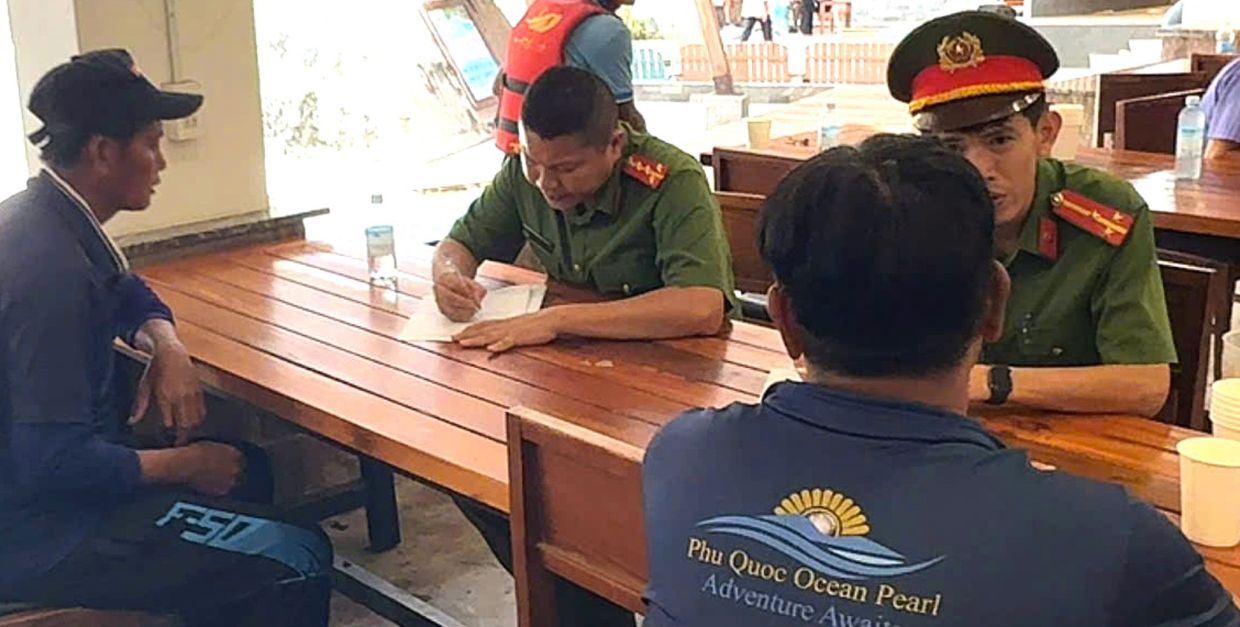
The speedboat was operating at full capacity with 32 Indian tourists and four Vietnamese crew members when the disaster struck near Hon May Rut Ngoai island, located close to Phu Quoc, Vietnam's largest island. The vessel was departing the island in the early afternoon when it capsized, though investigations into the precise sequence of events remain ongoing. The boat's captain, Nguyen Hong Hai, 57, has become the focus of an official inquiry examining whether he violated mandatory waterway transport safety protocols. State media reports indicate the investigation centres on adherence to maritime safety standards, suggesting potential regulatory breaches may have contributed to the tragedy.
The group comprising company employees, distributors, and retail partners of Lava International—a major Indian smartphone and consumer electronics manufacturer headquartered in Uttar Pradesh—had embarked on what was intended to be a recreational company excursion. What began as an ordinary outing transformed into catastrophe within moments when weather conditions deteriorated dramatically. According to survivor accounts, the sequence of events unfolded with startling speed, leaving passengers with minimal time to respond or seek safety measures.
Bhavik Nirmal Kumar, a 44-year-old businessman and eyewitness, provided detailed recollection of the disaster's unfolding. He described how sudden, severe weather descended upon the boat, creating treacherous maritime conditions. A massive wave struck the vessel with tremendous force, immediately generating widespread panic among the passengers. The impact caused the boat to rock violently in increasingly turbulent waters, and Kumar observed that the captain appeared to lose effective control of the vessel as it became progressively unstable. The chaos escalated rapidly as frightened passengers scrambled across the deck, attempting to reach what they perceived as safety before the vessel went under.
Kumar himself made the desperate decision to jump overboard as the situation became untenable. Fortunately, rescue personnel reached the site with remarkable speed, arriving within just five minutes of the incident. Swift intervention by these rescue teams proved instrumental in extracting survivors from the water, preventing what could have been an even greater loss of life. Despite this rapid response, however, the window between capsizing and rescue proved fatal for many aboard.
The human toll extended beyond mere statistics. Kumar, traumatised by his near-death experience, lost a childhood friend in the disaster—someone with whom he had anticipated enjoying a memorable holiday together. The inability to process this loss reflects the profound psychological impact such sudden tragedy inflicts on survivors, transforming anticipated pleasure into permanent grief and trauma. His account underscores how corporate team-building exercises, ordinarily viewed as morale-boosting activities, can suddenly transform into settings for unforeseeable catastrophe.
Among the survivors, sixteen individuals were discharged from hospitals and cleared to return to India. However, one survivor remained in critical condition Monday, having been transferred to Cho Ray Hospital, one of Vietnam's leading public medical institutions located in Ho Chi Minh City. The 49-year-old man sustained severe lung injury from near-drowning, along with shock, multiple physical injuries, and intracranial bleeding. Medical specialists treating him reported modest progress, with blood pressure and blood oxygen levels showing improvement, though his condition remained serious enough to warrant continued intensive care unit management. Dr. Tran Thanh Linh, heading the hospital's intensive care unit, monitored the patient's deteriorating respiratory and neurological status closely.
The capsizing location lies approximately ten kilometres south of Phu Quoc, Vietnam's premier island destination. Both the island and its surrounding waters have earned reputations for stunning natural beauty, featuring pristine white sandy beaches and remarkably transparent waters. These characteristics have transformed the region into one of Southeast Asia's most sought-after tourist destinations, drawing millions of visitors annually from both domestic and international markets. The irony of the tragedy's location—in what is ostensibly one of the region's safest and most developed tourist zones—raises questions about maritime safety oversight in popular tourist areas.
India represents one of Vietnam's fastest-growing tourism markets, with increasing numbers of Indian visitors choosing Vietnam for holidays, business trips, and organised excursions. This accident represents a serious incident within that growing travel corridor and raises important questions about safety standards for tour operators and maritime transport providers serving this expanding demographic. The incident will inevitably prompt scrutiny of whether adequate safety protocols, equipment, and training exist across Vietnam's tourism infrastructure, particularly for water-based activities. For Malaysian and regional travellers contemplating similar excursions throughout Southeast Asia, the tragedy serves as a sobering reminder of the inherent risks associated with maritime activities, even in developed tourist destinations, and the critical importance of rigorous safety compliance and weather monitoring by operators.

