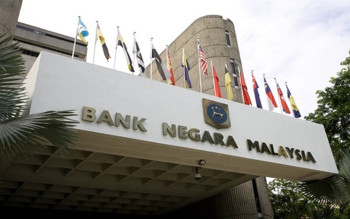
Bank Negara Malaysia has moved to clarify the constitutional basis for its involvement in advising Tabung Haji, framing such guidance as a core element of the central bank's broader mandate to protect the nation's financial system. In formal remarks, the monetary authority emphasised that its interventions stem directly from powers granted under the Central Bank of Malaysia Act 2009, which empowers it to identify and monitor risks to systemic stability across the financial landscape. This clarification emerges as the Royal Commission of Inquiry continues examining the pilgrimage fund's governance and financial trajectory, a process initiated by the government in 2021 and formally examined following the appointment of commission members in January 2022.
The central bank's authority to oversee non-bank institutions like Tabung Haji rests on a distinction between regulatory supervision and financial system vigilance. While BNM does not directly regulate Tabung Haji as it would a bank or insurance company, the legislation permits the monetary authority to monitor entities that operate at scale within or connected to the financial system. This oversight mechanism becomes particularly relevant when institutions pose potential risks to broader financial stability—a consideration that applies to Tabung Haji given its role managing billions in pilgrimage funds for millions of Malaysian Muslims. The establishment of the Financial Stability Executive Committee under the same legislation provides the institutional framework through which BNM coordinates surveillance activities and develops policy responses to emerging systemic threats.
BNM's positioning of its advisory function as precautionary reflects mounting concerns about Tabung Haji's financial health that had crystallised before the RCI process began. Between 2017 and the early 2020s, the central bank issued five separate warning letters to the Tabung Haji chairman and the Minister responsible for religious affairs, specifically addressing a widening gap between the fund's liabilities and its asset base. These communications represented an escalation from routine monitoring into active intervention, suggesting that internal BNM assessments had moved beyond abstract systemic risk into concrete concerns about the institution's solvency trajectory. The Auditor-General subsequently reinforced these concerns, issuing its own critical remarks in the 2017 Financial Statements Report—a move that signalled deteriorating confidence across Malaysia's accountability institutions.
The framing of BNM's role as advisory rather than directive reflects the legal boundaries within which the central bank operates. Because Tabung Haji falls outside BNM's direct supervisory perimeter, the monetary authority cannot issue binding instructions as it could to commercial banks or investment firms. Instead, communications flow to the Tabung Haji Board and the responsible minister, positioning recommendations as counsels to entities ultimately accountable to the government rather than to BNM. This distinction matters for understanding the power dynamics at play—BNM can alert and recommend, but implementation depends on political will and institutional leadership responsiveness. When five warnings yield limited visible remedial action, the utility of advisory mechanisms comes into question, potentially explaining why the government felt compelled to establish a formal RCI to investigate underlying causes of the fund's deterioration.
From a regional perspective, Malaysia's experience with Tabung Haji's financial challenges reflects broader questions about how Asian financial systems manage large-scale institutions serving economically and culturally significant functions. Tabung Haji's purpose—enabling Muslim Malaysians to save for Hajj pilgrimage—makes it politically sensitive and socially embedded in ways that complicate standard regulatory intervention. The fund's asset-liability gap threatens not merely balance-sheet metrics but the retirement and religious aspirations of millions of savers. This context explains BNM's careful articulation of its role as protective of systemic stability rather than punitive or hostile—framing that positions the central bank as guardian of the broader financial ecosystem rather than as critic of a religiously significant institution.
The involvement of multiple accountability bodies—BNM, the Auditor-General, the Minister of Religious Affairs, and ultimately the RCI—suggests that no single institution possessed clear authority or sufficient tools to address Tabung Haji's structural problems through normal channels. The government's decision to establish a formal commission in 2021, with the commission presenting its report to the Yang di-Pertuan Agong on 30 August 2022, signalled recognition that the issue had escalated beyond routine oversight into a matter of constitutional importance. For Malaysian policymakers, the Tabung Haji episode underscores tensions between regulatory frameworks designed for standard financial institutions and the governance challenges posed by hybrid entities serving dual economic and social missions.
BNM's emphasis on its statutory mandate likely reflects sensitivity to questions about whether its warnings were adequately heeded or whether communication gaps between the central bank and responsible political authorities contributed to the fund's deterioration. By publicly grounding its advisory role in explicit legislative authority, the monetary authority establishes a record of having acted within appropriate bounds while discharging clear responsibilities. This posture protects BNM's institutional credibility ahead of potentially critical RCI findings. Simultaneously, it sends a signal to other non-bank financial institutions operating at significant scale that BNM surveillance capacity extends beyond formal regulatory reach, and that systemic concerns will trigger active engagement regardless of supervisory classification.
For Malaysian savers and stakeholders in Tabung Haji, the clarification of BNM's role offers limited immediate reassurance but establishes that multiple pillars of the accountability system recognised the fund's problems well before the RCI process commenced. The five warning letters, the Auditor-General's critical assessment, and now BNM's articulation of its financial stability mandate collectively document institutional awareness of mounting risks. Whether awareness translated into timely action that could have arrested the fund's decline remains the critical question the RCI findings are expected to illuminate. The monetary authority's statement effectively positions BNM as having sounded alarms appropriately, shifting focus to why those alarms did not trigger more robust remedial responses from political and institutional leadership during the intervening years.
Moving forward, BNM's clarification of its financial stability mandate suggests the central bank may seek to formalise its engagement protocols with non-bank institutions of systemic significance. Enhanced coordination mechanisms, clearer escalation procedures, and perhaps legislative amendments to broaden BNM's explicit authority over systemically important non-bank entities could emerge from the Tabung Haji experience. For Malaysia's broader financial architecture, the episode demonstrates both the value of multi-institutional oversight and the risks that arise when authority is fragmented across supervisory boundaries. How the government responds to the RCI report will likely shape the future of BNM's ability to translate financial stability concerns into binding institutional reforms among non-bank entities that have grown too large and too interconnected with Malaysia's financial system to be left entirely outside the central bank's direct regulatory ambit.

