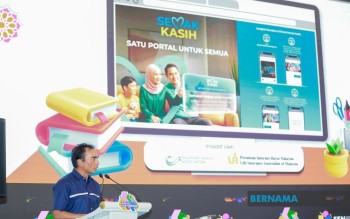
Bank Negara Malaysia has launched a new digital platform designed to reunite Malaysian families with insurance and takaful protection benefits that have been overlooked or forgotten. The Semak Kasih portal, unveiled at the Terengganu Financial Literacy Carnival, represents a coordinated effort by the central bank, alongside the Life Insurance Association of Malaysia and the Malaysian Takaful Association, to address a longstanding gap in the financial protection landscape where substantial sums remain unclaimed by rightful beneficiaries.
Deputy Governor Adnan Zaylani Mohamad Zahid emphasised that the initiative tackles a widespread problem affecting Malaysian households. Industry estimates indicate that approximately 50,000 insurance policies and takaful certificates carrying death benefits have yet to be claimed, representing a significant financial safety net that has effectively disappeared from family knowledge. The portal streamlines what has traditionally been a cumbersome process, allowing beneficiaries to verify coverage details and initiate contact with providers without navigating fragmented systems or outdated administrative procedures.
The underlying challenge reflects a broader disconnect between policyholders and their beneficiaries. Many Malaysians purchase insurance or takaful coverage but fail to communicate these protections to family members, or documentation remains inaccessible after the policyholder's death. Adnan Zaylani noted that families often remain unaware that their loved ones had arranged financial safeguards specifically designed to support them during emergencies such as hospitalisation, accidents, or property damage. This knowledge gap means that protection mechanisms intended to provide stability during crisis periods instead remain dormant and unutilised.
For Malaysian households already grappling with rising living costs and economic uncertainty, unclaimed benefits represent a tangible but invisible form of financial hardship. The portal addresses this by enabling straightforward verification without requiring beneficiaries to contact multiple insurers or navigate complex claim procedures. The accessibility of this single entry point could prove particularly valuable for less financially literate segments of the population or those unfamiliar with bureaucratic processes. By centralising the search function, BNM has acknowledged that the problem lies not in companies' unwillingness to pay claims, but rather in information asymmetry preventing legitimate claims from being lodged.
Previous recovery efforts by insurance and takaful providers—including postal notifications and agent outreach—have produced limited results, suggesting that passive communication strategies cannot overcome the structural barriers that separate beneficiaries from their benefits. The digital platform represents a shift toward active beneficiary engagement, where families can themselves initiate searches rather than waiting for companies to locate them. This proactive approach recognises that beneficiaries often do not know which provider holds their coverage, making traditional contact methods ineffective. The portal's centralised design overcomes this by allowing simultaneous searching across the insurance and takaful ecosystem.
Beyond the immediate objective of reconnecting beneficiaries with unclaimed funds, the Semak Kasih initiative underscores broader policy priorities within Malaysia's financial sector. The central bank's emphasis on financial protection reflects acknowledgment that many Malaysian households remain inadequately insured, particularly among lower-income and middle-income segments. Adnan Zaylani reiterated that comprehensive insurance and takaful coverage serves as essential infrastructure for family welfare, functioning as a practical safeguard against the financial devastation that medical emergencies, accidents, or property disasters can inflict. This framing positions the portal not merely as a administrative convenience but as part of Malaysia's financial resilience strategy.
The launch coincided with BNM's broader financial literacy initiatives, demonstrating integration across multiple policy domains. The central bank has simultaneously expanded microfinancing options for small and medium enterprises, allocated RM5 billion through the SME Stabilisation Relief Facility to support businesses affected by regional conflicts, and extended the iTekad initiative—which has benefited over 14,000 participants nationwide. These parallel initiatives suggest that BNM views financial protection and financial literacy as interconnected components of economic stability, rather than separate concerns. The Terengganu launch itself served as venue for announcing the Financial Education Forum's expansion to include persons with disabilities, indicating that inclusive financial access has become a stated priority.
However, the effectiveness of the Semak Kasih portal will ultimately depend on public awareness and digital literacy levels across Malaysia's diverse demographic landscape. Although the online platform increases accessibility compared to traditional methods, it simultaneously excludes those without internet connectivity or digital skills. BNM's parallel commitment to financial education initiatives, including the FEN Proaktif 2.0 Programme developed with Universiti Malaysia Terengganu, suggests recognition that technological solutions require complementary educational support. Research cited by Adnan Zaylani indicating that 37 per cent of Malaysians engage in impulsive online purchases and 26 per cent carry excessive debt demonstrates that digital access without financial understanding may produce unintended consequences.
The portal also highlights systemic vulnerabilities in Malaysia's insurance and takaful administration. That 50,000 benefits remain unclaimed suggests substantial gaps in policyholder record-keeping, beneficiary communication, and estate settlement processes. While BNM's centralised portal addresses the search problem, it does not resolve underlying issues such as lost policy documentation, disputes over beneficiary entitlement, or policies issued under names that have changed through marriage or legal proceedings. These practical barriers may prevent some identified claims from proceeding smoothly, indicating that the portal functions as a necessary but insufficient solution to the broader challenge of ensuring protection reaches intended recipients.
For Malaysian consumers, the Semak Kasih initiative carries important implications regarding financial planning and family communication. The portal's existence should prompt conversations between policyholders and family members about existing coverage, with particular emphasis on ensuring beneficiaries know how to access their protection benefits. Adnan Zaylani's message about prudent financial decision-making and consistent saving from a young age suggests that the central bank views financial resilience as requiring both adequate protection mechanisms and strengthened individual financial discipline. The combination of the portal with expanded financial literacy programming indicates BNM's understanding that systemic infrastructure improvements must accompany behavioral change initiatives to achieve meaningful financial security improvements across Malaysian society.

