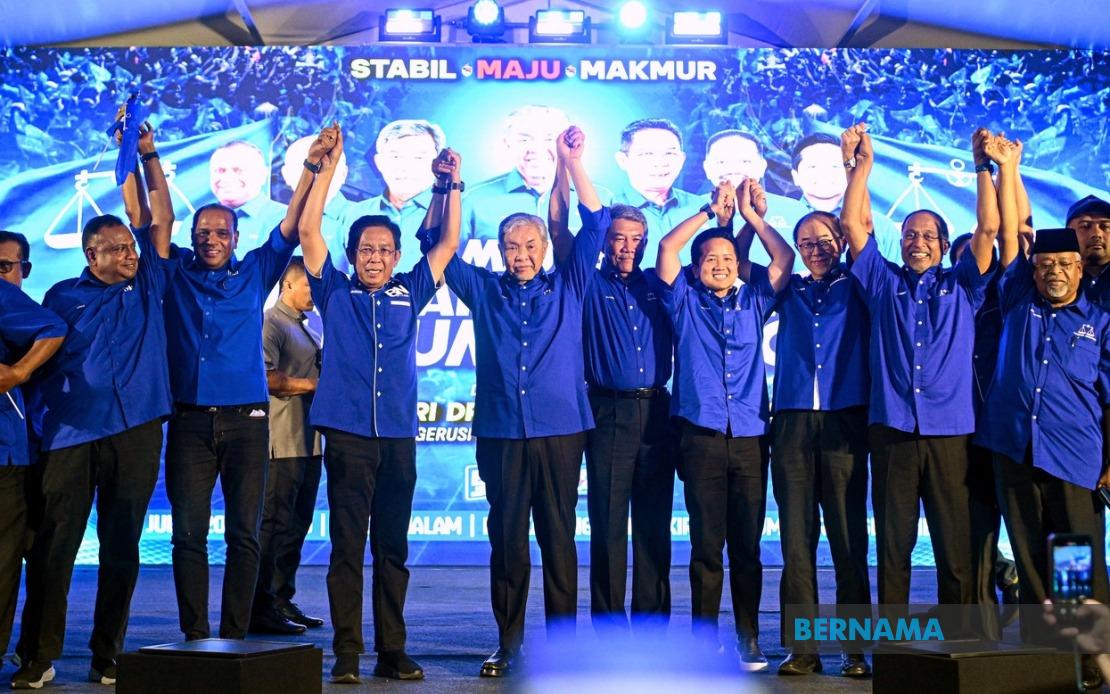
The Barisan Nasional coalition unveiled its electoral lineup for the 16th Negeri Sembilan state election at an event held in Seremban on July 15, releasing the names of 25 candidates who will contest across the state. The announcement came during a campaign launch ceremony at Tuanku Abdul Rahman Stadium in Paroi, where party officials formally introduced both returning representatives and newly selected hopefuls to contest what is shaping up to be a significant electoral contest in the central Malaysian state.
At the helm of BN's Negeri Sembilan campaign is Datuk Seri Mohamad Hasan, the coalition's chairman in the state and deputy chairman nationally, who confirmed his intention to seek another term representing Rantau. Having continuously held the seat since 2004, Mohamad has established himself as a longstanding fixture in Negeri Sembilan politics, spanning nearly two decades of representation. His retention signals BN's confidence in consolidating its support in this traditional stronghold, and reflects the party leadership's decision to preserve experienced parliamentarians in key constituencies.
Mohamad attributed his selection to the backing of UMNO president Datuk Seri Dr Ahmad Zahid Hamidi, publicly acknowledging the national party leadership's role in determining candidacy at the state level. This publicly expressed gratitude underscores the hierarchical decision-making structure within UMNO and the BN apparatus, where national leadership maintains significant influence over state-level electoral strategies. The dynamic between national party machinery and state operations remains a crucial factor in understanding BN's approach to contests across Malaysia's 13 states.
Equally notable is the retention of Datuk Seri Jalaluddin Alias in the Pertang constituency, where he has served as the elected representative since 2013. Jalaluddin, who carries the additional responsibility of chairing the Negeri Sembilan UMNO Liaison Committee and representing Jelebu as Member of Parliament, represents the type of multi-level political operative common in Malaysian politics, where individuals simultaneously hold federal and state positions. His return to contest Pertang suggests BN's assessment that he remains a viable candidate despite the accumulated demands of his various roles.
The coalition also confirmed the retention of several other sitting assemblymen seeking fresh mandates. Datuk Mohd Faizal Ramli will attempt to retain the Linggi seat, while Datuk Mustapha Nagoor will pursue another term from Palong. These decisions reflect BN's strategy to maintain continuity in constituencies where incumbents enjoy demonstrable electoral appeal or organisational strength, hedging against the uncertainty inherent in fielding entirely new candidates.
However, the candidate announcement remains incomplete, with BN yet to finalise its selection for 11 remaining state seats. The constituencies awaiting confirmed nominations include Klawang, Serting, Lobak, Sikamat, Ampangan, Bukit Kepayang, Mambau, Paroi, Lukut, Bagan Pinang, and Gemas. This incomplete slate raises questions about the party's internal deliberations and the complexity of negotiating seat allocations between its constituent parties—a perpetual challenge within any multi-party coalition, particularly one as diverse as Barisan Nasional.
The delayed finalisation of candidate lists can reflect multiple factors: negotiations between coalition partners over seat distribution, internal party contests to determine nominees, or strategic assessments of electoral viability in contested areas. For Malaysian voters and political observers, incomplete candidate announcements often signal ongoing backroom negotiations that may not be publicly resolved until nomination day itself, creating uncertainty that extends the campaign season and maintains media and public attention.
Negeri Sembilan represents a significant electoral battleground for BN, as the coalition seeks to maintain its dominance in a state it has traditionally controlled. The state's 36 seats make it a meaningful barometer of BN's electoral health, particularly given that several constituencies could swing towards opposition parties depending on voter sentiment and local campaigning effectiveness. The composition of BN's candidate slate—balancing experience with fresh faces—reflects efforts to project both stability and renewal simultaneously.
The announcement's timing and venue selection, featuring ceremonial elements at a major stadium, underscore the significance BN attaches to these elections. The party's deployment of senior national and state figures for the launch event demonstrates commitment to projecting strength and organisational capability. For Malaysian political observers, such displays of party machinery and coordinated messaging form crucial components of electoral strategy, signalling to supporters, potential candidates, and the broader electorate that the party remains energised and competitive.
Regionally, Negeri Sembilan's electoral trajectory carries implications for Southeast Asian politics more broadly, as Malaysia's state elections often presage shifts in national sentiment. The coalition's candidate selections and campaign intensity will be scrutinised for signals about BN's prospects in potential nationwide contests, offering international observers insight into the political dynamics shaping this major regional economy and democracy. The state election thus transcends local significance, serving as a political indicator with national and regional dimensions.

