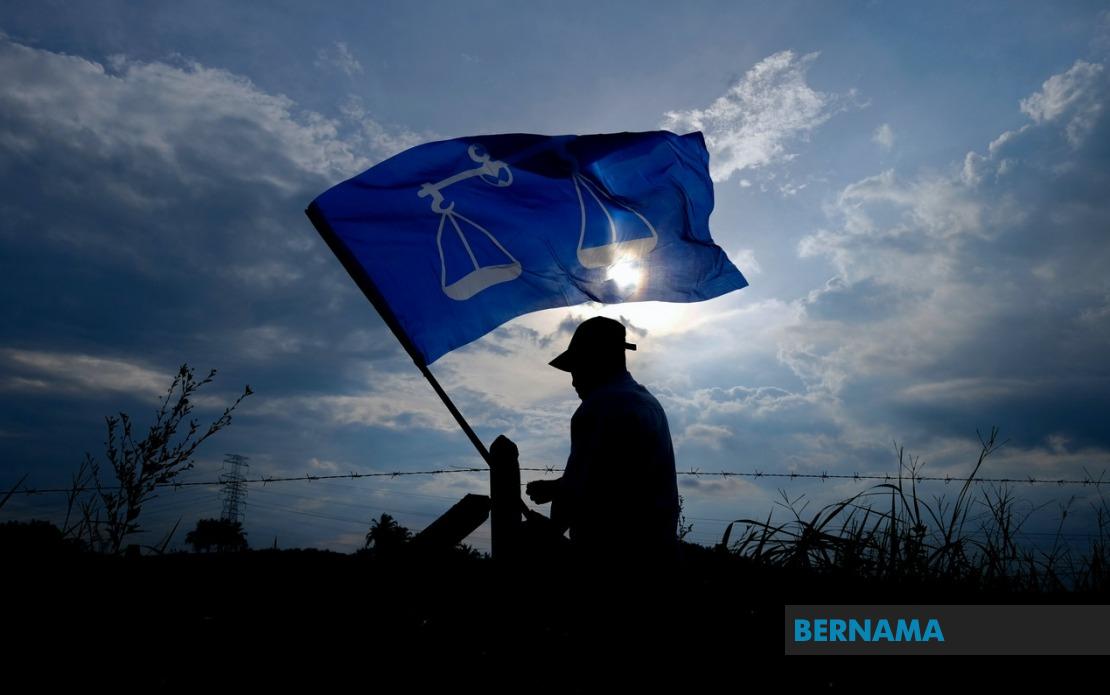
Barisan Nasional will tailor its election machinery and candidate selection process for the forthcoming Negeri Sembilan state election to account for the state's distinctive demographic composition and established voting behaviour patterns, according to coalition chairman Datuk Seri Dr Ahmad Zahid Hamidi. The Deputy Prime Minister indicated that a one-size-fits-all approach would be inappropriate given the state's structural differences from other Malaysian states, prompting BN to recalibrate its political strategy accordingly. The coalition plans to unveil its chosen candidates within days, signalling an imminent shift toward the campaign phase.
Ahmad Zahid's acknowledgement that Negeri Sembilan requires customised electoral planning reflects a broader recognition within BN's leadership that state-level contests demand granular understanding of local conditions. The number of seats available, the distribution and characteristics of the voter population, and entrenched voting preferences all influence how effectively a coalition can deploy resources and messaging. Rather than assuming strategies that succeeded in other jurisdictions will automatically translate, BN appears intent on conducting a more calibrated assessment. This methodological shift underscores lessons learned from recent state elections and represents a maturation in how the coalition approaches competitive electoral contests.
The BN chairman's comments come on the heels of the coalition's decisive victory in the Johor state election just days prior, a result he attributed to mental fortitude and creative problem-solving among campaign workers who navigated various obstacles throughout the contest. That success has evidently invigorated BN's approach to upcoming electoral challenges, with party leaders viewing the Johor outcome as validation of their broader political strategy. However, Ahmad Zahid's insistence that Negeri Sembilan requires differentiated tactics suggests the coalition does not regard all state elections as interchangeable challenges—each presenting distinct opportunities and constraints that demand tailored responses.
Parallel negotiations with PAS regarding potential power-sharing arrangements in Negeri Sembilan have emerged as a significant dimension of BN's planning process. Ahmad Zahid characterised discussions surrounding a possible PAS candidate for the Menteri Besar position as preliminary and non-binding, emphasising that no formal agreement currently exists between the two Islamist-oriented parties. His language carefully distinguished between tentative understandings and concrete commitments, suggesting ongoing fluidity in coalition deliberations. This cautious framing reflects the complexity of managing inter-party relations while maintaining flexibility to respond to emerging political developments or internal party preferences.
The absence of a finalised agreement with PAS illustrates broader challenges facing BN as it coordinates strategy across multiple component parties with sometimes divergent interests and constituencies. Any power-sharing arrangement must balance BN's interests with those of potential partners, requiring delicate negotiation and credible assurances to all stakeholders. Ahmad Zahid's implicit warning against interpreting preliminary discussions as settled positions suggests BN may be preserving room for manoeuvre should political circumstances shift or should internal consensus prove elusive. The coming week's announcement of candidates will clarify whether such discussions have yielded concrete outcomes or remain speculative.
Simultaneously, Ahmad Zahid addressed emerging tensions within the ruling Unity Government coalition, specifically defending Housing and Local Government Minister Nga Kor Ming against calls for his resignation. The DAP deputy chairman has become a focal point of political criticism, with some quarters demanding he step down from his ministerial role. Ahmad Zahid's response emphasised that statements regarding coalition members require reasonableness and restraint, particularly when parties share governmental responsibility. His observation that aggressive positioning might be acceptable in opposition but becomes counterproductive within a governing coalition articulates an important distinction between oppositional and governing coalitions.
The defence of Nga Kor Ming signals BN's commitment to maintaining Unity Government coherence despite periodic tensions between its constituent parties. Ahmad Zahid's characterisation of Nga as a personal friend and his undertaking to meet with him suggest deliberate efforts to manage potential fractures through personal relationships and informal dialogue. This approach prioritises institutional stability over short-term political point-scoring, reflecting recognition that the Unity Government's longevity depends on maintaining professional relationships and managing disagreements constructively rather than allowing them to escalate into existential challenges.
Ahmad Zahid's broader assertion that Unity Government leaders maintain harmonious and collaborative relations at the federal level, with all parties functioning as a unified team, projects an image of governmental stability. However, the very fact that he felt compelled to address calls for Nga's resignation acknowledges underlying tensions that persist despite official rhetoric regarding unity. Such periodic eruptions of public criticism from within coalition circles reflect the inherent difficulties of maintaining cohesion among parties with distinct political bases, ideological orientations, and organisational interests. Managing these tensions without allowing them to undermine governmental effectiveness remains an ongoing challenge for the administration.
For Malaysian observers, the strategic recalibration evident in BN's approach to Negeri Sembilan carries implications extending beyond that state's borders. The coalition's explicit acknowledgement that different electoral contexts require different strategies suggests a more sophisticated political apparatus than might be assumed from oversimplified media narratives. This flexibility could enhance BN's competitive positioning in future contests, provided the coalition translates strategic flexibility into effective execution. Conversely, overreliance on state-specific tailoring without maintaining clear overarching party principles risks appearing opportunistic or unprincipled to voters.
The timing of these strategic announcements, coming just days before candidate nominations, reflects the compressed timeframe characteristic of Malaysian electoral contests. BN's apparent comfort with moving swiftly from strategic deliberation to public announcement suggests reasonable internal consensus, though the coming weeks will test whether announced strategies translate into effective campaigning and ultimately electoral success. The state election will serve as an important test case for whether BN's recalibrated approach genuinely accounts for local realities or whether it represents merely rhetorical acknowledgement of differences without substantive strategic adaptation.
For the broader Southeast Asian context, BN's approach to state-level electoral competition offers lessons regarding coalition management and strategic adaptation. As regional democracies grapple with managing multi-party coalitions and diverse electoral landscapes, the ability to maintain organisational coherence while responding to local circumstances emerges as a critical capability. Malaysia's experience navigating these tensions—between maintaining a clear political identity and adapting to diverse local contexts—resonates with challenges facing other regional governments managing complex coalition dynamics. Ahmad Zahid's statements thus reflect not merely domestic political manoeuvring but also broader questions about how contemporary parties and coalitions can remain electorally competitive while maintaining organisational cohesion and ideological clarity.

