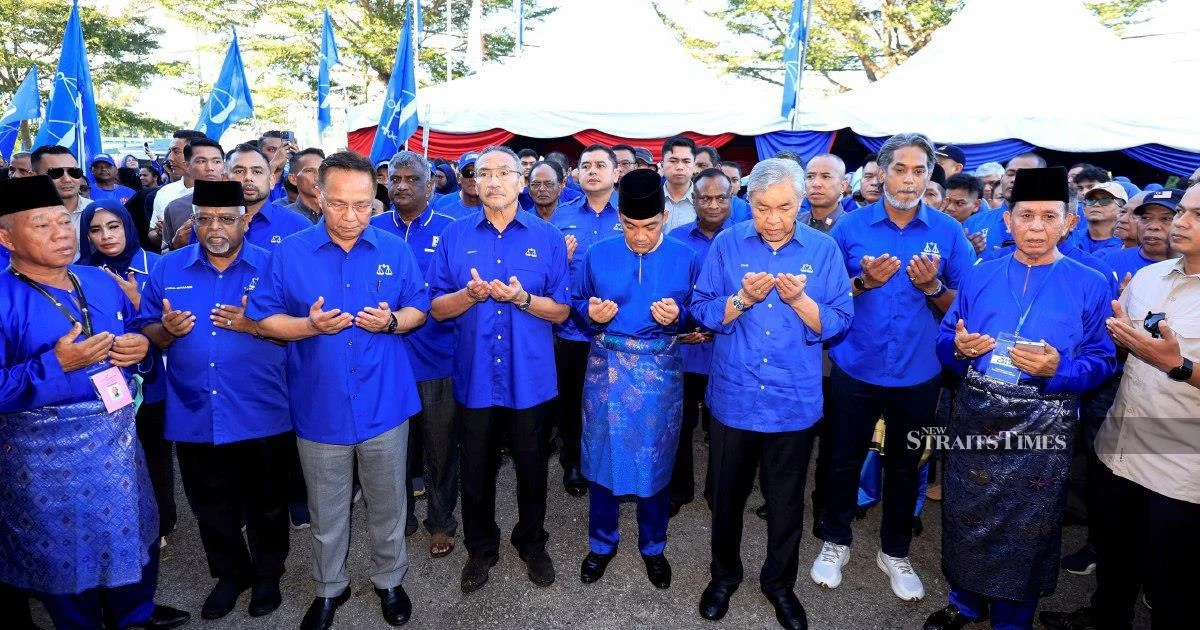
The appearance of multiple prominent Barisan Nasional leaders at Simpang Renggam District Council underscores the coalition's determination to maintain its grip on Johor, Malaysia's third-largest state by population and a critical political battleground that has remained under BN control for decades. Datuk Onn Hafiz Ghazi, who has served as Johor Menteri Besar since 2018, faces mounting pressure to demonstrate that the coalition retains broad support across the state's diverse constituencies, and the coordinated presence of senior figures from across BN's component parties represents an attempt to project organisational strength and unity heading into electoral contests.
The strategic gathering in Simpang Renggam, located in the southern reaches of the state, carries particular significance because this district has historically been a stronghold for BN's traditional support base, comprising middle-income urban voters and rural communities dependent on agriculture and local commerce. By staging a high-profile mobilisation event in this area, BN aims to reinforce its narrative of administrative competence and stability, especially against backdrop of evolving political dynamics in Peninsula Malaysia that have seen the coalition's traditional dominance tested in recent state-level contests across other regions.
Onn Hafiz has become the public face of BN's Johor campaign, embodying the coalition's broader strategy to emphasise continuity, infrastructure development, and economic management. His tenure has coincided with various development initiatives across the state, including infrastructure projects in Johor Bahru and efforts to attract foreign investment into southern Malaysia. The gathering of BN heavyweights signals confidence in his leadership while simultaneously demonstrating that he enjoys backing from party elders and federal-level decision-makers, a crucial element in consolidating support among party grassroots and the voting public.
The show of unity among BN's senior leadership carries implicit messaging to several audiences simultaneously. To internal party members and grassroots supporters, it communicates that the coalition remains cohesive and committed to fighting for Johor, countering any perception of internal discord or weakening resolve. For the broader electorate, particularly swing voters in urban and semi-urban areas, the presence of multiple respected figures suggests governmental stability and access to resources at both state and federal levels—advantages that opposition parties typically cannot match.
Johor occupies a distinctive position within Malaysia's political ecosystem. As the largest BN-controlled state, it generates substantial federal revenues and remains a test case for the coalition's ability to govern complex, diverse constituencies. The state encompasses Johor Bahru's cosmopolitan urbanity, the industrial zones of Pasir Gudang, the agricultural regions of Kota Tinggi and Mersing, and the growing economic centres in southern Johor. Each area presents distinct governance challenges and voter priorities, requiring BN to maintain broad-based appeal across demographic and geographic divides.
The timing of this mobilisation reflects electoral cycles and internal party dynamics. Recent political developments across Malaysia have demonstrated that no seat is guaranteed, and even traditionally safe constituencies require consistent engagement and visible investment from party leadership. By deploying senior figures in Simpang Renggam and presumably other key districts, BN seeks to prevent any erosion of traditional support that could accumulate into larger losses across multiple constituencies.
Simpang Renggam itself represents a microcosm of Johor's voting patterns. The district includes both established BN voter blocs and emerging demographic segments whose political preferences remain more fluid. The decision to concentrate leadership resources here suggests BN's strategic assessment of where consolidation efforts will yield maximum electoral dividends. This granular, constituency-focused approach reflects modern political campaigning's emphasis on precise targeting rather than broad-brush messaging.
The coalition's show of solidarity also carries implications for the broader national political landscape. Johor's electoral performance influences perceptions of BN's national viability and momentum heading into potential federal contests. A successful holding of Johor would substantially strengthen BN's narrative of recovering political ground after years of electoral setbacks, while conversely, significant losses would reinforce narratives of decline. The presence of heavyweight figures therefore serves both immediate state-level goals and longer-term national political calculations.
For opposition parties contesting in Johor, BN's visible mobilisation of senior talent and apparent institutional cohesion presents a formidable challenge. Opposition coalitions must overcome not only BN's structural advantages in resource allocation and administrative machinery but also the symbolic power of unified leadership endorsement. This raises the electoral bar for opposition candidates seeking to overturn historically BN-supporting constituencies, requiring them to develop exceptionally strong local messaging and organisational capacity.
The gathering at Simpang Renggam illustrates how contemporary Malaysian politics remains heavily influenced by personality-driven leadership, institutional affiliation, and visible demonstrations of party strength and unity. Voters in Johor will ultimately decide whether these signals translate into actual electoral support, but the strategic deployment of BN's heavyweights indicates the coalition views the state as winnable and worthy of intensive leadership engagement. The coming weeks will reveal whether this show of support translates into sustained voter enthusiasm or represents merely superficial organisational theatre masking underlying weaknesses.

