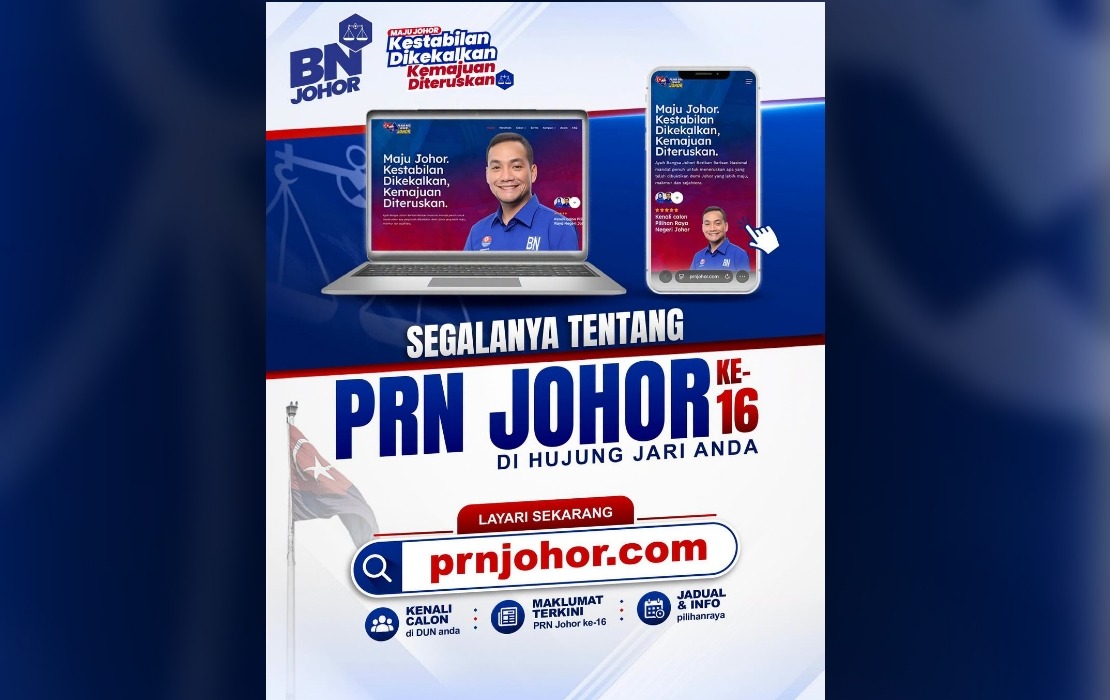
Barisan Nasional is steering voters towards a dedicated digital platform as a reliable source for candidate information during the Johor State Election campaign. The coalition's chairman, Datuk Seri Dr Ahmad Zahid Hamidi, who simultaneously serves as Deputy Prime Minister, made the appeal on Facebook, directing the public to prnjohor.com as the authoritative repository for verified data about the election process and BN hopefuls across all state constituencies.
The initiative reflects a broader strategic shift among Malaysian political parties to harness digital channels for voter engagement. Rather than relying solely on traditional campaign methods or unverified social media circulation, BN is positioning an official website as the gatekeeper for factual election-related content. This approach addresses growing concerns about misinformation and rumour-mongering that typically intensify during campaign periods, when unsubstantiated claims can spread rapidly across messaging platforms and social networks.
Through prnjohor.com, voters gain access to comprehensive profiles of BN candidates contesting in each State Legislative Assembly constituency. The portal consolidates this information in a single, centrally managed location, allowing the electorate to research candidates' backgrounds, qualifications, and platforms without having to navigate fragmented sources. This transparency mechanism is particularly valuable in a state like Johor, which spans diverse communities with varying information consumption habits and digital literacy levels.
Beyond candidate profiles, the website serves as the official conduit for BN's election manifesto. The manifesto represents the coalition's policy commitments and vision for Johor's development over the coming years, touching on issues from economic development to healthcare, education, and infrastructure. Making this document readily accessible online ensures that voters can review BN's platform comprehensively rather than relying on partial summaries or interpretations circulating through informal channels.
The digital platform also provides real-time updates on campaign developments and election logistics. As the polling campaign unfolds, voters can obtain verified information about candidate movements, rally schedules, policy announcements, and official statements directly from BN. This functionality reduces the lag time between events and public awareness, minimising the window during which rumours or distorted accounts might gain traction.
For Malaysian voters increasingly accustomed to obtaining information online, such a centralised resource reduces friction in accessing election-related data. Rather than searching across multiple websites, news outlets, and social media pages—each with varying credibility—voters can turn to a single authoritative source curated by the election machinery itself. This convenience factor may encourage broader voter participation and more informed decision-making at the ballot box.
The emphasis on authenticity and fact-based decision-making evident in Ahmad Zahid's message comes amid a regional context where election-related misinformation has become a persistent challenge. Neighbouring countries have grappled with false claims about candidates, voting procedures, and electoral outcomes. By proactively establishing a verified information hub, BN attempts to insulate the Johor election from such distortions while subtly positioning itself as the responsible steward of accurate election discourse.
However, the effectiveness of such initiatives depends on public awareness and accessibility. Many voters, particularly older demographics or those in rural areas with limited internet penetration, may not spontaneously visit the website or may lack the digital infrastructure to do so reliably. The coalition would need to complement online efforts with robust offline promotion, ensuring that the portal's existence and value are communicated through traditional media, community meetings, and grassroots mobilisation.
The initiative also raises broader questions about information equity during elections. While BN's official platform provides verified information about its own candidates and policies, voters still require reliable sources for comparative analysis with opposition parties' positions and track records. An information ecosystem that relies heavily on individual party websites may inadvertently fragment the public discourse, with supporters consuming information primarily from their preferred party's channels. This balkanisation of election information, while reducing misinformation within each party's domain, may paradoxically complicate the formation of comprehensive voter perspectives.
Moreover, the digital divide remains a tangible reality across Malaysia, including in Johor. Urban, educated, and younger voters are far more likely to visit and benefit from online platforms than rural voters or those with limited digital skills. Any election information strategy relying heavily on digital channels risks inadvertently creating a two-tiered information landscape where some voter segments enjoy better access to verified data than others.
Despite these limitations, BN's move underscores a recognition that modern political campaigns increasingly operate in hybrid spaces, blending digital and traditional channels. The prnjohor.com platform represents a measured effort to occupy the online information space strategically, particularly during a critical electoral window when voter attention is at its peak. By framing verified information as a competitive advantage and inviting voters to distinguish between official sources and rumour-filled alternatives, BN is subtly advocating for information discipline within the electorate.
As Johor voters prepare to cast their ballots, the availability of centralised, verified candidate and policy information should theoretically facilitate more deliberate electoral choices. Whether the public responds by visiting the portal and adjusting their decision-making accordingly remains an empirical question that will only become clear once voting concludes and analysts examine patterns of voter behaviour and information consumption during this campaign cycle.

