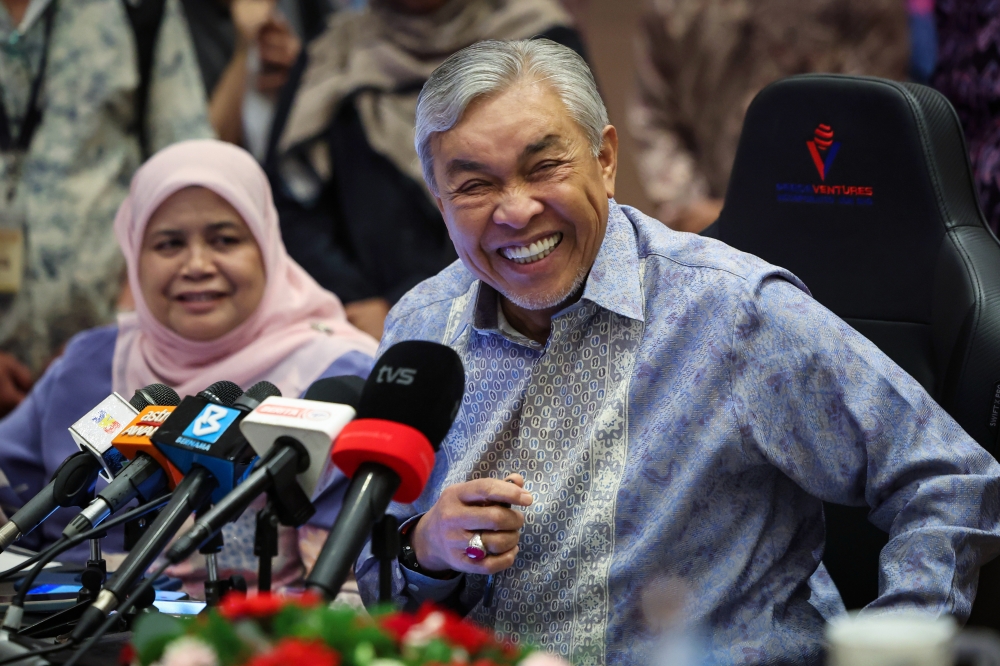
Deputy Prime Minister Ahmad Zahid Hamidi has moved to quell persistent rumours about potential fractures within Malaysia's governing coalition by firmly declaring that Barisan Nasional intends to honour its commitment to the Unity Government arrangement until the dissolution of the current parliamentary term. Speaking in George Town on July 23, the UMNO leader used characteristically blunt language to dismiss speculation about possible coalition realignments, signalling that the party will not entertain behind-the-scenes negotiations or alternative political arrangements regardless of where such discussions might hypothetically occur.
The declaration carries particular significance given the complex political landscape that has defined Malaysian governance since the 2022 general election. The Unity Government itself emerged from an unprecedented arrangement between historical rivals Pakatan Harapan and Barisan Nasional, with the backing of Sabah and Sarawak-based parties, fundamentally altering the nation's political dynamics and introducing new vulnerabilities inherent to multi-party coalitions dependent on razor-thin parliamentary majorities.
Zahid's unambiguous stance addresses mounting concerns within ruling coalition circles about the durability of the current arrangement. Speculation about potential realignments has periodically surfaced as various political actors calculate their positions ahead of the next election cycle, with some observers suggesting that the inherent tensions between Pakatan Harapan's progressive agenda and Barisan Nasional's more establishment orientation could eventually produce instability. His emphasis on commitment until Parliament's dissolution reflects an understanding that premature coalition breakdown could trigger dissolution and fresh elections before BN wished to face the electorate.
The reference to hypothetical scenarios involving Bangkok or Dubai—major financial hubs where clandestine political negotiations have historically taken place—represents a colourful dismissal of suggestions that BN leadership might be engaged in preliminary discussions for alternative coalitions. Such metaphorical language, while perhaps exaggerated for rhetorical effect, underscores the seriousness with which BN views its commitments and the party's desire to project stability to both coalition partners and Malaysian voters simultaneously.
For Southeast Asian political observers, Malaysia's Unity Government experiment carries broader significance as a model of coalition governance in a deeply divided democracy. The arrangement has survived longer than many initial sceptics predicted, though it remains dependent on sustained discipline from constituent parties and the absence of triggering events that might tempt defections or withdrawals. Zahid's reinforcement of this commitment suggests BN leadership views the stability provided by the current arrangement as preferable to the uncertainty that would accompany early dissolution.
The internal dynamics of Barisan Nasional itself carry weight in this calculation. As the dominant partner within BN, UMNO's position in the broader Unity Government depends partly on demonstrating that it can manage coalition responsibilities while simultaneously preparing for eventual electoral competition. Zahid's statement signals that UMNO has determined this equilibrium can be maintained throughout the current parliamentary cycle, offering reassurance to both Pakatan Harapan partners and to UMNO's own party faithful that strategic patience remains the operative principle.
The timing of Zahid's remarks reflects ongoing sensitivity to coalition stability within Malaysian political circles. Periodic reports of tensions between coalition partners—whether rooted in policy disagreements, ministerial portfolio disputes, or divergent electoral strategies—have required careful management to prevent public perception of imminent collapse. By publicly reaffirming commitment in such emphatic terms, the Deputy Prime Minister seeks to establish a narrative of solidity that can withstand routine political friction.
From a governance perspective, the durability question matters considerably for policy implementation. The Unity Government's agenda, while limited by coalition compromises, does require sufficient parliamentary stability to advance legislative priorities and maintain executive continuity. Premature dissolution would interrupt ongoing initiatives and potentially introduce policy reversals depending on which parties assume greater prominence following fresh elections. Zahid's declaration implicitly acknowledges that Malaysian society benefits from predictable governance horizons.
The Malaysian public's relationship with the Unity Government remains complicated by lingering reservations from different segments of the electorate. Opposition supporters question whether a coalition featuring Barisan Nasional can genuinely advance reforms, while some BN supporters remain concerned that alignment with Pakatan Harapan compromises their party's traditional positions. Statements like Zahid's attempt to navigate this terrain by projecting competence and stability while managing expectations about the inevitable end of the arrangement.
Looking toward the longer term, Zahid's commitment statement also serves a preparatory function for eventual campaign positioning. By establishing clear parameters about when the Unity Government ceases to operate, BN effectively signals to voters that a future election will represent a genuine competitive moment rather than a coronation. This framing may benefit BN strategically if handled carefully, presenting the party as a force that respects democratic processes while simultaneously offering stability in the interim period.
The Deputy Prime Minister's remarks ultimately reflect the pragmatic calculus that has become routine in Malaysian coalition governance. Rather than encouraging destabilizing speculation, BN's leadership appears resolved to extract maximum stability benefits from the current arrangement while maintaining sufficient political flexibility to position the party advantageously when the next electoral cycle arrives. This approach trades the uncertainty of early political realignment for the more predictable challenge of managing an inherently fragile coalition until natural parliamentary expiration.

