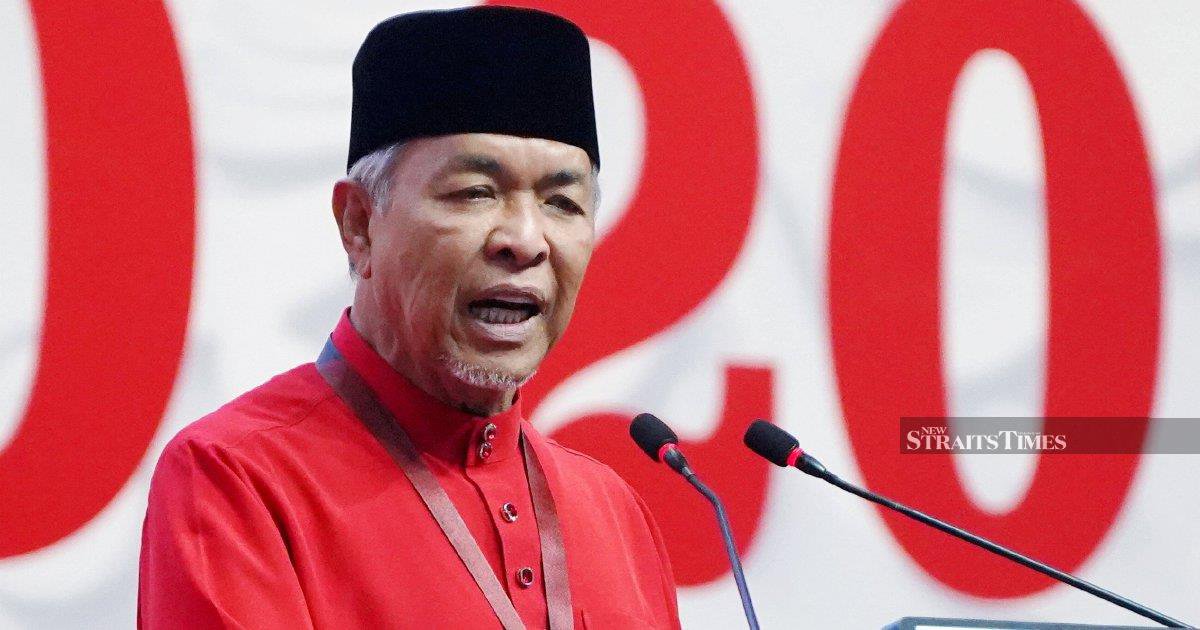
Barisan Nasional and Umno have signalled their readiness to pursue accountability measures without hesitation should the Royal Commission of Inquiry into Tabung Haji uncover evidence of misconduct at any level, according to statements made by party leaders in Putrajaya. The declaration underscores the coalitions' stated commitment to addressing governance failures within the massive Islamic pilgrimage fund, which has faced mounting scrutiny over investment losses and operational irregularities.
Datuk Seri Dr Ahmad Zahid Hamidi, who holds the dual positions of BN chairman and Umno president, confirmed that both political entities will not extend protection or mercy to individuals or entities found responsible for breaches of fiduciary duty, misappropriation of funds, or systemic failures in governance. His remarks come as the inquiry moves forward with its investigative mandate, examining the circumstances that led to substantial financial deterioration within the organisation.
The Tabung Haji fund has become a focal point for public concern across Malaysia, particularly among the Muslim community whose savings and contributions form the bedrock of its capital base. The fund's value has declined significantly in recent years, prompting questions about management decisions and internal controls. For many Malaysian Muslims, Tabung Haji represents their primary financial vehicle for undertaking the hajj pilgrimage to Mecca, and any loss of capital carries profound personal implications.
The establishment of the Royal Commission represents a formal governmental acknowledgment that allegations of mismanagement merit rigorous, independent investigation. Such inquiries typically examine whether institutional leaders exercised prudent stewardship, whether investment decisions aligned with fiduciary responsibilities, and whether proper governance frameworks existed and were followed. The commission's findings carry potential legal consequences for individuals found culpable, including criminal prosecution if evidence warrants such action.
For Umno specifically, the Tabung Haji inquiry holds particular significance given the party's traditional dominance in Malaysian governance and the fund's close historical ties to Umno-led administrations. Senior party officials have emphasised that strengthening institutional integrity serves the party's broader political interests, as public confidence in governance directly influences electoral fortunes. The willingness to support accountability measures may be viewed as both a genuine commitment to reform and a strategic calculation to rebuild public trust following previous governance controversies.
The emphasis on non-compromise resonates within a Malaysian political context where questions of accountability and rule of law have intensified over the past decade. Malaysian voters have demonstrated growing intolerance for perceived institutional corruption, as evidenced by electoral shifts and heightened public scrutiny of political and corporate governance. By explicitly rejecting any suggestion of preferential treatment, BN and Umno leadership appear intent on positioning themselves as champions of institutional reform rather than defenders of the status quo.
Regionally, Malaysia's approach to investigating governance failures within religious institutions carries implications for broader discussions about institutional accountability in Southeast Asia. Other nations within the region similarly manage large faith-based financial entities, and the methods employed in the Tabung Haji inquiry may provide procedural models or cautionary lessons for managing such sensitive investigations within multireligious societies.
The inquiry process itself involves examining administrative records, financial documentation, and testimonies from individuals involved in decision-making processes. Such investigations require careful navigation of technical financial matters, organisational hierarchies, and the sensitivities surrounding a fund that holds deep cultural and spiritual significance for Malaysia's Muslim majority. The Royal Commission's ability to conduct thorough, credible investigation while maintaining public confidence remains crucial to achieving its accountability objectives.
For ordinary Malaysians with funds held in Tabung Haji, the inquiry's findings and subsequent actions will determine whether institutional safeguards prove sufficient to prevent future losses. Members of the public increasingly expect transparency regarding how their savings are managed and what consequences befall those responsible for poor stewardship. The accountability framework established through this inquiry will likely influence public perception of regulatory efficacy more broadly.
The path forward involves completing the inquiry, publishing findings, and implementing any recommended reforms or enforcement actions. Political leaders across the spectrum have framed support for rigorous investigation as alignment with governance best practices and public interest. However, translating rhetoric into sustained institutional reform requires consistent implementation and resistance to pressure that might arise once specific individuals face potential consequences.
Zahid's statement effectively establishes a public record of the coalition's stated position, creating accountability for the leadership itself should selective prosecution or preferential treatment subsequently emerge. This transparent positioning also sends a message to investigators that political interference should not be expected, though critics may rightfully note that such statements, while significant, do not eliminate the risk of subtle institutional or political pressure influencing outcomes in complex investigations.

