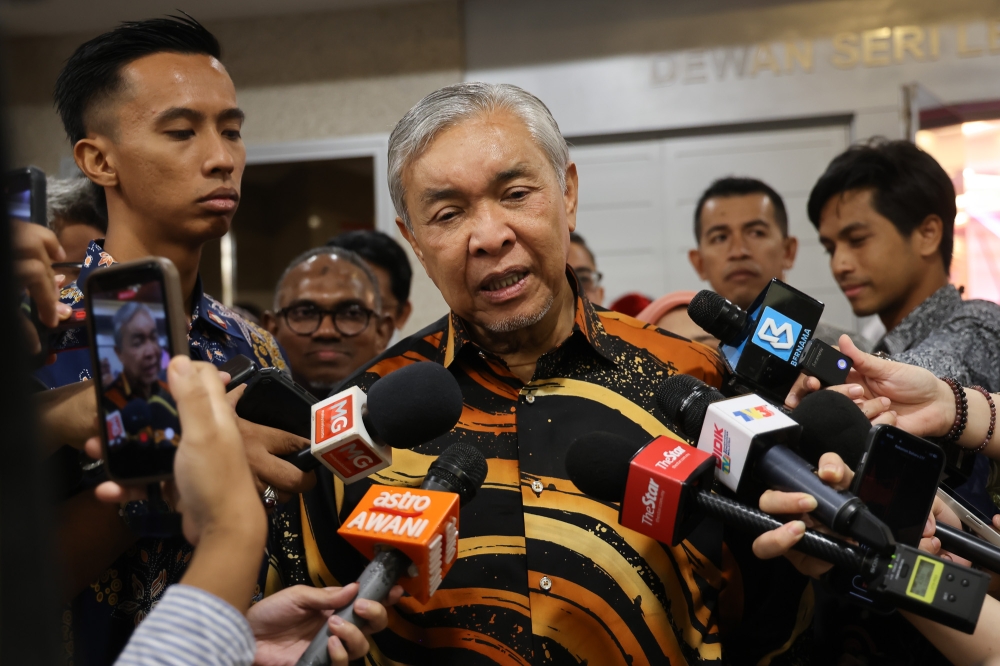
Deputy Prime Minister Datuk Seri Ahmad Zahid Hamidi has made clear that neither Barisan Nasional nor Umno will accept any violation of trust in the management of Tabung Haji, the Islamic pilgrimage savings institution that serves millions of Malaysian Muslims. Speaking in Putrajaya on August 6, Zahid underscored the coalition's commitment to holding accountable those whose actions contributed to institutional mismanagement. This positioning signals the leadership's intention to distance itself from past governance failures while reaffirming its commitment to institutional integrity.
The statement carries particular weight given the historical significance of Tabung Haji in Malaysian public life. Established as a statutory body to assist Muslims in fulfilling the hajj obligation, the institution has long occupied a unique place in the nation's financial landscape, managing savings from millions of contributors across the country. Any governance lapse at the organisation therefore extends beyond mere financial concerns, touching on matters of religious trust and social responsibility. The institution's health reflects directly on the credibility of the political leadership overseeing it.
Zahid's declaration appears to acknowledge mounting public scrutiny regarding the fund's previous operational challenges and financial irregularities. In recent years, Tabung Haji has faced questions about investment decisions, internal controls, and management practices that drew criticism from stakeholder groups and financial observers. By firmly rejecting any tolerance for misconduct, the Deputy Prime Minister is attempting to position the current administration as committed to remedial action and preventive governance structures. This stance also subtly distinguishes the present leadership from predecessors who may have overlooked or inadequately addressed systemic issues.
The emphasis on consequences for wrongdoing reflects a broader political strategy to rebuild public confidence in government institutions. Malaysian citizens and pilgrims who depend on Tabung Haji require assurance that their savings and trust are safeguarded by robust oversight and ethical management. When institutional failures occur, the credibility of the entire political establishment suffers collateral damage. By vocally committing to accountability measures, Zahid is attempting to restore public trust through demonstrable action rather than mere reassurance.
For the average Malaysian contributor to Tabung Haji, such statements translate into tangible implications. Those who have entrusted their savings to the fund—often accumulated over many years to finance their sacred pilgrimage—need confidence that management decisions serve their interests. Zahid's remarks suggest that investigations into past failures will be pursued rigorously, and that individuals responsible for breaches of fiduciary duty will not escape consequences simply because of political connections or seniority. This approach, if implemented consistently, could strengthen investor confidence in the institution's future.
The regional context also matters. Throughout Southeast Asia, governance transparency and institutional accountability have become increasingly important to citizens and investors alike. Malaysia's approach to policing institutional misconduct at major government-linked bodies signals to both domestic stakeholders and international observers the seriousness with which the administration treats corporate governance. Neighbouring countries and global financial institutions monitor such developments as indicators of the nation's commitment to responsible stewardship of public resources.
Umno's particular association with this statement carries additional significance, as the party has historically maintained close organisational links with Tabung Haji and benefited from its institutional structure. By explicitly stating that the party will not tolerate misconduct, the leadership is imposing party discipline on its own members and affiliated officials. This represents a departure from perceptions that ruling party members might receive preferential treatment when institutional failures occur. Such positioning, if matched by concrete enforcement, could help rehabilitate public perception of Umno's governance orientation.
The practical enforcement of Zahid's statement will determine its credibility. Observers will watch closely to see whether investigations proceed impartially, whether findings result in prosecutions regardless of the accused's political standing, and whether institutional reforms address root causes of past failures. Public statements about accountability carry little weight unless backed by demonstrable action. The true test will come when difficult decisions must be made about individuals implicated in institutional failures—whether they face genuine consequences or receive subtle protection through procedural delays or reduced penalties.
Moving forward, Tabung Haji will require not only accountability for past failures but also structural reforms to prevent recurrence. This might involve strengthening independent oversight mechanisms, enhancing transparency in investment decisions, improving internal audit processes, and implementing clearer governance standards. Zahid's remarks suggest that such reforms form part of the government's intended response to institutional weaknesses. The credibility of these measures will depend on their comprehensiveness and the resources allocated to implementation.
For Malaysian pilgrims and contributors, these developments represent an opportunity for institutional renewal. Tabung Haji's effective operation serves millions of families who view the hajj as a fundamental religious obligation. When institutional governance improves, the financial security of these contributors strengthens, and the organisation can better fulfil its sacred mission. The Deputy Prime Minister's statement, therefore, potentially signals the beginning of a more rigorous oversight era at one of Malaysia's most significant faith-based financial institutions, though sustained implementation will be essential to validate current assurances.

