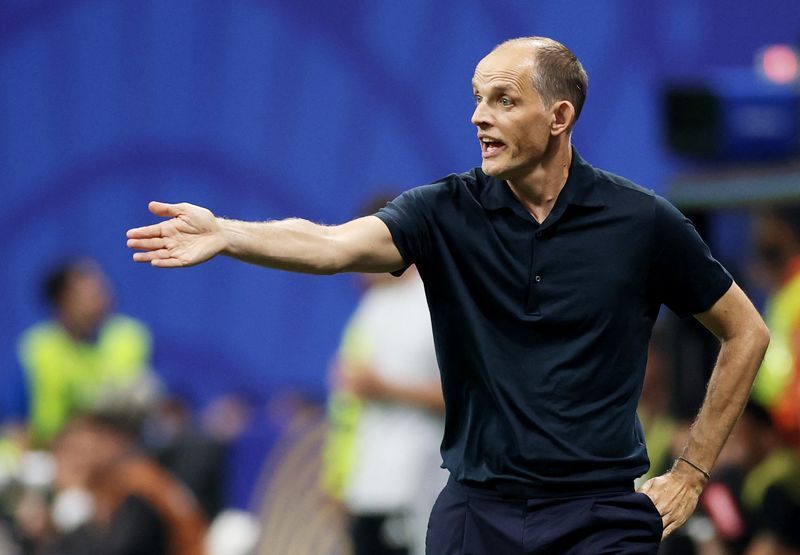
Thomas Tuchel arrived at the England job as a serial winner with a mandate to end decades of tournament heartbreak, yet his tenure has already unravelled in the dying moments of a World Cup semi-final against Argentina. The German's appointment last October was framed as a transformative moment for English football, with Football Association Chief Executive Mark Bullingham declaring confidence that Tuchel represented "the best possible chance" to claim a major trophy at the next men's World Cup. The former Chelsea and Bayern Munich boss had embraced the challenge with characteristic ambition, vowing to "get a second star on our shirt" and replicate England's sole World Cup triumph from 1966. That ambition collided brutally with Argentine reality when his defensive adjustment after Anthony Gordon's opener proved catastrophic, gifting Lionel Messi and his teammates the space to orchestrate a remarkable turnaround in the tournament's pivotal match.
The post-match inquest has fixated on Tuchel's in-game management, with former Premier League managers dissecting his decision-making in the commentary boxes and studios. Alan Pardew, speaking on talkSPORT, offered one of the more measured critiques, suggesting that Tuchel's tactical shift had "fed a negative mindset" and caused the team to lose its "rational organisation." Yet the manager himself has pushed back against the notion that systems alone explain England's exit, pointing instead to a more existential challenge facing his team. Tuchel's argument—that English football lacks the cultural DNA for ball possession and game control that comes naturally to the Spanish, Argentinian, and Brazilian traditions—deserves serious consideration. This observation transcends tactical minutiae and speaks to how different football cultures approach the fundamental question of how to win matches at the highest level, a distinction that proved decisive on the night.
Context matters enormously when assessing Tuchel's performance in his first major international tournament. Unlike established international legends such as Didier Deschamps, who spent six years developing France's system before winning the 2018 World Cup, Tuchel has been thrust into the crucible of tournament football without the gradual apprenticeship that typically shapes world-class international coaches. France's 1998 World Cup-winning architect Aime Jacquet required five years to mould his squad, suggesting that even the most accomplished coaches need time to understand the unique pressures and dynamics of knockout competition. Tuchel at least matched Gareth Southgate's semi-final achievement from 2018, providing a platform from which to build. His recent contract extension through 2026 indicates that the FA remains committed to his long-term project, recognising that tournament coaching is a discipline requiring experience that cannot be condensed into a single campaign.
Yet focusing exclusively on Tuchel's tactical blueprint obscures the elephant on the pitch: Argentina's relentless determination and the unstoppable force that is Lionel Messi at his most inspired. Defending champions entering this tournament, Scaloni's side has demonstrated a psychological resilience that separates champions from merely competent teams. Their path through the knockout rounds was hardly serene—Cape Verde pushed them to the limit, Egypt required three late goals to resurrect their campaign, and Switzerland forced extra time in the quarter-finals. These narrow escapes might have broken a less cohesive unit, yet each challenge seemed to strengthen Argentina's resolve rather than expose fragility. When England lined up against this battle-hardened ensemble, they were confronting not just superior tactical acumen but a team that had already demonstrated it knew how to survive and prevail when circumstances seemed darkest.
Messi's performance encapsulated Argentina's advantage with startling clarity. The 39-year-old magician, whom Thierry Henry has described as someone capable of "writing history with his feet," proved utterly uncontainable when his team required him most. Henry's analysis, delivered on Fox and rooted in three seasons observing Messi at Barcelona's training ground, reveals how the Argentine's competitive psychology operates at a level beyond conventional coaching. When referees fail to call fouls or when opposition players commit minor infractions, Messi appears to "switch" into a different mode entirely, transforming minor slights into fuel for extraordinary performances. Against England, the England defence discovered this principle in the most painful manner possible, with Messi gliding to the right flank to evade their concentrated rearguard and serving assists for Enzo Fernandez and Lautaro Martinez's decisive goals.
Statistical evidence underscores Messi's dominance and England's paralysis in the final stages. From the 72nd to the 92nd minute, as Tuchel's defensive retrenchment took hold, England attempted merely two passes in Argentina's half of the pitch. During the identical period, Argentina executed 111 such passes, a differential so stark it captures the essence of England's predicament. They had surrendered possession and territorial control, attempting to compress their shape and withstand waves of Argentine pressure. This defensive strategy might have succeeded against a team lacking Argentina's creative resources and psychological fortitude, but against Scaloni's players and Messi's determination to add a second consecutive World Cup title to his legacy, such caution proved fatal. The numerical gap between the teams' passing statistics reveals how completely England had ceded initiative, transforming from attacking football into reactive desperation.
Argentina's ambition to become the first nation since Brazil in 1962 to retain the World Cup title has imbued their campaign with historical significance that extends beyond Messi's individual brilliance. The team understands what claiming back-to-back crowns would mean for their nation's football heritage, and that awareness has steeled their resolve through adversity. Each survived challenge in the knockout rounds has reinforced their conviction that they are destined for glory, a psychological advantage that accumulates as tournaments progress. England, by contrast, carried the weight of repeated near-misses and the burden of expectation attached to Tuchel's appointment as the manager who would finally deliver silverware. That psychological imbalance, though invisible in tactical diagrams, proved as consequential as any adjustment Tuchel might have made from the touchline.
For Malaysian and Southeast Asian observers, England's exit provides instructive lessons about the gap between managerial reputation and tournament success. Tuchel's appointment was celebrated as a guarantee of progress, yet international football operates according to different rules than the club game, where money and superior talent frequently deliver trophies. At the World Cup, determination, collective belief, and the ability to execute under extreme pressure matter alongside tactical sophistication. Argentina's semi-final victory, achieved through grit and the transcendent skill of a 39-year-old player who refuses to accept defeat, demonstrates that tournaments favour teams that have developed deep reserves of resilience. For emerging football nations in the region, the lesson extends beyond Tuchel's tactical choices: sustained success requires cultural development, psychological maturity, and coaching experience accumulated through repeated exposure to high-pressure competition.
The criticism directed at Tuchel, while understandable given England's elimination, partially misses the point about why his team fell short. Tactical systems matter, certainly, and his defensive switch remains a legitimate subject for analysis. However, the deeper truth suggested by the statistics, by Argentina's demonstrated capacity to overcome adversity, and by Messi's performances in crucial moments is that England encountered a superior team at a crucial juncture. Tuchel's job now involves extracting lessons from this painful defeat while maintaining the squad's confidence and unity. His two-year contract extension, agreed in February, provides runway for experimentation and development ahead of the next World Cup. Whether England can close the gap on Argentina and other established powerhouses will depend less on tactical innovation than on whether Tuchel can gradually embed the possession-based football culture that he identified as absent from English football's DNA, a transformation requiring years of patient work rather than the instant gratification that trophy-hungry nations often demand.

