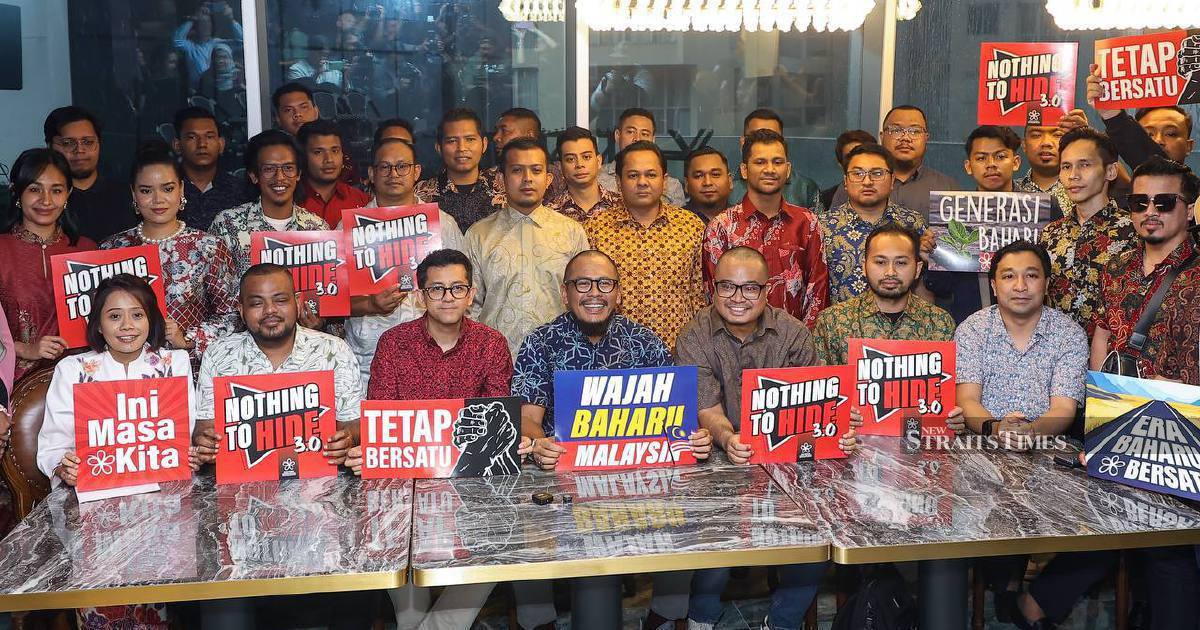
The partnership between PAS and Bersatu—the twin pillars of Malaysia's Perikatan Nasional coalition—faces mounting strain, yet one senior politician from the latter party insists the relationship can still be salvaged. Kota Siputeh assemblyman Mohd Ashraf Mustaqim Abdul Munir presented an optimistic view of the troubled alliance during a recent interview, suggesting that despite evident friction, the two parties retain sufficient common ground to rebuild their fractured partnership.
Mohd Ashraf's characterisation of the current impasse as akin to "a married couple who continue quarrelling while living under the same roof" reveals both the depth of current discord and his belief that the underlying relationship remains intact. The metaphor underscores a critical reality in Malaysian coalition politics: even when tensions run high, parties bound by electoral compacts and shared governance structures often find reconciliation more pragmatic than separation. His framing sidesteps the more troubling scenario—irrevocable breakdown—by emphasising that conflict and cohabitation need not be mutually exclusive in political unions.
The PN coalition itself has proven resilient through multiple crises since its formation. PAS and Bersatu have divergent ideological orientations and grassroots support bases, yet their decision to forge a formal alliance signalled mutual recognition that neither party alone possessed sufficient strength to compete with the combined machinery of other blocs. This asymmetry of interdependence typically incentivises accommodation, even when egos and policy preferences collide.
Recent months have exposed fissures in the relationship. Disputes over seat allocation, ministerial portfolios, and ideological direction have created public acrimony that threatens to undermine the coalition's coherence ahead of crucial state and federal elections. Such tensions are endemic to multi-party coalitions in Malaysia's complex political landscape, where managing competing interests without sacrificing overall unity remains perpetually challenging. What distinguishes recoverable disagreements from terminal ones is often not the intensity of conflict but the willingness of key figures to engage in behind-the-scenes negotiation.
Bersatu's assertion that reconciliation remains possible carries particular weight given its smaller parliamentary footprint compared to PAS. Bersatu politicians have strong incentive to mend the relationship because fragmentation would erode their leverage within PN structures. Conversely, PAS leadership must weigh whether demanding further concessions might provoke a Bersatu backlash that weakens the entire coalition vis-à-vis opposition forces. This mutual vulnerability often produces pragmatic compromise.
The Malaysian electorate has grown increasingly volatile and strategic in voting behaviour. Regional elections and by-polls have demonstrated that coalition fractures translate into voter defection and competitive defeats. Both PAS and Bersatu have witnessed this phenomenon directly. For voters aligned with either party's base or attracted to PN's policy platform, a destabilised partnership signals weakness and invites tactical voting for rivals. The electoral cost of protracted internal conflict thus creates powerful incentive for de-escalation.
Mohd Ashraf's public optimism also serves a functional political purpose: it signals to party members that internal disputes, while real, remain bounded and subject to resolution. Such reassurance prevents cascading defection and morale collapse within party structures. In Malaysian politics, where party discipline and internal cohesion remain vital to electoral competitiveness, senior figures routinely calibrate public messaging to maintain organisational integrity even amid substantive disagreements. His remarks likely reflect calculations about maintaining party unity as much as genuine conviction about PN's future.
The broader context of Malaysian coalition dynamics suggests that temporary ruptures, even serious ones, rarely translate into permanent dissolution. The 2020 Sheraton Move itself—which shattered the Pakatan Harapan government and created PN—demonstrates that Malaysian politicians frequently undertake dramatic realignments. Yet these same actors also engage in repeated reconciliation. Party leaders maintain multiple channels of communication and regularly revisit fractious relationships when circumstances shift or when the cost of separation rises sufficiently high.
Looking ahead, whether PAS and Bersatu successfully navigate their current difficulties will depend partly on whether their respective leaderships can negotiate concrete compromises on grievance issues. Leadership changes, electoral outcomes, or shifts in opposition bloc dynamics could either accelerate reconciliation or deepen divisions. The metaphor of the married couple cuts both ways: such relationships can either grow stronger through conflict resolution or spiral toward irretrievable breakdown. Mohd Ashraf's optimism reflects hope that PN leadership will choose the former path, though the outcome remains far from predetermined.

