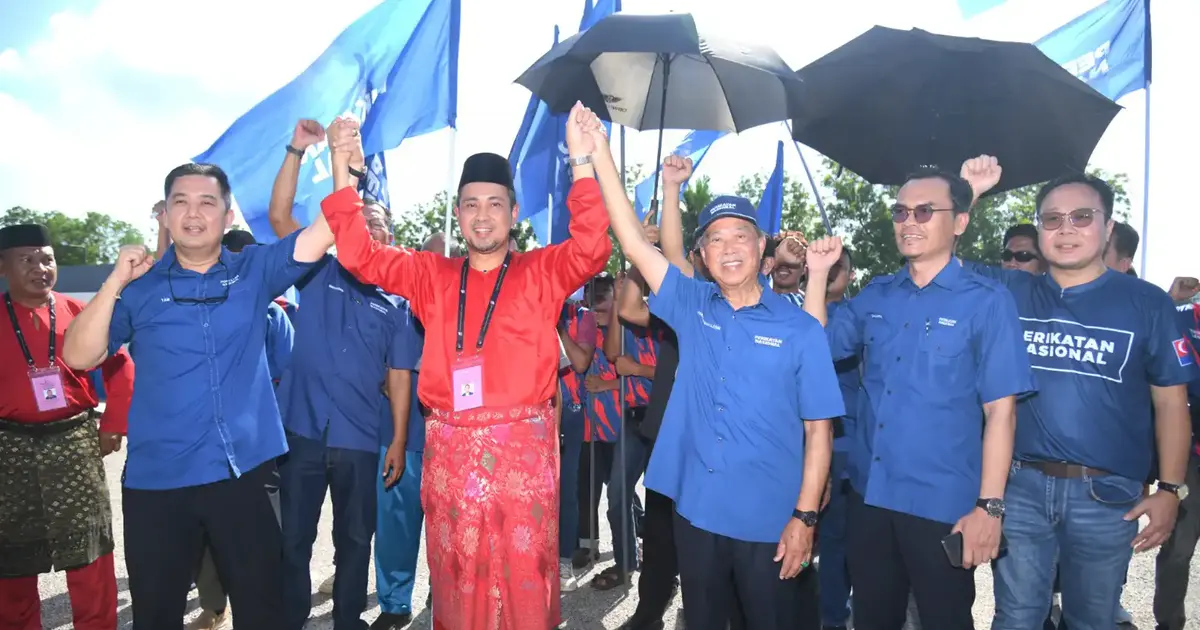
Bersatu's leadership has adopted a measured stance following PAS's decision to withhold its organisational resources from the party, with president Muhyiddin signalling that such setbacks will not destabilise the Perikatan Nasional coalition. His comments reflect an attempt to manage internal tensions within the three-year-old alliance while maintaining a united public face heading into crucial electoral contests across Malaysia.
The underlying friction between the two parties points to broader complications in how PN functions as a governing coalition. While Bersatu and PAS remain nominally aligned on key policy platforms and share overlapping voter bases in certain states, the decision by the Islamic party to decline lending its formidable grassroots machinery represents a meaningful assertion of autonomy. For Bersatu, which has invested considerably in portraying itself as the anchor of Malay-Muslim political stability, such rebuffs underscore the continuing precariousness of coalition management in Malaysian politics.
Muhyiddin's framing of the situation emphasises reciprocal support as an ideal rather than an enforceable obligation within PN. By positioning the coalition around voluntary coordination rather than hierarchical command structures, he steers attention away from questions about whether Bersatu possesses sufficient internal leverage to demand assistance from its allies. This rhetorical strategy has become increasingly important as Bersatu navigates its relationship with PAS, particularly given PAS's emergence as the numerically dominant force in multiple state governments, especially in the north.
The machinery question carries practical implications that extend beyond symbolic politics. Campaign infrastructure—the ability to mobilise voters, manage ground-level logistics, and coordinate messaging—remains foundational to electoral success in Malaysia. PAS's refusal to place its networks at Bersatu's disposal therefore represents more than a personal disagreement between party leaders; it reflects differential calculations about where each party's organisational energy should be concentrated. For PAS, maintaining control over its resources allows maximum flexibility in pursuing its own electoral agenda without diluting efforts across coalition partners.
Regional dimensions add another layer to this dynamic. In states where PAS holds significant influence, such as Kelantan, Terengganu, and parts of Perak and Kedah, the party's administrative machinery and community networks are valuable assets. PAS leaders may view these resources as too critical to their own electoral fortunes to be redistributed to Bersatu, particularly as pressures mount from other competitors including Umno and Pakatan Harapan. The decision to retain full control thus becomes a rational strategic calculation rather than an ideological rejection of coalition principles.
Bersatu's philosophical position on voluntary cooperation also reflects its own vulnerabilities within the PN structure. The party lacks the mass membership base that PAS commands and cannot claim the historical longevity or organisational depth of older coalition partners. Publicly insisting that all assistance must be coerced would only highlight these structural weaknesses. Instead, framing cooperation as ideally voluntary allows Bersatu to position itself as the principled party willing to operate within ethical boundaries, even when others might choose narrow self-interest.
For Malaysian voters and political observers, the broader question concerns whether PN can sustain itself as a viable coalition when its constituent parties pursue divergent strategies. The federation of Malay and Islamic parties was established partly to counter the perceived dominance of Umno and partly to offer an alternative vision of Malay-Muslim political representation. Yet such grand objectives require operational coordination that becomes increasingly difficult when individual parties prioritise their own electoral survival. Muhyiddin's equanimous public response masks genuine uncertainty about how deeply PAS remains committed to PN's collective success versus its standalone interests.
The timing of this friction also matters. As Malaysia approaches various electoral contests—whether state-level by-elections or the broader reckoning of whether the federal coalition holds through to 2025—every demonstration of discord provides ammunition to opposing coalitions. Pakatan Harapan observers will note that PN struggles with the basic mechanics of internal cooperation, while smaller parties might interpret the Bersatu-PAS tension as evidence that the coalition lacks the cohesion necessary to implement ambitious policies.
Muhyiddin's insistence that Bersatu will proceed regardless of PAS support signals determination to project strength despite the setback. This response serves multiple audiences: party faithful who need reassurance that leadership remains resolute, coalition partners who should understand that Bersatu cannot be taken for granted, and the broader electorate who must believe that PN retains capacity to govern effectively. Yet the underlying reality remains that coalition politics in Malaysia increasingly involves parties asserting independence within formally united structures, suggesting that PN's unity may prove more fragile than its architects hoped.

